What Is the Gospel?
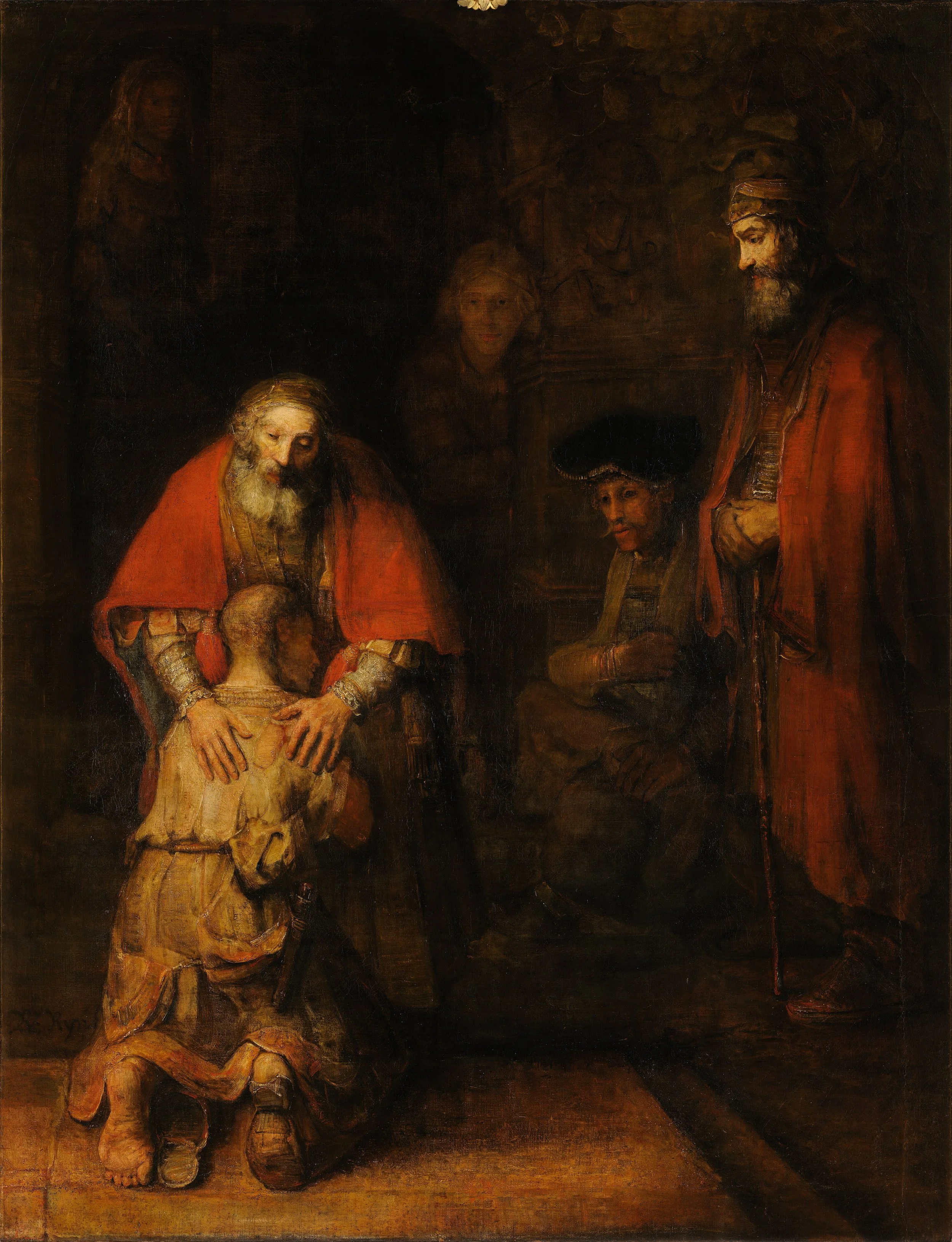
"The Return of the Prodigal Son", by Rembran(d)t Harmenszoon van Rijn, c. 1669
view SOURCES AND JUSTIFICATIONS
The Gospel is the good news that although we have been separated from God by sin, God came to rescue us through Jesus Christ.
Christ lived the life we failed to live, died the death our sins deserved, and rose from the grave in victory over sin and death. Through faith in Him, we are forgiven, made new, reconciled to God, and adopted into His family.
The Gospel is not advice about how we can work our way to God. It is the announcement of what God has already done to bring us home.
The God Who Made Us
The Gospel begins with God.
Before anything was created, God already existed. He did not create because He was lonely, incomplete, or lacking something.
I’ll explain it this way: The Father, Son, and Holy Spirit are never separate. They have always existed in eternal, loving relationship, even before creation. God did not create us because He was lonely. He created us so that we could share in that love with Him.
God did not need creation in order to become loving. God is love. The Father eternally loves the Son, the Son eternally loves the Father, and the Holy Spirit eternally shares in this perfect life of divine love.
Creation was not God’s attempt to fill some emptiness within Himself. It was the free expression of His goodness. He created us to know Him, love Him, reflect His character, and enjoy fellowship with Him.
Human beings were made in the image of God. That means every person possesses real dignity and value. We are not cosmic accidents floating through a universe with no purpose. We were created by God and for God.
But something has gone terribly wrong.
Our Separation From God
Sin is more than making mistakes or failing to be perfect. Sin is rebellion against the God who gave us life.
We were created to love God, yet we turn away from Him. We were created to reflect His goodness, yet we lie, hate, envy, exploit, lust, and place ourselves at the center of reality. We want God’s gifts while rejecting His authority. We want the life He gives without submitting to the One who gave it.
Scripture tells us:
“For all have sinned and fall short of the glory of God.”
Romans 3:23
That includes me. It includes you. It includes every person who has ever lived, except Jesus Christ.
We often compare ourselves with other people and decide that we are doing fairly well. But other people are not the standard. God is. His character is perfectly holy, just, loving, and good.
Sin separates us from God because God is holy. Sin also brings death because God is the source of life. When we turn away from Him, we are turning away from the very One for whom we were made.
This is why the Gospel cannot simply be, “Try harder.” Our problem is deeper than a lack of effort. We do not merely need better habits. We need forgiveness. We need new hearts. We need to be reconciled to God.
We need to be rescued.
God Came for Us
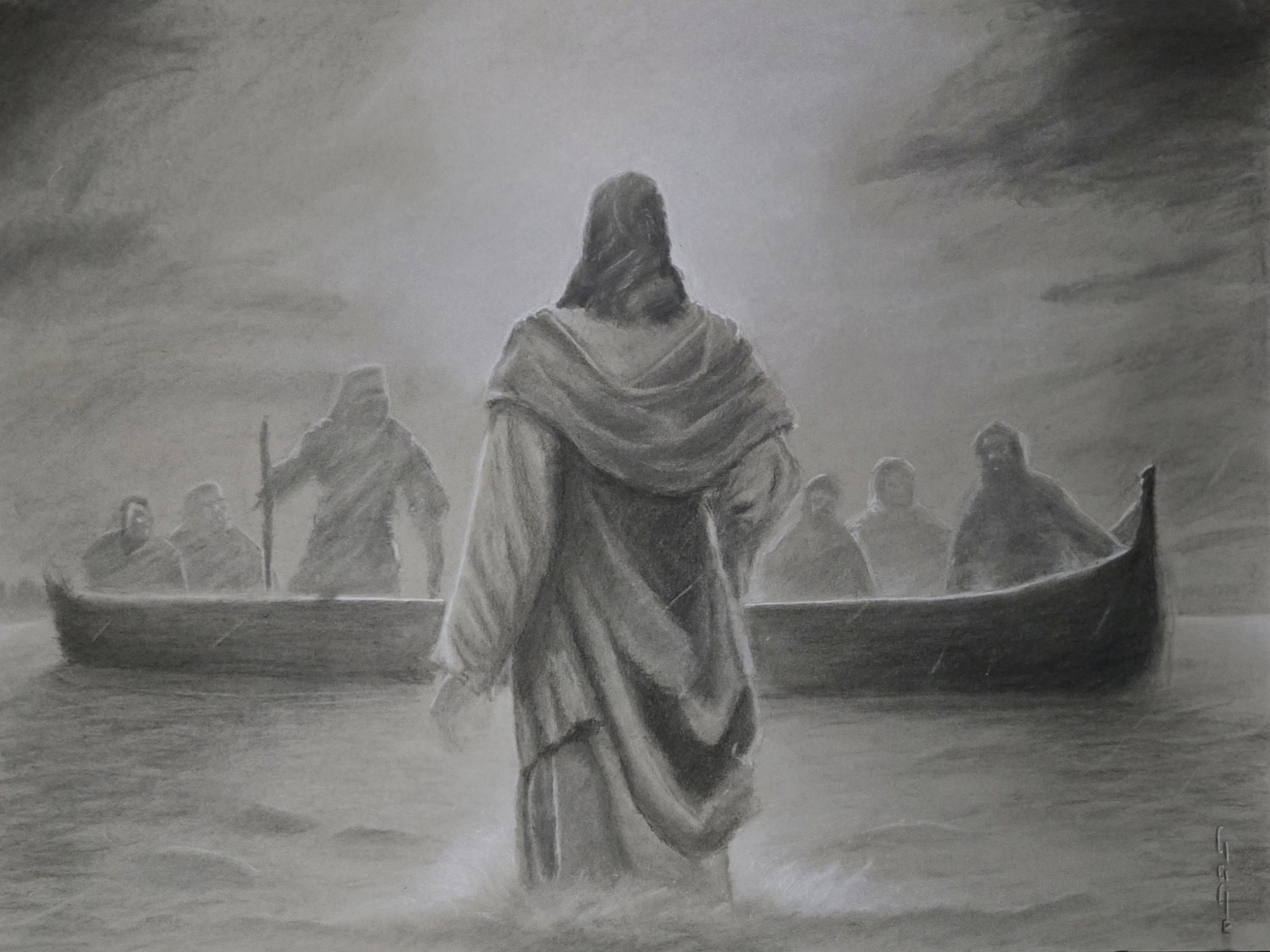
Be Not Afraid - by Gage Kinney
The heart of the Gospel is not that humanity finally found its way to God. It is that God came to us.
The eternal Son took on a human nature and entered His own creation as Jesus Christ. He was truly God and truly man. He experienced hunger, exhaustion, temptation, suffering, rejection, and grief, yet He never sinned.
Jesus lived the life we were created to live. He loved the Father perfectly. He loved His neighbor perfectly. He fulfilled the law that we had broken.
Then He willingly went to the cross.
Jesus was not merely a good teacher who became the victim of an unfortunate execution. His death was part of God’s plan of redemption. On the cross, Christ bore the judgment our sins deserved.
Scripture says:
“He himself bore our sins in his body on the tree.”
1 Peter 2:24
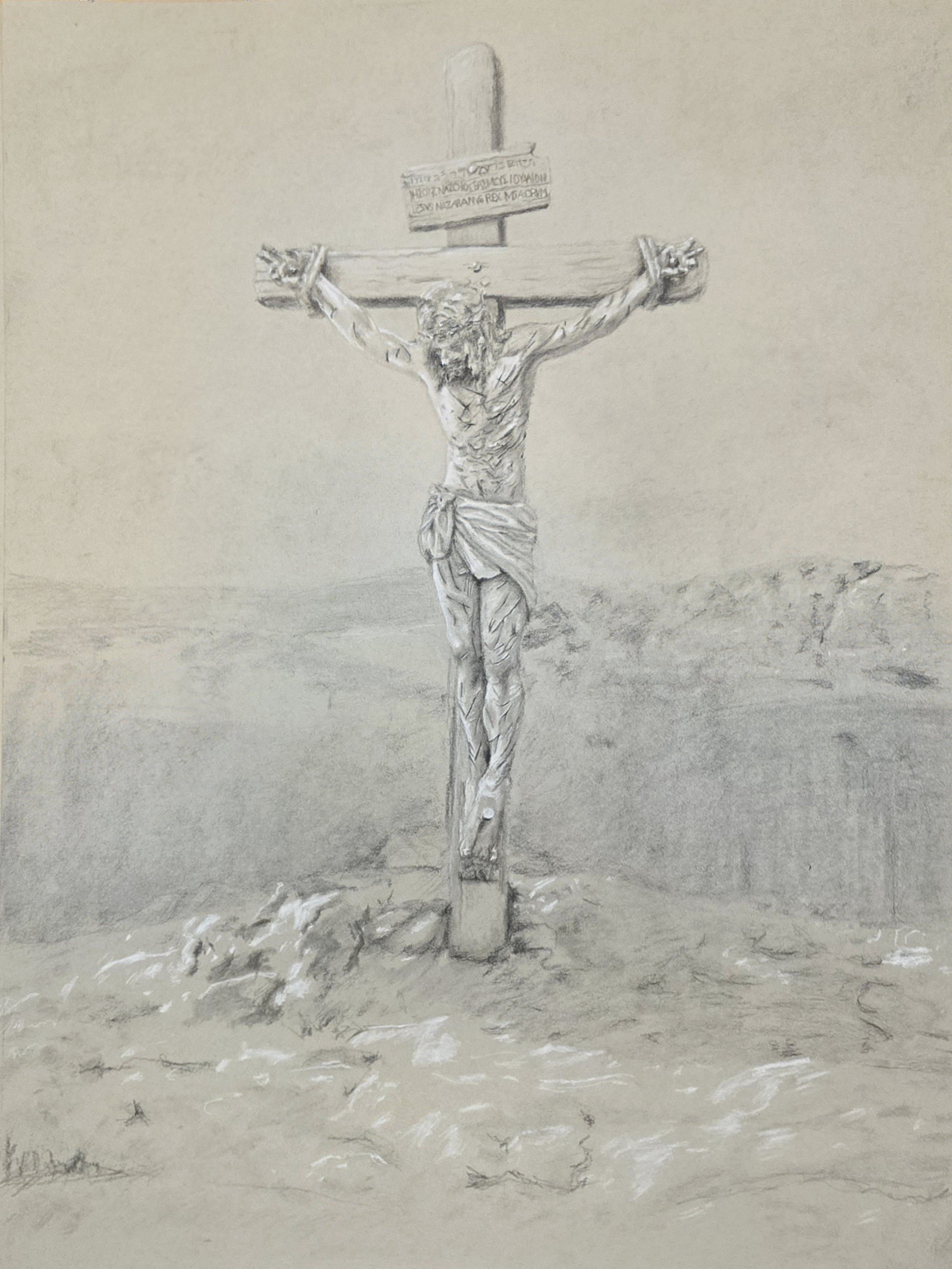
It Is Finished (FOr God So Loved the World) - by Gage Kinney
God did not ignore evil or pretend that sin did not matter. Justice was satisfied at the cross. But instead of leaving us to bear that judgment ourselves, the Son willingly took our place.
That is grace.
Grace does not mean our sin was never serious. The cross shows exactly how serious it is. Grace means God loved us enough to pay the price Himself.

the Pieta (After the Cross) - By Gage Kinney
Christ Rose From the Dead
The Gospel does not end at the cross.
Jesus was buried, but on the third day He rose bodily from the dead. The tomb was empty. Death could not hold Him.
Paul summarizes the central message he received and passed on:
“Christ died for our sins according to the Scriptures, that he was buried, that he was raised on the third day according to the Scriptures.”
1 Corinthians 15:3–4
The resurrection was not merely a symbol that Jesus’ teachings continued through His followers. Jesus truly rose from the dead.
His resurrection confirmed His claims, demonstrated His victory over death, and showed that His sacrifice had been accepted. Christianity stands or falls on this event. As Paul explains, if Christ has not been raised, our faith is useless and we remain in our sins.
But Christ has been raised.
Because He lives, death does not get the final word. The same Jesus who walked out of the tomb promises resurrection and eternal life to those who belong to Him.
The Christian hope is not that we will escape reality and exist as disembodied spirits forever. Our hope is resurrection, restoration, and eternal life with God in a renewed creation.
Salvation Is Received, Not Earned
The Gospel is good news precisely because salvation does not depend on our ability to make ourselves worthy of it.
We cannot undo our past. We cannot balance our sins with enough good deeds. We cannot make God owe us forgiveness. If salvation could be earned through human effort, Christ would not have needed to die.
Scripture says:
“For you are saved by grace through faith, and this is not from yourselves; it is God’s gift, not from works, so that no one can boast.”
Ephesians 2:8–9
Salvation is a gift, but that gift must be received.
Jesus calls us to repent and believe the Gospel. Repentance means turning away from sin and toward God. Faith means placing our trust in Jesus Christ, not merely agreeing that certain facts about Him are true.
Saving faith is not blind belief. It is trust in the person and work of Christ. It means recognizing that I cannot save myself and entrusting my life to the One who can.
That does not mean good works are unimportant. We are not saved by good works, but genuine salvation produces them. We do not obey God to purchase a place in His family. We obey because He has already brought us into His family.
Grace changes us.
More Than Forgiveness
Many explanations of the Gospel stop with forgiveness. Forgiveness is essential, but the Gospel gives us even more.
God does not merely cancel our debt and send us away. He reconciles us to Himself. He gives us new life through His Spirit. He joins us to Christ and welcomes us into His family.
John writes:
“But to all who did receive him, he gave them the right to be children of God, to those who believe in his name.”
John 1:12
Paul describes this as adoption:
“You received the Spirit of adoption, by whom we cry out, ‘Abba, Father.’”
Romans 8:15
This changes how we understand salvation. The Judge who declares us righteous is also the Father who welcomes us home.
We were guilty, but we are forgiven.
We were spiritually dead, but we are made alive.
We were separated from God, but we are reconciled.
We were without an inheritance, but we are made heirs with Christ.
We were lost, but through Christ, we are adopted into glory.
Why Adoption Is Personal to Me

me as a baby (bottom middle)
The name Adopted Into Glory is not just a theological phrase to me. It is personal.
When I was two years old, my brothers and I were adopted. Before I was old enough to fully understand what adoption meant, it had already changed my life. I was brought into a family and given a place where I belonged, not because I had earned it or could offer anything in return, but because someone chose to receive me as their own.
As I grew in my faith, I began to see how closely my own story reflected the Gospel.
No human experience can perfectly capture what God has done for us. But adoption gave me a picture of grace before I even knew the word for it.
My adoption was not merely a legal statement written on a piece of paper. It gave me a family, a name, a home, and an inheritance. It established a real relationship. I was not treated as a permanent outsider who was merely allowed to stay nearby. I was received as a son.
That is what makes the biblical language of adoption so powerful.
Through Christ, God does not merely tolerate us from a distance. He does not leave us standing at the door, constantly wondering whether we belong. He brings us into His household and calls us His children.
My earthly adoption was something done for me before I could understand it. Eventually, though, I had to grow into an understanding of who I was and what it meant to belong to the family that had received me.
There is a similarity in the Christian life. Salvation begins with what God has done for us, not what we have done for Him. But once we receive Christ by faith, we begin learning what it means to live as children of God.
Our obedience does not cause our adoption. It flows from it.
Heirs With Christ
Biblical adoption does not only give us a new identity in the present. It also gives us a future inheritance.
Paul writes:
“If children, also heirs, heirs of God and coheirs with Christ.”
Romans 8:17
That does not mean we become gods or become equal with Christ. It means that because we have been joined to Christ, we share in the inheritance He has secured for His people.
This inheritance includes resurrection, eternal life, freedom from sin, and the restoration of creation. One day, those who belong to Christ will be fully transformed into what God intended them to be.
Paul continues by connecting our present adoption with our future glory:
“I consider that the sufferings of this present time are not worth comparing with the glory that is going to be revealed to us.”
Romans 8:18
The Gospel does not promise that Christians will avoid suffering in this life. Jesus certainly did not avoid it. The Gospel promises that suffering will not have the final word.
God is leading His children toward glory.
That is the meaning behind the name Adopted Into Glory. We are adopted now, and we wait for the full unveiling of what that adoption means. We belong to God today, but there is still an inheritance ahead of us.
The Cost of Our Adoption
Human adoption can be costly. It requires love expressed through action, sacrifice, commitment, and the willingness to bring someone into your life permanently.
Our adoption into God’s family also came at a cost.
It did not cost us money or good deeds. It cost Christ His blood.
Paul says that God sent His Son to “redeem those under the law, so that we might receive adoption as sons” (Galatians 4:5).
Redemption and adoption belong together. We could not simply walk into God’s family while remaining under the guilt and power of sin. Christ redeemed us so that we could be adopted.
At the cross, Jesus took what belonged to us: guilt, judgment, suffering, and death. Through faith, we receive what belongs to Him: righteousness, sonship, life, and an inheritance.
This does not mean Jesus stopped being the unique and eternal Son of God. He is the Son by nature. We become children of God by grace. We are brought into His relationship with the Father because we are united to Him.
The Gospel is not humanity climbing upward until we become divine. It is the Son of God coming down to rescue us and bring us home.
The Love We Were Made to Share
The Gospel reveals that ultimate reality is not cold, impersonal, or indifferent. At the foundation of all reality is the eternal, living God, who is Father, Son, and Holy Spirit.
God has always possessed the highest form of love because love has always existed relationally within God. He did not need to create another person before He could love. The Father, Son, and Holy Spirit eternally know and love one another.
We were created to share in that love, not because God needed us, but because God is good.
Sin separated us from that purpose. Christ restores us to it.
Jesus prayed:
“I made your name known to them and will continue to make it known, so that the love you have loved me with may be in them and I may be in them.”
John 17:26
This is bigger than escaping hell. It is bigger than receiving a clean record. Those things matter, but the final purpose of salvation is God Himself.
We were made to know Him.
We were made to love Him.
We were made to belong to Him.
The Gospel brings us into fellowship with the Father through the Son and in the Holy Spirit. God invites us to share in the eternal love that existed before the foundation of the world.
Responding to the Gospel
The Gospel demands a response.
It is not enough to know Christian vocabulary, admire Jesus as a teacher, attend church, or believe that God probably exists. The question is whether we have placed our trust in Christ.
Have you recognized your need for forgiveness?
Have you turned from your sin?
Are you trusting in what Christ has done, or are you still trying to make yourself worthy of God?
Jesus does not tell us to clean ourselves up before coming to Him. We come because we cannot make ourselves clean. We bring Him our sin, shame, confusion, doubt, and brokenness. He gives us forgiveness, new life, and a new identity.
Following Christ will cost us something. Jesus calls us to deny ourselves, take up our cross, and follow Him. Grace is free, but it is not empty. The Christ who saves us also becomes our Lord.
But whatever following Him costs, what He gives is infinitely greater.
He gives us Himself.
Come Home

The Gospel is the good news that the God who made us has acted to save us.
The Father sent the Son. The Son took on humanity, lived without sin, died in our place, and rose from the grave. The Holy Spirit gives new life to those who trust in Christ and marks them as members of God’s family.
Because of Jesus, sinners can be forgiven. Enemies can be reconciled. The spiritually dead can be made alive. Those without a home can become children of God.
This is why Adopted Into Glory is more than the name of a website.
It is my story. I was adopted at two years old alongside my brothers, long before I understood everything that adoption would mean for my life. Later, I discovered that adoption was also at the heart of the salvation God offers through Christ.
But this message is not only about me. It is an invitation to you.
You may feel unworthy, unwanted, abandoned, or too far gone. The Gospel does not say that you must first prove you deserve a place in God’s family. None of us deserves it.
The Gospel says that Christ has made a way.
He offers forgiveness.
He offers new life.
He offers His name.
He offers an inheritance.
He offers a home.
Through Jesus Christ, we can be adopted into glory.