The Trinity Thoroughly Explained
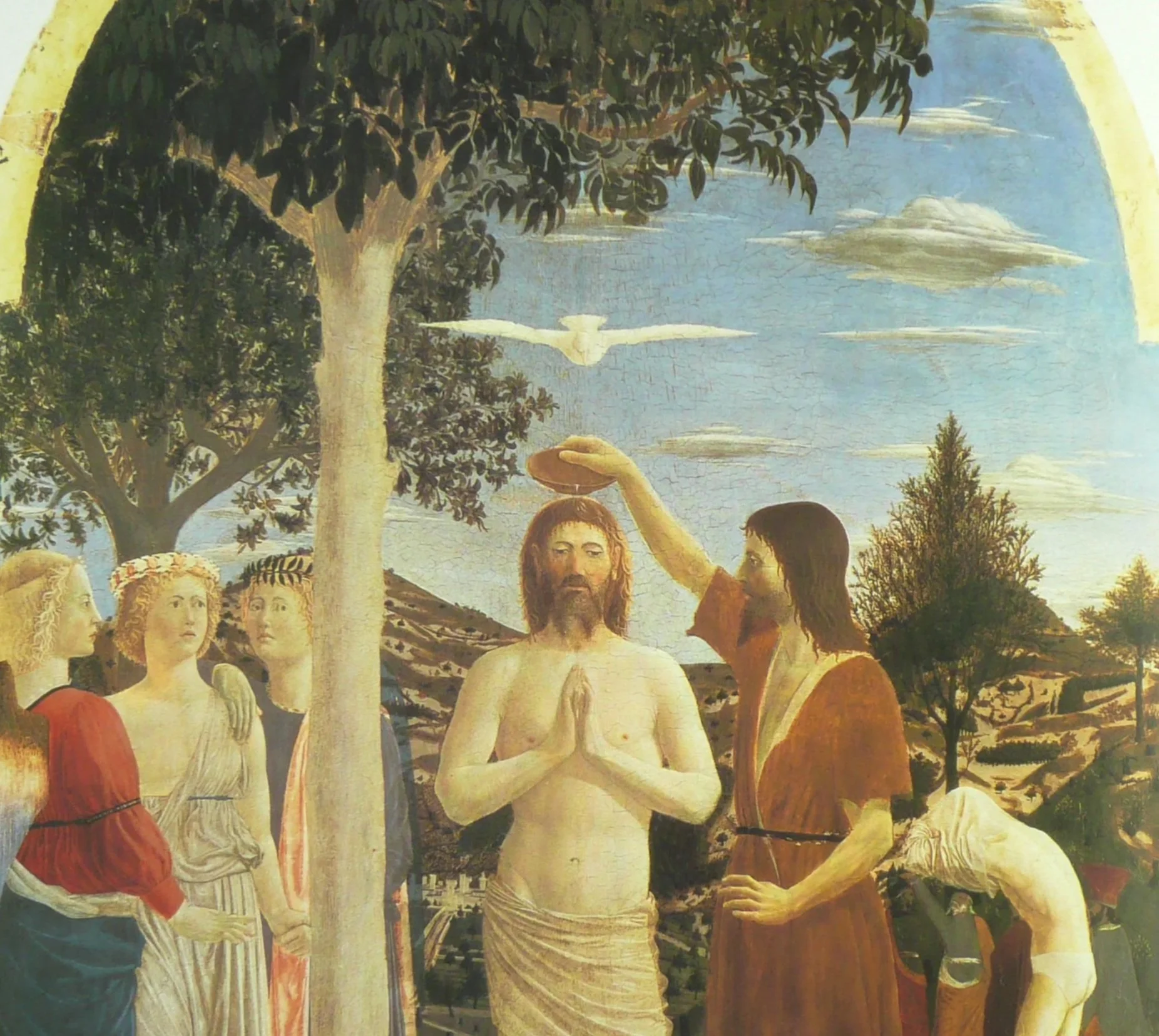
The Baptism of Christ by Piero della Francesca (1415–1492)
One God, Three Persons, and No Contradiction
The Trinity is not the belief that three gods are somehow one God. It is not the belief that one person is somehow three persons. It is not the belief that the Father became the Son, that the Son became the Holy Spirit, or that God simply wears three different masks.
The doctrine is this:
There is one God who eternally exists as three distinct persons: the Father, the Son, and the Holy Spirit. Each person is fully God. The persons are distinct from one another, yet they are not three gods because they possess the one undivided divine being.
That is difficult to fully comprehend, but it is not a contradiction. A contradiction would be saying that God is one person and three persons in the same sense, or one being and three beings in the same sense. Christianity says God is one in one respect and three in another: one being and three persons.
The words being and person answer two different questions. Being answers, “What is it?” Person answers, “Who is it?” When speaking about God, the answer to what is one: God. The answer to who is three: the Father, the Son, and the Holy Spirit.
Those words do not explain God away. They give us the clearest language available to confess everything Scripture teaches without denying one truth to protect another. The doctrine of the Trinity was not invented because Christians wanted a complicated God. It was formulated because Scripture would not allow the Church to discard any of these truths:
There is only one God.
The Father is God.
The Son is God.
The Holy Spirit is God.
The Father, Son, and Holy Spirit are personally distinct.
Remove any one of those truths and the doctrine collapses. Hold all five together and the basic structure of the Trinity follows.
Scripture Begins With One God
Christianity is monotheistic. The Trinity does not weaken that confession. It tells us who the one God eternally is.
Israel was commanded, “The LORD our God, the LORD is one” (Deuteronomy 6:4). God declares that there is no God besides Him (Isaiah 44:6; 45:5–6). Jesus repeats the Shema when asked for the greatest commandment (Mark 12:29–30). Paul says, “there is no God but one” (1 Corinthians 8:4). James assumes the same truth when he writes, “You believe that God is one. Good!” (James 2:19).
Nothing in the New Testament presents the Father, Son, and Spirit as a committee of separate gods. Scripture carries Israel’s confession of one God directly into the Christian faith. The question is not whether there is one God. The question is what this one God has revealed about Himself.
The Father Is God
This is normally the least disputed point. Jesus calls the Father “the only true God” while distinguishing Himself as the one sent by the Father (John 17:1–5). Paul speaks of “one God, the Father, from whom are all things” (1 Corinthians 8:6). He repeatedly calls Him “God our Father” (Philippians 1:2).
Trinitarian belief fully agrees. The Father is God. The error begins only when someone silently changes that sentence into, “Only the person of the Father is God.” The first statement is biblical. The second does not follow from it.
In John 17:3, Jesus is not denying His own deity. In the same prayer, He speaks of sharing glory with the Father before the world existed (John 17:5). John has already identified the Word as God, said that all creation came through Him, and said that the Word became flesh (John 1:1–3, 14). John 17 distinguishes the Son from the Father. It does not separate the Son from the divine identity.
The Son Is Fully God
The deity of Christ does not rest on one disputed verse. It runs throughout the New Testament.
John begins before creation: “In the beginning was the Word.” The Word already was. He was “with God,” so He is personally distinct from the Father, and “the Word was God,” so He shares the divine identity. Everything that came into existence was created through Him. John then identifies this eternal Word as the one who became flesh (John 1:1–3, 14).
The distinction and unity are both present in the opening sentence. The Word is with God, and the Word is God.
Jesus claims a glory He possessed with the Father before the world existed (John 17:5). He says, “Before Abraham was, I am” (John 8:58). This is more than saying He was foreknown. A person known in advance cannot truthfully claim present existence in a time before that person exists. Jesus places His own existence before Abraham and uses the striking “I am” construction. His hearers respond by trying to stone Him.
In John 10, Jesus says, “I and the Father are one” (John 10:30). The same passage distinguishes them. Jesus does not say, “I am the Father.” Yet His hearers understand that His claim concerns equality with God and attempt to stone Him.
His appeal to Psalm 82 is not a retraction. It is a lesser-to-greater defense. If Scripture could use the word gods for those who received God’s word, how much more may the one sanctified and sent by the Father call Himself the Son of God?
Jesus concludes, not by lowering His claim, but by saying, “the Father is in me and I am in the Father.” They then try to seize Him again (John 10:34–39).
After the resurrection, Thomas addresses Jesus: “My Lord and my God!” Jesus does not correct him. He blesses those who will believe without seeing (John 20:27–29).
Paul says that Christ existed in the form of God and possessed equality with God, yet humbled Himself by taking the form of a servant and becoming human (Philippians 2:5–11). The movement is not from a mere creature upward into divinity. It is from divine glory downward into servanthood, followed by exaltation in His incarnate mission.
Paul also writes that the fullness of deity dwells bodily in Christ (Colossians 2:9).
Hebrews says the Son created the universe, sustains all things, perfectly expresses God’s nature, and receives language originally addressed to the LORD as eternal Creator (Hebrews 1:1–12; Psalm 102:25–27). The Son is not placed among the angels. He is the one the angels worship (Hebrews 1:5–6).
Paul takes the confession that Israel has one God and includes Jesus within it:
“One God, the Father, from whom are all things,” and “one Lord, Jesus Christ, through whom are all things” (1 Corinthians 8:6).
Paul is not adding a second god beside the first. He is identifying the Father and the Son within the identity and creative work of the one God.
The Son is therefore not the Father, but He is everything God is by nature. He is eternal, uncreated, Creator, worthy of divine honor, and fully God.
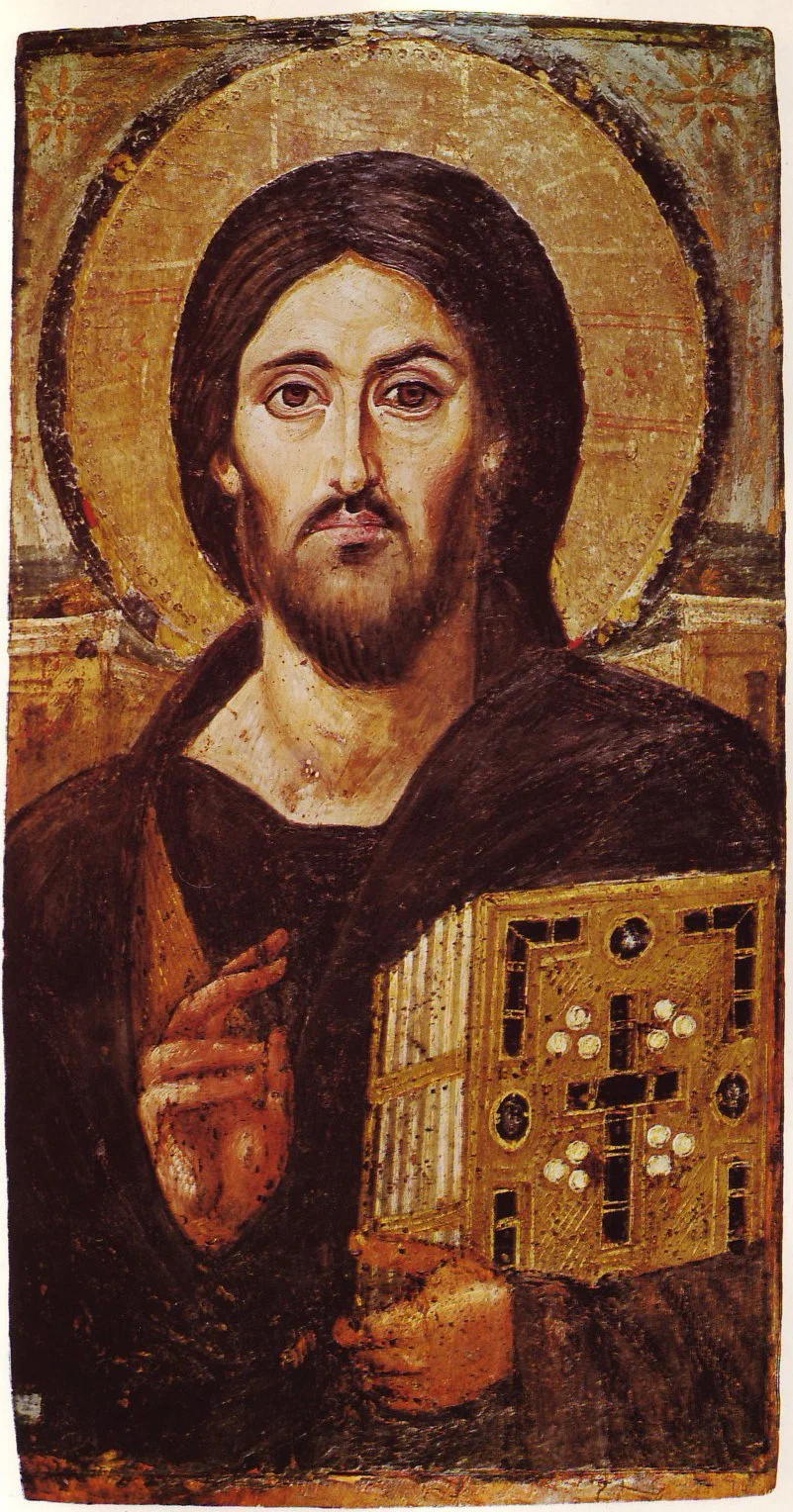
'In the beginning was the Word, and the Word was with God, and the Word was God. He was with God in the beginning. All things were created through him, and apart from him not one thing was created that has been created.
The Word became flesh and dwelt among us. We observed his glory, the glory as the one and only Son from the Father, full of grace and truth. '
John 1:1-3,14
.CSB
'Jesus said to them, “Truly I tell you, before Abraham was, I am.” '
John 8:58 CSB
The Holy Spirit Is Fully God and Truly Personal
People sometimes speak of the Holy Spirit as if He were merely God’s energy or impersonal power. Scripture does not.
In Acts 5, Peter tells Ananias that he has lied to the Holy Spirit and then says he has lied to God (Acts 5:3–4).
Paul says the Spirit searches everything, even the depths of God, and knows God’s thoughts in a way compared to a person’s own spirit knowing that person’s thoughts (1 Corinthians 2:10–11).
The Spirit is present everywhere (Psalm 139:7–10), gives life (Romans 8:11), sanctifies believers (2 Thessalonians 2:13), and participates in creation (Genesis 1:2; Psalm 104:30). These are not the acts of a created force.
The Spirit also acts personally. He speaks and sends (Acts 13:2–4). He distributes gifts according to His will (1 Corinthians 12:11). He teaches and reminds (John 14:26). He guides, hears, speaks, and declares (John 16:13–15). He intercedes (Romans 8:26–27). He can be grieved (Ephesians 4:30).
Power does not decide how gifts are distributed. An influence is not lied to. An impersonal force is not grieved, does not teach, and does not speak in the first person.
The Holy Spirit possesses intellect, will, and personal agency. He is not another name for the Father or the Son because the Son asks the Father to send “another Counselor.” Jesus speaks of the Spirit as one who proceeds from the Father and testifies about the Son (John 14:16–17; 15:26).
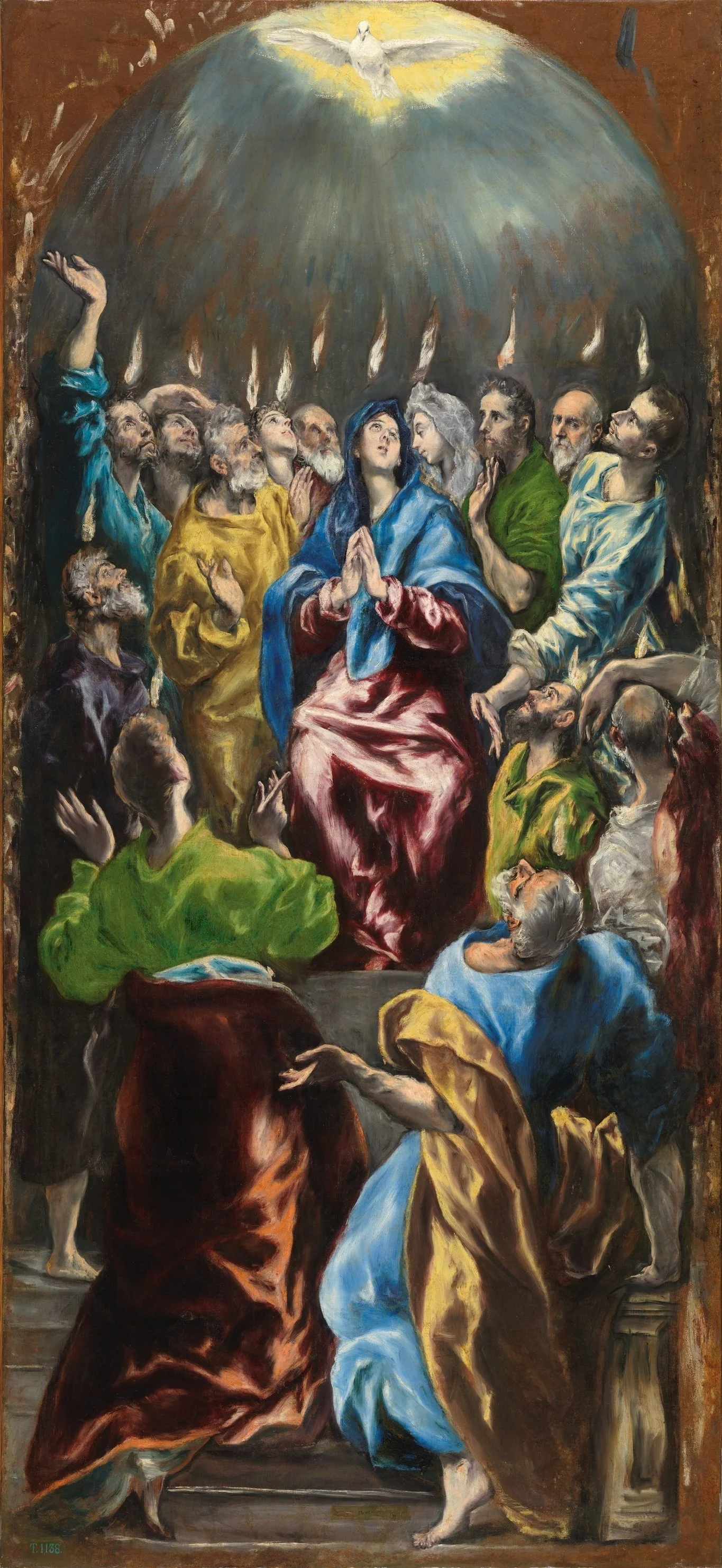
'As they were worshiping the Lord and fasting, the Holy Spirit said, “Set apart for me Barnabas and Saul for the work to which I have called them.” '
Acts 13:2 CSB
The Three Are Personally Distinct
If the Father, Son, and Spirit were merely three titles worn by one person, many passages would become incoherent.
At Jesus’ baptism, the Son stands in the water, the Spirit descends like a dove, and the Father speaks from heaven (Matthew 3:16–17). These are not three successive roles in one scene. They act simultaneously and relationally.
The Son prays to the Father (John 17). The Father loves the Son before the foundation of the world (John 17:24). The Father sends the Son (John 3:16–17). The Father and Son send the Spirit in the work of salvation (John 14:26; 15:26). The Spirit glorifies the Son (John 16:14).
Relationship is impossible if there is only one person talking to Himself under different names.
Jesus commands baptism in the singular “name” of the Father, Son, and Holy Spirit (Matthew 28:19). There is one name and one divine authority, yet three distinct persons are named.
Paul blesses the Church with the grace of Christ, the love of God, and the fellowship of the Holy Spirit (2 Corinthians 13:13). Peter describes salvation through the foreknowledge of the Father, the sanctifying work of the Spirit, and obedience to Jesus Christ (1 Peter 1:2).
The pattern is woven into Christian worship, baptism, salvation, prayer, and blessing.
One Being Does Not Mean One Person
This is where many objections confuse categories.
When Christians say the Father and Son are distinct, some assume that distinct persons must be separate beings. That is true of human persons because each human person possesses an individual human being. But we cannot take the limits of created human existence and place them over God as though He must be a larger version of us.
Human nature is multiplied among human beings. Peter, James, and John are three persons and three separate beings. Each possesses a limited instance of humanity.
The divine nature is not material, divisible, or distributed into thirds. The Father does not possess one-third of deity, the Son another third, and the Spirit the final third. Each is fully and eternally the one undivided God.
This also means the persons are not three centers of independent being competing with one another. They possess one divine nature, one divine power, one divine knowledge, and one divine will.
Their distinction is not a separation of essence. It is an eternal distinction of relation. The Father is Father to the Son, the Son is Son of the Father, and the Spirit is Spirit in relation to the Father and the Son.
Thomas Aquinas expressed the point by locating the personal distinctions in eternal relations of origin, not in three separate divine substances (Summa Theologiae I, questions 28–30).
The Father is unbegotten, the Son is eternally begotten, and the Spirit eternally proceeds. These relations distinguish the persons without dividing God’s essence.
“Begotten” does not mean created, sexually produced, or brought into existence at a moment in time. It describes the Son’s eternal relation to the Father. There was never a time when the Father existed without His Word and Son.
If the Son were created, then all things could not have been created through Him because He would belong to the category of things made. John carefully excludes that possibility. Everything that came to be came to be through the Word (John 1:3).
Likewise, “proceeds” does not mean that the Spirit began to exist or traveled away from God. It names His eternal personal relation within the one divine life.
Christians disagree about how the Spirit’s eternal procession should be expressed in relation to the Father and Son, especially in the Eastern and Western traditions. That later dispute should not be confused with the more basic confession shared by historic Christianity: the Spirit is eternally divine, personally distinct, and not created.
Is “Three-in-One” a Contradiction?
No. The Law of Non-Contradiction says something cannot be both A and not-A at the same time and in the same respect.
The doctrine does not say:
God is one person and three persons.
God is one being and three beings.
The Father is the Son and is not the Son.
It says:
God is one being.
God eternally exists as three persons.
The persons are distinct, but the divine essence is undivided.
Someone may reject the doctrine. They may say they do not understand how one divine being can subsist in three persons. But lack of comprehension is not the same as contradiction.
To prove a contradiction, a person must show that Christianity affirms and denies the same proposition in the same sense. Simply repeating “three is not one” does not do that because Trinitarian doctrine has never said three persons are one person.
We should also be careful with analogies. Water as ice, liquid, and vapor leans toward one thing changing modes. One actor wearing three masks teaches modalism. Three leaves on a clover divide God into parts. An egg’s shell, white, and yolk make each person only part of God.
Every created analogy eventually breaks because nothing in creation is exactly like the uncreated God.
Analogies can illustrate one feature, but they cannot define God. Scripture must govern the doctrine.
“The Father Is Greater Than I”
Jesus says, “The Father is greater than I” (John 14:28). That statement must be taken seriously. It also must be read within everything John has already said.
John presents the Son as the eternal Word who is God and created all things (John 1:1–3). Jesus claims preexistence, divine glory, unity with the Father, and mutual indwelling with Him. Thomas calls Jesus God.
John 14 itself says that seeing the Son is seeing the Father because the Father dwells in Him (John 14:9–11). Therefore, verse 28 cannot honestly be isolated and made to erase the rest of the Gospel.
The eternal Son truly became human. He did not pretend to be a servant. He assumed our nature and entered a mission of obedient humiliation.
Paul holds equality and submission together. Christ existed in the form of God, yet took the form of a servant and humbled Himself (Philippians 2:6–8). Hebrews says He shared in flesh and blood and was made like His brothers and sisters (Hebrews 2:14–17).
The Father is greater in position within the Son’s incarnate mission. The Son, according to His humanity, is genuinely limited, suffers, obeys, and dies. This does not mean His divine nature becomes less divine.
Submission in role does not prove inferiority of nature. A king who stoops to rescue a servant does not cease to possess his royal nature because he has taken a lower position.
The early Church summarized this by confessing Christ as one person in two natures, fully divine and fully human.
His hunger, growth, suffering, and death belong to the real humanity He assumed. His eternal existence, creative power, divine glory, and equality with the Father belong to His deity.
We must neither split Christ into two persons nor mix His two natures into something that is neither God nor man.
Can God Die?
God’s divine nature is immortal and cannot cease to exist. Yet the Son truly died in the human nature He assumed.
The subject who died is the divine person of the Son. The nature according to which He died is human.
Christianity does not teach that the divine essence stopped existing for three days. It teaches that the eternal Son took a real human body and soul and truly experienced human death, the separation of His human soul from His body.
This is why Scripture can speak of the Lord of glory being crucified (1 Corinthians 2:8) and of God obtaining the Church with His own blood (Acts 20:28), while still affirming that God is immortal (1 Timothy 6:16).
The blood is human blood, but it belongs to the person who is God the Son. The natures are distinct without separating the person.
Does the Son’s Submission Make Him Less Divine?
No. Equality of nature does not erase relationship, order, mission, or willing obedience.
The Son is sent by the Father. The Son obeys the Father. The Son gives the kingdom to the Father, and Paul says the Son will be subject so that God may be all in all (1 Corinthians 15:24–28).
But the same chapter presents the Son reigning until every enemy, including death, is defeated. The passage distinguishes the Father and Son and describes the order of Christ’s messianic kingdom. It does not say the Son is a creature or deny His divine nature.
It is a mistake to assume that love must eliminate all order. The Son’s obedience is not forced submission to a rival being. It is the willing action of the Son in perfect unity with the Father. Their will is not divided.
The missions of the Son and Spirit reveal in time who the persons eternally are without creating inequality in the divine essence.
God Is Eternally Relational Love
Scripture does not merely say God loves. It says, “God is love” (1 John 4:8, 16).
Love is not something God discovered after creating other persons. God does not develop, improve, or actualize a potential He previously lacked. He is eternally perfect and unchanging (Malachi 3:6; James 1:17).
This raises a serious question. If God were eternally a single isolated person, what did it mean for God eternally to be love before anything else existed?
Self-love is real, but relational love is a higher expression of love because it gives itself to another. If God is eternally the highest, complete, and unchanging form of love, then love cannot have first become relational when God created.
Otherwise, creation would supply an object of love that allowed God to express a kind of love He could not express eternally in Himself.
The Trinity gives the coherent answer. Before creation, the Father loved the Son, the Son loved the Father, and the Spirit existed eternally in the undivided fellowship of God.
Jesus speaks directly of the Father loving Him before the foundation of the world (John 17:24).
Creation is therefore not God’s cure for loneliness. God did not create because He needed someone to complete Him. The Father, Son, and Spirit eternally possess perfect life, glory, knowledge, joy, and love.
God creates freely, not from deficiency, but from abundance. He invites creatures to share by grace in the love He eternally is.
Jesus prays that His people may be brought into the unity and love shared by the Father and Son (John 17:20–26). Salvation is not merely escape from punishment. It is adoption into fellowship with the Triune God (Galatians 4:4–6; Ephesians 1:3–6).
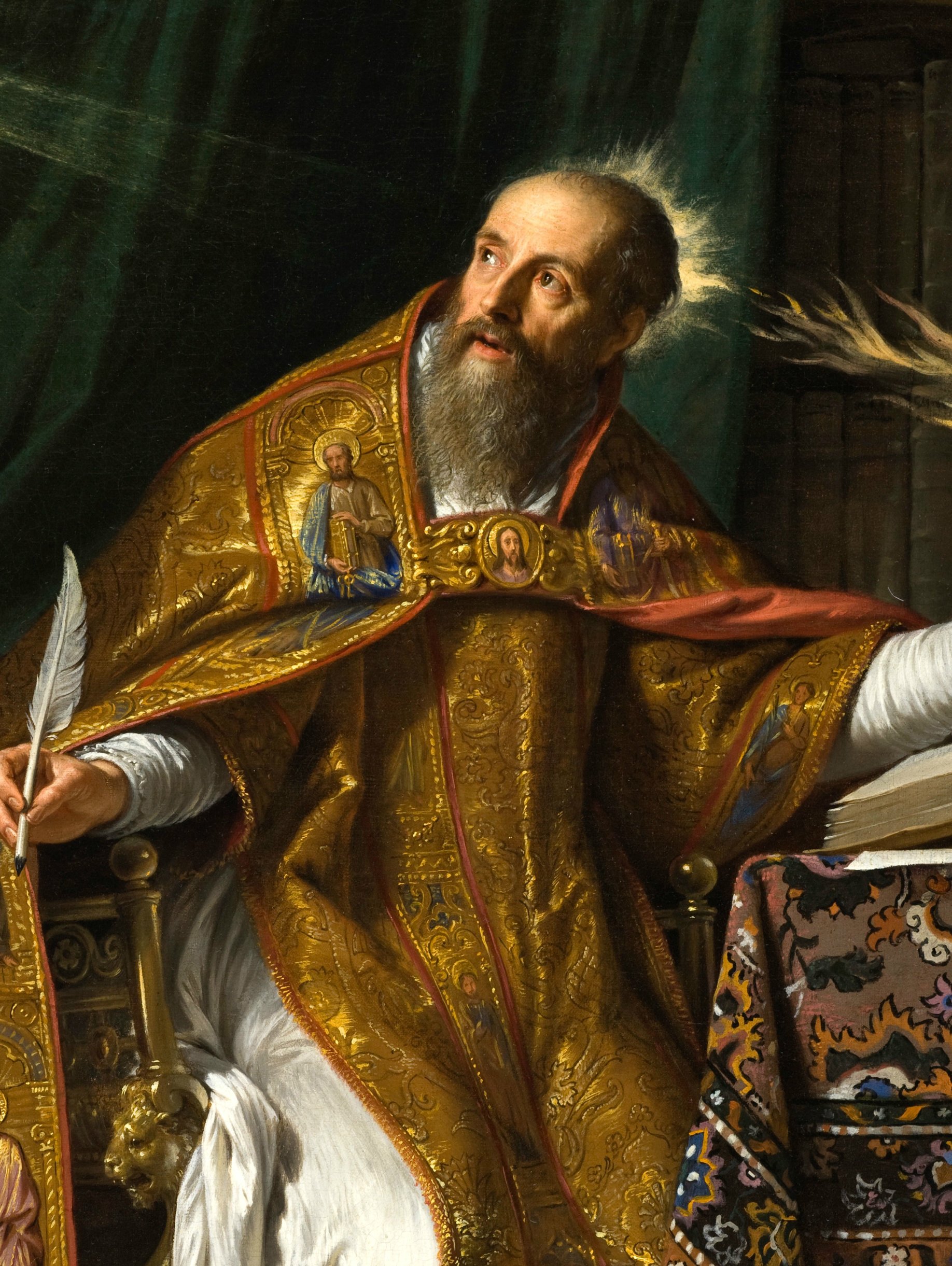
Augustine searched for reflections of the Trinity in the mind’s knowledge and love while always admitting the distance between the image and God Himself (On the Trinity, Books IX and XV).
Richard of St. Victor later developed an argument from perfect love. Supreme love is not closed within the self but is shared, and perfect love rejoices in a beloved and in love shared with another. His reasoning gives philosophical depth to the conviction that ultimate reality is not isolated personhood but eternal communion.
Still, this argument must be stated carefully. It shows the coherence and fittingness of the Trinity. It exposes the difficulty of grounding eternal, unchanging, relational love in an eternally solitary person.
But we should not pretend it can derive every personal distinction or prove the number three with the certainty of a mathematical equation.
Aquinas explicitly says the Trinity cannot be discovered by natural reason alone. It is known because God revealed Himself (Summa Theologiae I, question 32, article 1).
Reason can show that the doctrine is not contradictory, answer objections, and explore why it fits what revelation tells us about God. Revelation remains the foundation.
Was the Trinity Invented at Nicaea?
No. The Council of Nicaea in AD 325 did not invent the Father, Son, and Holy Spirit, nor did it vote Jesus into divinity.
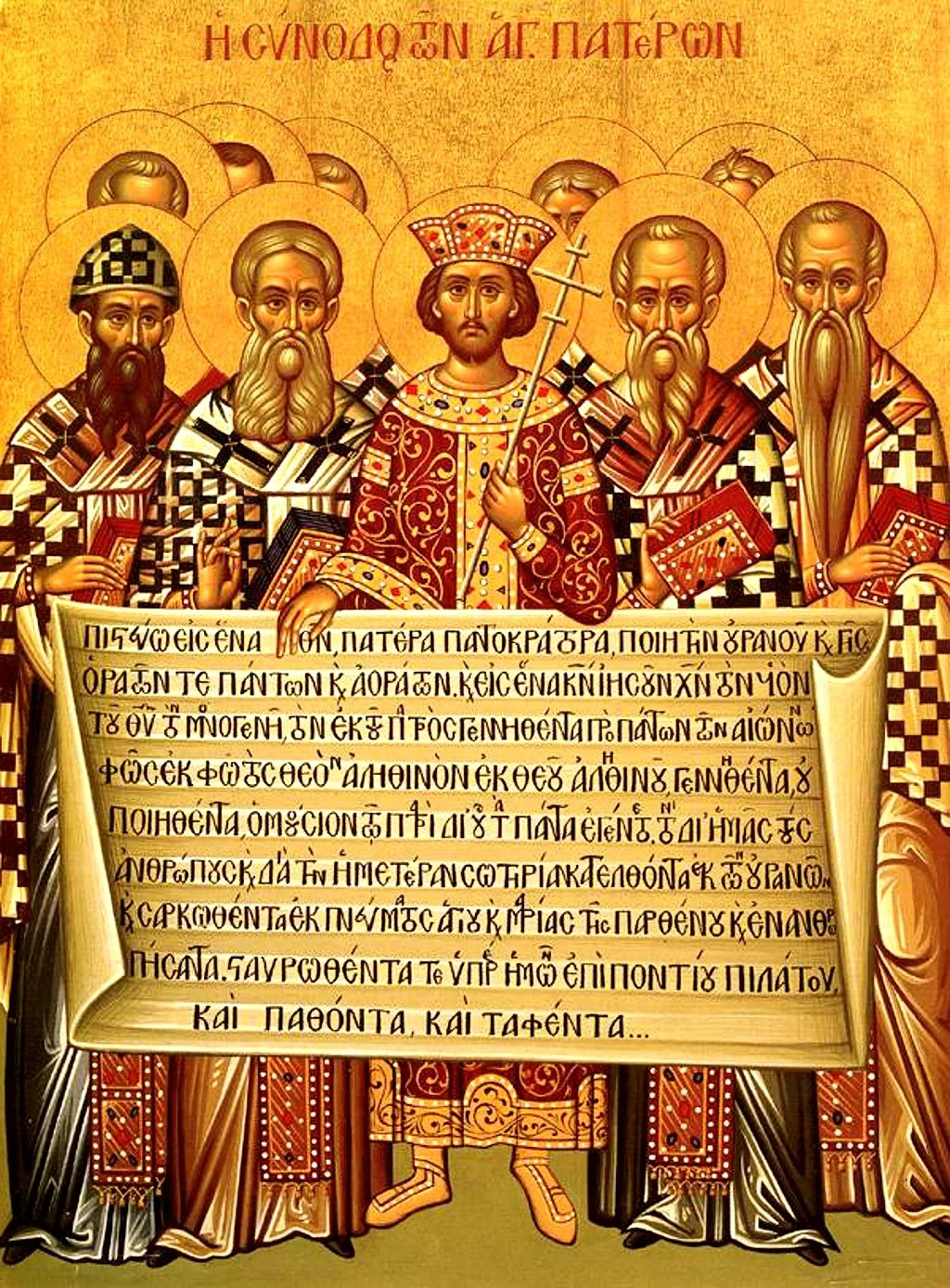
First Council of Nicaea (325), holding the Nicene-Constantinopolitan Creed of 381
The biblical writings had confessed these truths centuries earlier. Nicaea supplied precise language to exclude a new way of denying the Son’s full deity.
The distinction matters. A doctrine can exist before every technical term used to defend it has been standardized. Gravity existed before Newton described it.
Christians baptized, prayed, worshiped, and confessed the Father, Son, and Spirit before theologians settled on the most exact vocabulary of one essence and three persons.
Ignatius of Antioch, writing in the early second century on his way to martyrdom, repeatedly calls Jesus Christ “our God” (Letter to the Ephesians, chapter 18; Letter to the Trallians, chapter 7). This is roughly two centuries before Nicaea.
Irenaeus of Lyons, in the second century, defended one Creator God who made and ordered all things through His Word and Wisdom, identifying the Word as the Son and the Wisdom as the Spirit.
He also defended Christ as true God and true man against rival teachings (Against Heresies, Books III–IV). His vocabulary is not identical to the later creed, but the Father, Son, and Spirit are already present within his confession of the one Creator.
Around the beginning of the third century, Tertullian argued against the claim that the Father, Son, and Spirit were one person under different names.
He confessed one God while speaking of the Father, Son, and Spirit as three persons of one substance (Against Praxeas, chapters 2–3).
Whatever qualifications must be made about every early writer’s terminology, this alone destroys the claim that “one substance, three persons” first appeared at Nicaea.
Nicaea responded to Arius, who treated the Son as a creature. The council confessed the Son as “begotten, not made” and “of one substance with the Father.”
Those terms protected what Scripture already required: the Son is not part of creation because all creation came through Him. He is not a lesser god beside the Father, and yet He is personally distinct from the Father.
Athanasius later argued that the Father was never without His Word and that the Son, as the Father’s proper offspring, exists eternally (Discourses Against the Arians I).
He read “I and the Father are one” and “the Father is in me and I am in the Father” as teaching personal distinction without division of divine essence (Discourses Against the Arians III).
Gregory of Nazianzus put the distinction with extraordinary precision. The Father is not the Son, and the Spirit is not the Son, yet the three are one in Godhead and distinct in personal properties (Fifth Theological Oration).
He also explains the language as one essence and three hypostases, or persons (Oration 21).
Augustine defended the equality and unity of the persons while examining how the Son’s incarnation accounts for passages describing Him in a lower condition (On the Trinity, Book I).
Aquinas later organized the doctrine through the concepts of procession, relation, person, and mission while insisting that the mystery depends upon revelation rather than philosophical invention (Summa Theologiae I, questions 27–43).
The terminology became more exact because controversy forced Christians to say precisely what they meant. Development of vocabulary is not invention of belief.
What the Trinity Is Not
The boundaries matter because many supposed refutations attack something historic Christianity does not teach.
The Trinity is not tritheism. There are not three separate gods sharing a species called deity. There is one indivisible divine being.
The Trinity is not modalism. The Father, Son, and Spirit are not one person changing masks or performing three roles. They eternally relate to one another.
The Son is not a creature. He is eternally begotten, not made. All created things came through Him.
The persons are not thirds of God. Each is fully God because the divine essence cannot be divided into parts.
The Father is not the Son. They possess the same divine essence, but their personal relations are not interchangeable. The Father sends the Son. The Son prays to and glorifies the Father.
The Holy Spirit is not an impersonal force. He knows, wills, speaks, sends, teaches, intercedes, and can be grieved.
The Incarnation did not convert God into a human being. The Son assumed a complete human nature without losing or changing His divine nature.
Why the Trinity Matters
The Trinity is not an optional puzzle placed on the edge of Christianity. Remove it and the entire gospel changes.
The Father sends the Son for our salvation (John 3:16–17). The Son assumes our nature, dies, rises, and brings us to the Father (1 Peter 3:18). The Spirit unites us to Christ, gives life, sanctifies us, and causes us to cry, “Abba, Father” (Romans 8:9–17).
Salvation is from the Father, through the Son, in the Holy Spirit.
If Jesus is not truly God, He cannot perfectly reveal God, give divine life, receive worship without idolatry, or accomplish the saving work Scripture assigns to Him.
If He is not truly human, He cannot represent us, obey in our nature, suffer, die, and raise humanity with Him.
If the Spirit is not God, He cannot give God’s own life and presence. If the Spirit is not personal, Christian fellowship with Him becomes meaningless.
The Trinity also tells us that love is not an accidental feature of reality. Before matter, time, angels, or humanity existed, love was already eternal because God was already Father, Son, and Holy Spirit.
The gospel does not introduce us to a lonely deity who decided to become relational. It draws us into the life of the God who eternally is relational love.
We are not invited to understand God as though He were an object we could take apart and fully map. We are invited to know Him truly because He has made Himself known.
The Father is not the Son. The Son is not the Spirit. The Spirit is not the Father. The Father is God, the Son is God, and the Holy Spirit is God. Yet God is one.
That is not three gods compressed into one. It is not one person pretending to be three. It is the one eternal, indivisible God, living forever as Father, Son, and Holy Spirit, perfect in knowledge, glory, goodness, and love.
And that is why God did not create because He was lonely. He created freely.
Love was already there. Relationship was already there. The highest form of personal life was already there.
Creation did not complete God. In Christ and through the Spirit, God graciously brings creation into fellowship with the eternal love He has always possessed in Himself.
Sources and Justifications
Scripture
One God: Deuteronomy 6:4; Isaiah 44:6; 45:5–6; Mark 12:29–30; 1 Corinthians 8:4–6; James 2:19.
Father, Son, and Spirit together: Matthew 3:16–17; 28:19; 2 Corinthians 13:13; 1 Peter 1:2; Ephesians 4:4–6.
Deity and eternal existence of the Son: John 1:1–3, 14; 5:17–23; 8:58; 10:27–39; 17:5; 20:28; Philippians 2:5–11; Colossians 1:15–20; 2:9; Hebrews 1:1–12.
Deity and personhood of the Spirit: Acts 5:3–4; 13:2–4; 1 Corinthians 2:10–11; 12:11; John 14:16–17, 26; 15:26; 16:13–15; Romans 8:26–27; Ephesians 4:30.
Incarnation and Christ’s mission: John 1:14; Philippians 2:6–8; Hebrews 2:14–17; 1 Corinthians 15:24–28.
Eternal love: John 17:20–26; 1 John 4:8–16; Malachi 3:6; James 1:17.
Early Christian and Conciliar Sources
Ignatius of Antioch, Letter to the Ephesians, especially chapters 7 and 18; Letter to the Trallians, chapter 7.
Irenaeus of Lyons, Against Heresies, especially Books III and IV.
Tertullian, Against Praxeas, especially chapters 2–4.
The Creed of Nicaea, AD 325.
Athanasius, Discourses Against the Arians I and III.
Gregory of Nazianzus, Third Theological Oration, Fifth Theological Oration, and Oration 21.
Augustine, On the Trinity I, IX, and XV.
Theologians and Philosophical Development
Richard of St. Victor, On the Trinity, Book III, for the argument from perfect and shared love.
Thomas Aquinas, Summa Theologiae I, question 27 on divine processions; question 28 on divine relations; question 29 on person; question 30 on the three persons; and question 32, article 1 on why the Trinity is known through revelation rather than discovered by natural reason alone.
Accuracy Notes
The essay uses person and being as explanatory terms but does not treat a divine person as merely a modern, independent human center of consciousness.
“Eternally begotten” denies both creation and a beginning in time. It names the Son’s eternal relation to the Father.
The essay does not attempt to settle the later filioque controversy. Eastern and Western traditions formulate the Spirit’s eternal procession differently while sharing the basic Nicene confession of His full deity and personal distinction.
The relational-love argument is presented as a philosophical defense of the Trinity’s coherence and fittingness, not as a substitute for biblical revelation or as a strict mathematical proof of exactly three persons.