Did Jesus Claim to Be God?

Gerard van Honthorst, Christ Before the High Priest, c. 1617. Public domain.
People sometimes say, “Jesus never claimed to be God.”
Usually, what they mean is that Jesus never stood in the middle of Jerusalem and said the exact English sentence, “I am God.”
The Gospels never record that exact sentence. But that is not the real question.
The real question is whether Jesus said and did things that His Jewish audience would have understood as claims to divine identity, authority, honor, and prerogatives. Once we ask the right question, the evidence becomes much harder to dismiss.
Jesus did not merely claim to speak for God. The prophets did that.
He exercised authority belonging to God, accepted honors belonging to God, applied divine language and imagery to Himself, and placed a person’s eternal destiny on how that person responded to Him.
That goes far beyond the claim of an ordinary prophet.
Start With What Christians Actually Believe
Christianity does not teach that Jesus is the Father.
The Father is not the Son, and the Son is not the Holy Spirit. Yet the Father, Son, and Holy Spirit share the one divine being. Christianity is monotheistic, not tritheistic.
So when Jesus speaks to the Father, obeys the Father, or says He was sent by the Father, that does not disprove His deity. It shows the distinction between the Father and the Son.
The Christian claim is not:
Jesus is the Father.
It is:
Jesus is the divine Son who became genuinely human without ceasing to be divine.
John tells us that the Word was with God and was God, that everything was created through Him, and that this Word became flesh and lived among us (John 1:1–3, 14).
“With God” establishes personal distinction. “Was God” establishes divine nature.
We should not erase either half.
Jesus Forgave Sins as if He Were the One Offended
In Mark 2:1–12, several men bring a paralyzed man to Jesus. Instead of immediately healing him, Jesus tells him that his sins are forgiven.
The scribes understand the problem immediately:
“Why does he speak like this? He’s blaspheming! Who can forgive sins but God alone?”
A person can forgive a sin committed against him. But Jesus is not merely forgiving a personal offense. He declares the man’s sins forgiven before God.
Jesus does not correct the scribes by saying, “You misunderstood me. I am only announcing that God has forgiven him.”
Instead, He heals the man so that they will know “the Son of Man has authority on earth to forgive sins” (Mark 2:10).
The healing verifies His authority.
God can delegate authority. That is not in dispute. But Jesus does more than announce that God has forgiven the man. He personally declares the man forgiven and then performs a visible miracle to prove His authority to do it.
Jesus Claimed Authority Over the Sabbath
In Mark 2:27–28, Jesus says the Sabbath was made for man and that the Son of Man is Lord even of the Sabbath.
The Sabbath was not an ordinary human institution. God established it in creation and commanded Israel to keep it (Genesis 2:2–3; Exodus 20:8–11).
Yet Jesus does not merely interpret one disputed Sabbath regulation. He calls Himself Lord of the Sabbath itself.
That is an enormous claim.
He is claiming authority over an institution established by God and woven into Israel’s covenant life.
Jesus Did What the Old Testament Says God Does

Rembrandt, The Storm on the Sea of Galilee, 1633. Public domain.
The Gospel writers repeatedly describe Jesus using Old Testament images associated with Yahweh, the God of Israel.
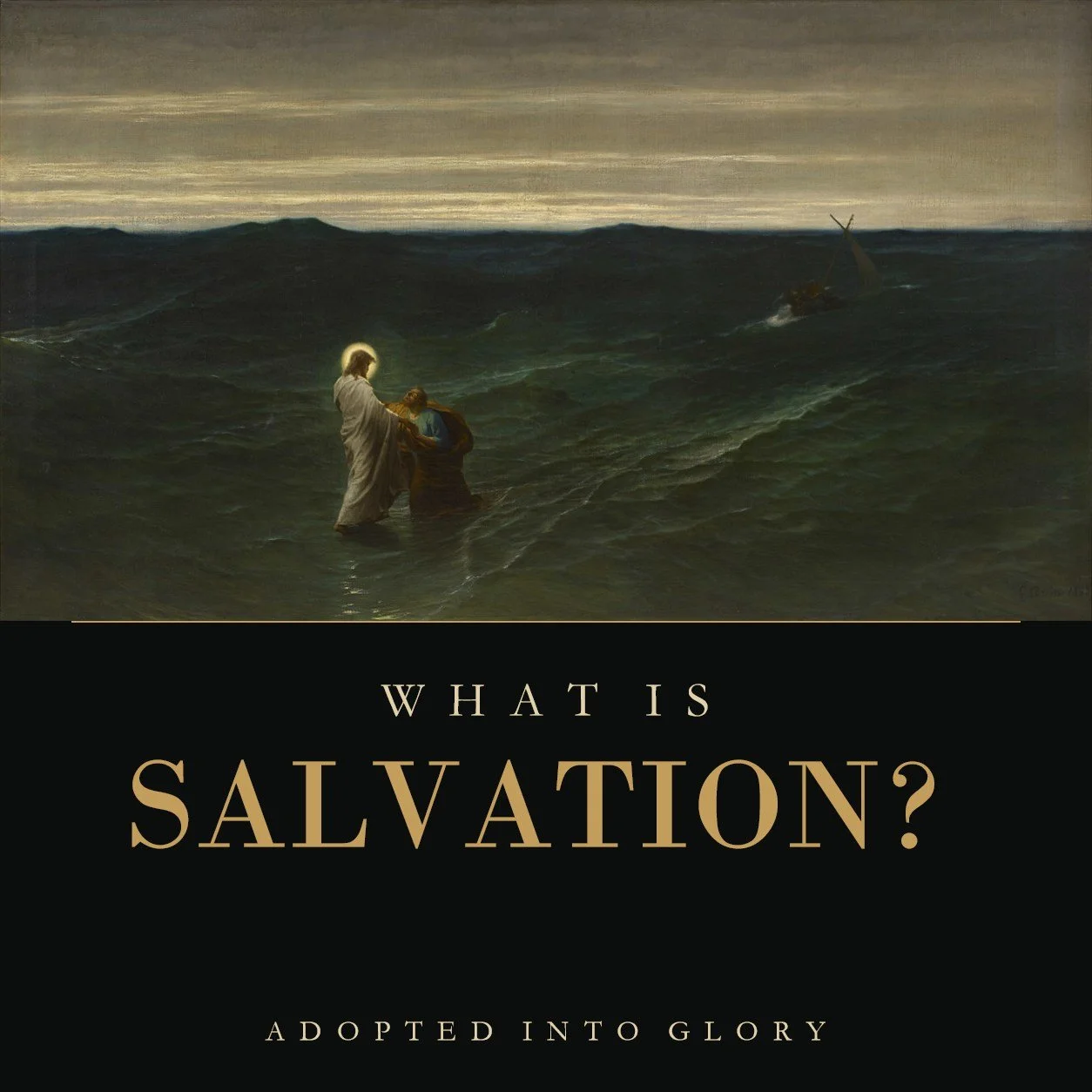
Psalm 107 describes people trapped in a violent storm. They cry to the Lord, and He stills the waves. In Mark 4:35–41, Jesus rebukes the wind and tells the sea to be silent. The storm immediately becomes calm.
The disciples respond:
“Who then is this? Even the wind and the sea obey him!”
Mark 4:41, CSB
That question is meant to send us back to Israel’s Scriptures.
In Job 9:8, God alone is described as stretching out the heavens and walking on the waves of the sea. In Mark 6:45–52, Jesus comes to the disciples walking on the water.
The Gospels are not presenting Jesus as another prophet asking God to calm the sea. Jesus commands creation directly.
The sea obeys Him.
Jesus Applied Daniel’s Divine Throne-Room Figure to Himself
At Jesus’ trial, the high priest asks whether He is the Messiah, the Son of the Blessed One.
Jesus responds:
“I am, and you will see the Son of Man seated at the right hand of Power and coming with the clouds of heaven.”
Mark 14:62, CSB
Jesus combines Psalm 110:1 with Daniel 7:13–14.
In Daniel, the “one like a son of man” comes with the clouds, approaches the Ancient of Days, and receives everlasting dominion over every people, nation, and language.
In the Old Testament, riding the clouds is imagery repeatedly associated with God (Psalm 68:4; Isaiah 19:1). Daniel’s Son of Man is distinct from the Ancient of Days, yet He receives everlasting dominion and the service of every nation.
Jesus identifies Himself with that figure and places Himself beside God’s throne.
The high priest tears his clothes and declares that Jesus has blasphemed.
The reaction of Jesus’ enemies does not prove their interpretation was correct. An accusation is not automatically evidence of guilt.
But Mark does not present this as a misunderstanding Jesus then corrects. The saying sits at the climax of the trial. Jesus deliberately uses enthronement, cloud-coming, and universal-authority language concerning Himself.
“Before Abraham Was, I Am”
John’s Gospel makes the claim even more explicit.
Jesus tells His opponents:
“Truly I tell you, before Abraham was, I am.”
John 8:58, CSB
Jesus does not merely say, “I existed before Abraham.” He uses the striking expression “I am.”
That language fits John’s larger presentation of Jesus and echoes the divine self-identification found throughout Isaiah, with Exodus 3:14 also standing in the background.
The crowd responds by picking up stones.
Scholars debate which Old Testament passage is the primary background. What is much harder to deny is that Jesus claims an existence preceding Abraham and expresses it through language John repeatedly associates with divine identity.
“I and the Father Are One”
In John 10, Jesus says His sheep receive eternal life from Him and that no one can snatch them from His hand.
He then says:
“I and the Father are one.”
His opponents prepare to stone Him because, as they explain, “you, being a man, make yourself God” (John 10:33).
Jesus answers by citing Psalm 82, where corrupt human rulers are called “gods.” Some claim this means Jesus backed away from His claim.
But read the whole argument.
Jesus’ argument moves from lesser to greater. If Scripture could use the word “gods” for those to whom God’s word came, how could His opponents charge the one sanctified and sent by the Father with blasphemy simply for calling Himself the Son of God?
Jesus then returns to the stronger claim:
“The Father is in me and I am in the Father.”
John 10:38, CSB
He did not say, “You are right. I am only an ordinary man.”
He exposed the weakness in their accusation and then returned to His unique unity with the Father.
That is not Jesus backing away from the claim.
Jesus Claimed Equal Honor With the Father
In John 5, Jesus calls God His own Father. John explains that His opponents understood Him to be “making himself equal to God” (John 5:18).
Jesus answers by describing His relationship with the Father.
The Son gives life to whomever He wants. The Son will raise the dead. The Son will execute final judgment. All people must honor the Son just as they honor the Father (John 5:19–23).
That last statement is staggering.
The prophets directed worship and honor away from themselves and toward God. Jesus says that refusing to honor Him is refusing to honor the Father who sent Him.
He does not compete with the Father. He shares the Father’s works, authority, and honor.
Thomas Calls Jesus God
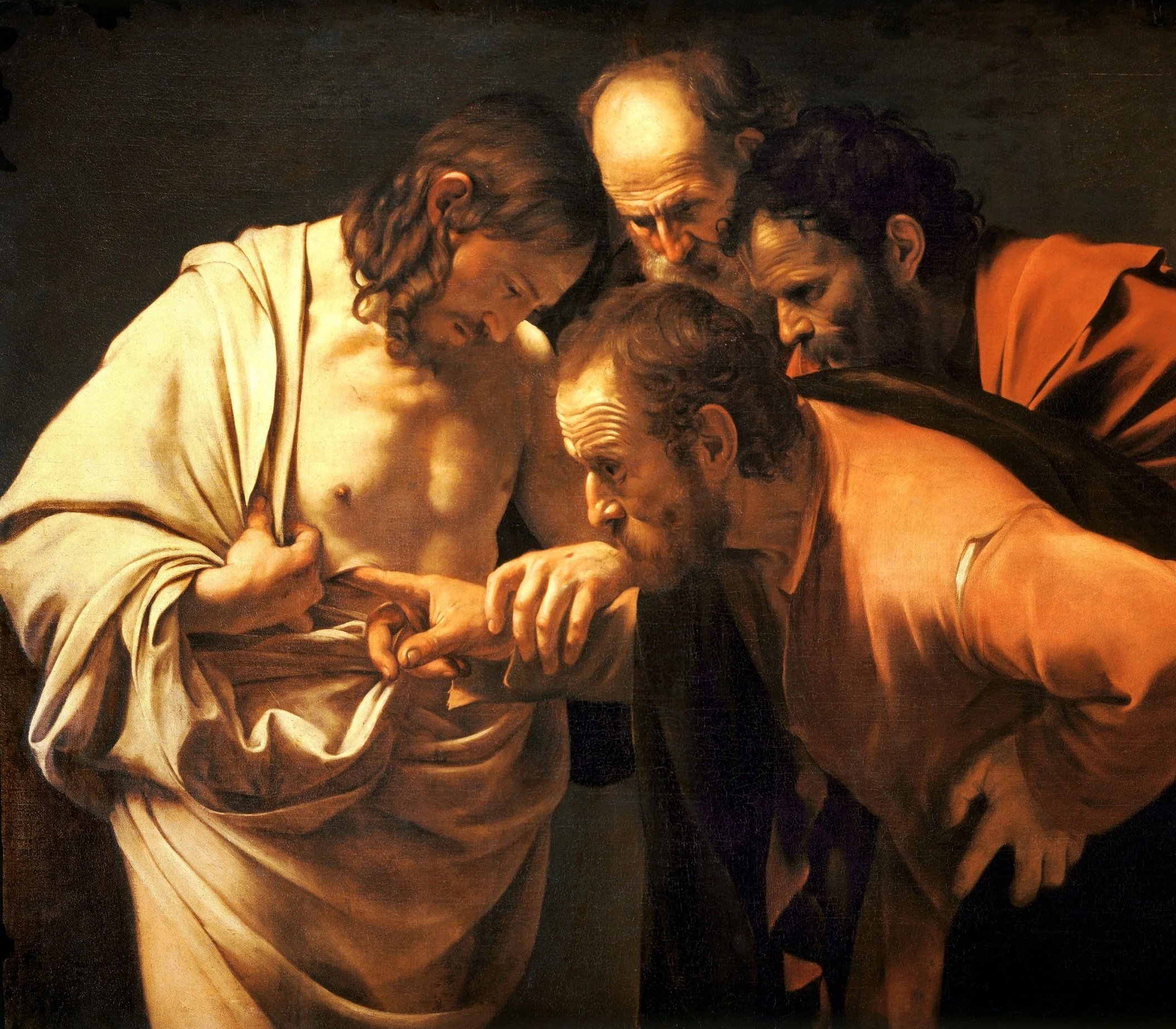
After the resurrection, Thomas sees Jesus and responds:
“My Lord and my God!”
John 20:28, CSB
Thomas directly addresses Jesus as “My Lord and my God.” Jesus accepts the confession and pronounces a blessing on those who will believe without seeing Him physically.
Elsewhere in the New Testament, Peter refuses the exalted honor Cornelius offers him, and an angel refuses John’s act of worship (Acts 10:25–26; Revelation 22:8–9).
Jesus does not correct Thomas or redirect his confession away from Himself.
John then says he recorded these signs so that his readers would believe Jesus is the Messiah, the Son of God, and have life in His name (John 20:30–31).
Thomas’s confession is not an accidental outburst. It is the climax of the Gospel.
This Belief Did Not Begin Centuries Later
Some people claim that Christians turned Jesus into God at the Council of Nicaea in AD 325.
That is historically indefensible.
Nicaea did not meet to decide whether Christians should begin treating Jesus as divine. Christians had worshiped Jesus long before AD 325. The controversy concerned how the Son relates to the Father and whether the Son is eternal, uncreated, and fully divine.
Paul’s letters were written more than two and a half centuries before Nicaea.
In 1 Corinthians 8:6, Paul adapts Israel’s confession that there is one God and includes both the Father and Jesus within it:
“Yet for us there is one God, the Father. All things are from him, and we exist for him. And there is one Lord, Jesus Christ. All things are through him, and we exist through him.”
New Testament scholar Richard Bauckham argues that Paul includes Jesus within the unique divine identity of the God of Israel.
Philippians 2:6–11 describes Jesus as existing in the form of God, humbling Himself, taking the form of a servant, and receiving the universal homage Isaiah says belongs to Yahweh (Isaiah 45:22–23).
These passages are earlier than the Gospel of John.
Early devotion to Jesus is not something we can push safely into the fourth century.
Around the beginning of the second century, Ignatius of Antioch referred to “Jesus Christ our God” and spoke of God appearing in human flesh. His letters are not Scripture, but they prove that explicit belief in Christ’s deity existed long before Nicaea.
What About “The Father Is Greater Than I”?
Jesus says, “The Father is greater than I” in John 14:28.
That does not erase everything John has already said.
The eternal Word became flesh. The Son entered human history as the Father’s commissioned servant. Philippians 2 describes this as genuine self-humiliation, not the loss of divine nature.
Jesus can therefore share the Father’s divine nature while willingly occupying a humbled and obedient position in the work of redemption.
But there is another important distinction.
“Greater” does not necessarily mean greater in being, power, or divine nature. It can describe relation and order.
The Father did not exist before the Son. There was never a time when the Father was without His Word. The Father is eternally Father because the Son is eternally Son.
Gregory of Nazianzus explained that “greater” can refer to the Father as the source or origin of the Son, while “equal” refers to their shared divine nature. In other words, the Father is greater with respect to relation, not greater in deity.
Gregory’s distinction was simple: the “greater” refers to origin, while the “equal” belongs to nature. He rejected the assumption that being greater in one respect means being greater in every respect. Gregory of Nazianzus, Theological Orations 29.15 and 30.7.
This fits the rest of John.
The Son does whatever the Father does (John 5:19). The Son gives life (John 5:21). All people must honor the Son just as they honor the Father (John 5:23). Jesus says, “I and the Father are one” (John 10:30), and “The Father is in me and I am in the Father” (John 10:38).
Equality of nature does not require sameness of relation.
John 14:28 is spoken within the context of Jesus’ incarnate mission, His relation to the Father, and His return to the glory He shared with the Father before the world existed (John 17:5).
Whatever “the Father is greater than I” means, it cannot reasonably mean that John suddenly denies everything he has affirmed throughout the rest of his Gospel.
What About Jesus Not Knowing the Hour?
In Mark 13:32, Jesus says:
“Now concerning that day or hour no one knows, neither the angels in heaven nor the Son, but only the Father.”
Mark 13:32, CSB
That is a serious text, and Christians should not dodge it.
One traditional explanation is that Jesus became genuinely human. Luke says He grew in wisdom (Luke 2:52). He became tired, hungry, and capable of suffering. The incarnation was not God pretending to be human.
Historic Christianity confesses that Jesus is one divine person who possesses both a fully divine nature and a fully human nature. In His humanity, Jesus possessed a genuinely human mind that grew in wisdom. At the same time, the divine nature of the Son did not stop being divine or cease to be omniscient.
That is one legitimate way Christians have understood the passage.
But there is another interpretation that deserves consideration.
The word translated “know” does not always have to mean that someone lacks information in his mind. Depending on the context, knowing can refer to declaring, disclosing, recognizing, or making something the focus of what one communicates.
Paul gives us a clear example:
“For I decided to know nothing among you except Jesus Christ and him crucified.”
1 Corinthians 2:2, CSB
Paul obviously knew more than one fact when he entered Corinth. He knew the Hebrew Scriptures, Jewish law, Greek culture, Christian doctrine, and the history of his own conversion.
When Paul says that he “decided to know nothing” except Christ crucified, he is not claiming that every other piece of information disappeared from his mind. He is describing what he was determined to proclaim and place at the center of his ministry.
That does not automatically prove that “know” has the same sense in Mark 13:32. But it does prove that we cannot simply assume every statement about “not knowing” describes a total absence of information.
Early Christian theologians recognized this possibility.
Augustine argued that the Son could be said not to know what He had not been commissioned to make known. The Son did not reveal the day to the disciples because it was not for them to know.
Basil of Caesarea also rejected the conclusion that the Father possessed knowledge entirely absent from the Son. He pointed to Jesus’ statement that “everything the Father has is mine” (John 16:15). If the Father possesses knowledge of the day, then that knowledge cannot be completely separated from the Son, who shares everything belonging to the Father. Basil of Caesarea, Letter 236.
Gregory of Nazianzus likewise asked how divine Wisdom, through whom the world was made, could know every event leading to the end while remaining ignorant of the hour itself. He understood the statement through the incarnation and the Son’s relation to the Father, not as proof that the Son lacked deity. Gregory of Nazianzus, Theological Oration 30.15–16.
There is also a meaningful wedding connection.
Throughout Scripture, Christ is presented as the bridegroom and His people as His bride. Jesus speaks of going to His Father’s house, preparing a place, returning, and receiving His people to Himself (John 14:2–3). In Matthew 25, the bride waits for the arrival of the bridegroom. Revelation ends with the marriage supper of the Lamb (Revelation 19:7–9).
Some interpreters connect Mark 13:32 with a traditional Jewish wedding picture in which the groom prepares a place in his father’s household and the father determines when the preparations are complete. The father then gives the word for the son to go and receive his bride.
That connection fits the biblical imagery beautifully: the Son prepares a place, the Father appoints the time, and the Son comes to receive His bride.
The exact claim that every first-century Jewish groom was forbidden from knowing the wedding day until his father said, “Go get your bride,” is not firmly established enough to carry the entire argument by itself. We should use it as a meaningful historical and biblical parallel, not pretend that the doctrine depends on proving one wedding custom.
The stronger point is already present in Scripture.
The Father appoints the time by His authority (Acts 1:7). The Son is the bridegroom who comes for His people (Matthew 25:1–13). The Son prepares a place in His Father’s house and returns to receive them (John 14:2–3).
Mark 13:32 may therefore concern not an absolute lack of knowledge in the Son, but the Father’s authority to appoint and announce the time within the order of redemption.
At minimum, the verse does not settle the question as easily as critics often pretend.
The same Gospel that records Jesus saying the Son does not know the hour also presents Him as the glorious Son of Man who comes with the clouds, gathers His elect, commands the angels, and exercises divine authority over the final judgment (Mark 13:26–27).
We must interpret the difficult statement within that complete picture.
“Why Do You Call Me Good?”
In Mark 10:18, Jesus asks the rich young ruler:
“Why do you call me good? No one is good except God alone.”
Jesus does not say, “I am not good,” or “I am not God.”
He challenges the man to think about the meaning of his own words. The man approaches Jesus as a teacher while using a description that, in the fullest sense, belongs to God.
The question is not a denial. It is an invitation to follow the logic.
If only God is good in the ultimate sense, what does it mean to call Jesus good?
This verse is not a complete argument for Jesus’ deity by itself. But it certainly cannot be used as proof that Jesus denied being God.
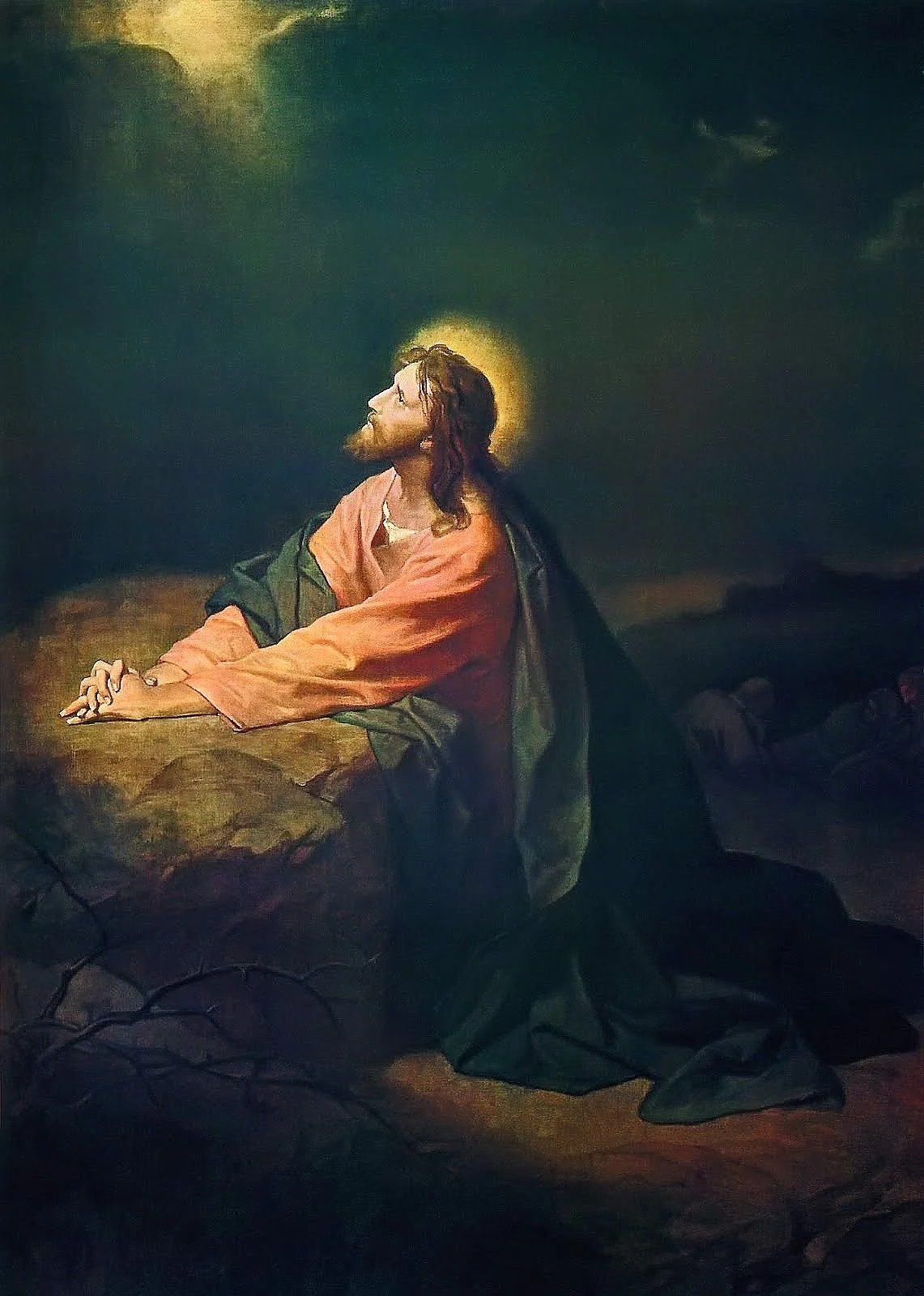
Why Did Jesus Pray?
Because He is the Son, not the Father, and because He became truly human.
The Father and Son did not begin relating to each other when Jesus was born in Bethlehem.
John says the Word was with God in the beginning (John 1:1–2). Jesus speaks of the glory He shared with the Father before the world existed (John 17:5). He also says the Father loved Him before the foundation of the world (John 17:24).
The Father and Son have eternally existed in loving communion.
When the Son became human, that eternal communion was expressed within a genuinely human life. For a truly human life, communion with God looks like prayer, thanksgiving, worship, trust, and obedience.
Prayer demonstrates personal relationship and distinction. It does not prove inferiority of nature.
If Christianity teaches that the Father and Son are distinct persons who have eternally known and loved one another, then communication between them is exactly what we should expect.
Unless someone expected Jesus to become human and suddenly stop speaking to the Father, His prayers are not an argument against the Trinity. They fit the doctrine perfectly.
Jesus even explains that some of His public prayers were spoken for the sake of the people listening:
“Father, I thank you that you heard me. I know that you always hear me, but because of the crowd standing here I said this, so that they may believe you sent me.”
John 11:41–42, CSB
Jesus’ prayers reveal communion, distinction, mission, and genuine humanity.
The Son’s obedience also matters because He came as the new Adam and faithful representative of humanity. Where Adam rebelled, Christ obeyed (Romans 5:12–19; Philippians 2:8).
His prayers are not embarrassing evidence Christians forgot to remove. They are part of the doctrine Christians actually confess.
Because He is the Son, not the Father, and because He became truly human.
The Father and Son did not begin relating to each other when Jesus was born in Bethlehem.
John says the Word was with God in the beginning (John 1:1–2). Jesus speaks of the glory He shared with the Father before the world existed (John 17:5). He also says the Father loved Him before the foundation of the world (John 17:24).
The Father and Son have eternally existed in loving communion.
When the Son became human, that eternal communion was expressed within a genuinely human life. For a truly human life, communion with God looks like prayer, thanksgiving, worship, trust, and obedience.
Prayer demonstrates personal relationship and distinction. It does not prove inferiority of nature.
If Christianity teaches that the Father and Son are distinct persons who have eternally known and loved one another, then communication between them is exactly what we should expect.
Unless someone expected Jesus to become human and suddenly stop speaking to the Father, His prayers are not an argument against the Trinity. They fit the doctrine perfectly.
Jesus even explains that some of His public prayers were spoken for the sake of the people listening:
“Father, I thank you that you heard me. I know that you always hear me, but because of the crowd standing here I said this, so that they may believe you sent me.”
John 11:41–42, CSB
Jesus’ prayers reveal communion, distinction, mission, and genuine humanity.
The Son’s obedience also matters because He came as the new Adam and faithful representative of humanity. Where Adam rebelled, Christ obeyed (Romans 5:12–19; Philippians 2:8).
His prayers are not embarrassing evidence Christians forgot to remove. They are part of the doctrine Christians actually confess.
Did the Historical Jesus Say All of This?
Scholars disagree about how much of John’s wording preserves Jesus’ exact phrasing and how much reflects John’s theological presentation of His words.
That disagreement should be acknowledged.
Bart Ehrman, for example, argues that John presents Jesus’ deity much more explicitly than the Synoptic Gospels. He has also acknowledged that his earlier claim that the Synoptics do not present Jesus as divine needed qualification.
We do not need to pretend every scholar accepts every saying as verbatim.
But skepticism about John does not make the Synoptic evidence disappear.
Jesus forgives sins, claims lordship over the Sabbath, commands creation, identifies Himself with Daniel’s heavenly Son of Man, and claims authority over humanity’s final destiny.
Then the earliest Christian writings we possess include Jesus within Jewish monotheistic worship and language.
No single passage has to carry the entire case. The evidence builds across different authors, events, claims, actions, and forms of worship.
The Real Choice
A person can reject Jesus’ claims.
A person can argue that the Gospel writers misunderstood Him.
We can debate either position.
What does not work is pretending the New Testament merely presents Jesus as a good moral teacher who never made divine claims. That version of Jesus is extremely difficult to find in our earliest Christian sources.
The Jesus of the New Testament does not leave us with admiration alone. He forgives sins, commands creation, raises the dead, judges humanity, receives divine honor, and demands our allegiance.
The question is not merely whether Jesus pronounced one modern sentence.
The question is who He understood Himself to be and who the earliest witnesses believed they had encountered.
The New Testament’s answer is clear:
The Word became flesh.
The Lord entered His creation.
And Jesus Christ is worthy of the honor belonging to God.
Sources
The Holy Bible, Christian Standard Bible: Exodus 3; Daniel 7; Psalm 107; Mark 2, 4, 6, 10, 13–14; John 1, 5, 8, 10–11, 14, 16–17, 20; Acts 1; Romans 5; 1 Corinthians 2, 8; Philippians 2; Hebrews 1; Revelation 19.
Richard Bauckham, Jesus and the God of Israel.
Larry W. Hurtado, Lord Jesus Christ: Devotion to Jesus in Earliest Christianity.
N. T. Wright, Jesus and the Victory of God.
Bart D. Ehrman, How Jesus Became God.
Richard B. Hays, Reading Backwards: Figural Christology and the Fourfold Gospel Witness.
Craig S. Keener, The Gospel of John: A Commentary.
Raymond E. Brown, The Gospel According to John.
Gregory of Nazianzus, Theological Oration 29, especially section 15.
Gregory of Nazianzus, Theological Oration 30, especially sections 7 and 15–16.
Augustine of Hippo, On the Trinity, 1.12.23.
Ignatius of Antioch, Letter to the Ephesians, especially chapters 7 and 18–19.
Athanasius, On the Incarnation.
Continue Exploring