Who Is Jesus?
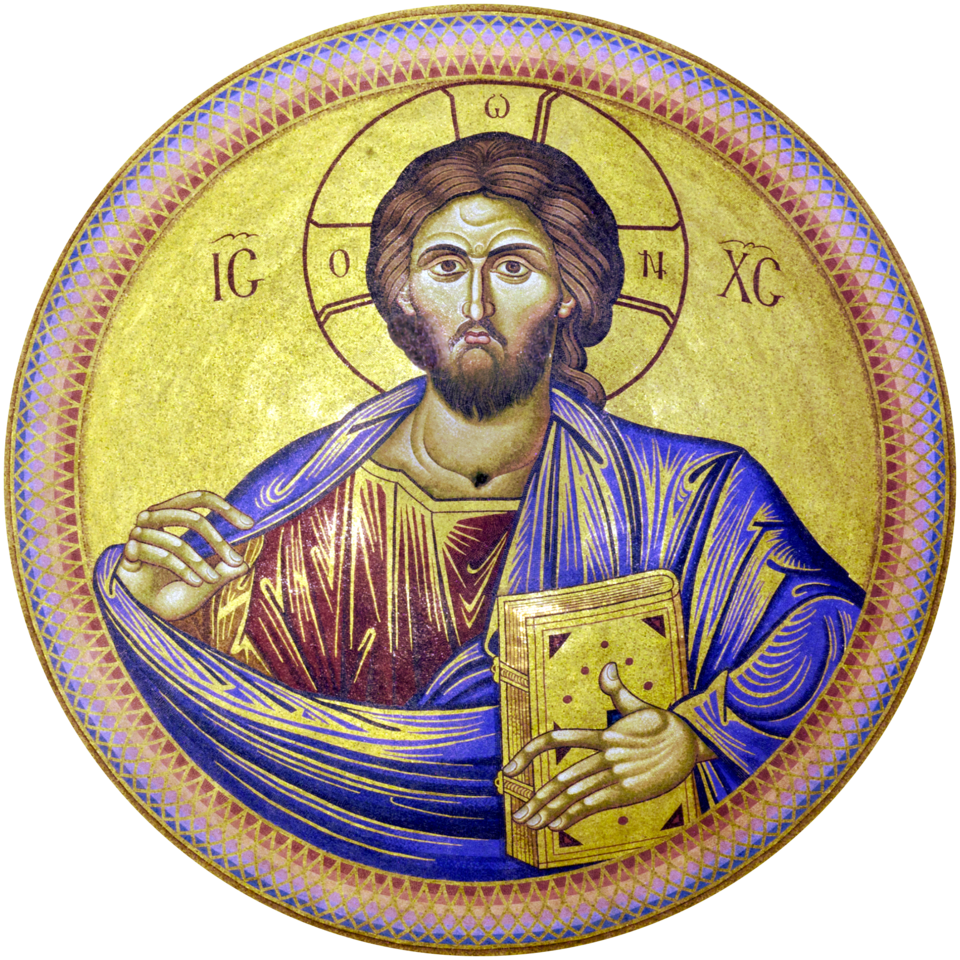
Christ Pantocrator, depicting Jesus as the sovereign Lord and ruler of all. Andrew Shiva / Wikipedia
The Man at the Center of Christianity
Christianity is not ultimately built around a philosophy, a moral system, or a list of religious rules.
It is built around a person.
Jesus of Nazareth lived in first-century Israel, gathered disciples, taught with unusual authority, performed works that His followers understood as signs from God, was crucified under Pontius Pilate, and was proclaimed alive again after His death.
But Christianity makes an even greater claim.
Jesus was not merely a teacher sent by God.
He was God the Son who entered His own creation, took on a human nature, died for sinners, rose from the dead, and now reigns as Lord.
That claim deserves to be examined.
Who did Jesus claim to be?
What did His earliest followers believe about Him?
Why was He crucified?
And why does His identity still matter today?
Jump to a Section
Jesus Claimed Divine Authority
Jesus Was a Real Person
Before discussing whether Jesus is God, we should establish something more basic.
Jesus was a real historical person.
His existence is recorded in the New Testament writings, but He is also mentioned by ancient writers outside Christianity.
The Roman historian Tacitus wrote that Christus was executed during the reign of Tiberius by order of Pontius Pilate. The Jewish historian Josephus also referred to James as “the brother of Jesus, who was called Christ.”
These writers were not Christian evangelists trying to spread the Gospel. Their references confirm basic details already found in the New Testament: Jesus existed, He was known as the Christ, He was executed under Pontius Pilate, and His followers continued spreading His message afterward.
The serious historical question is not whether Jesus existed.
The question is what best explains who He was.
Jesus Was Fully Human
Jesus was not God pretending to be human.
He truly became human.
He was born. He became tired. He experienced hunger and thirst. He felt grief, compassion, distress, and physical pain.
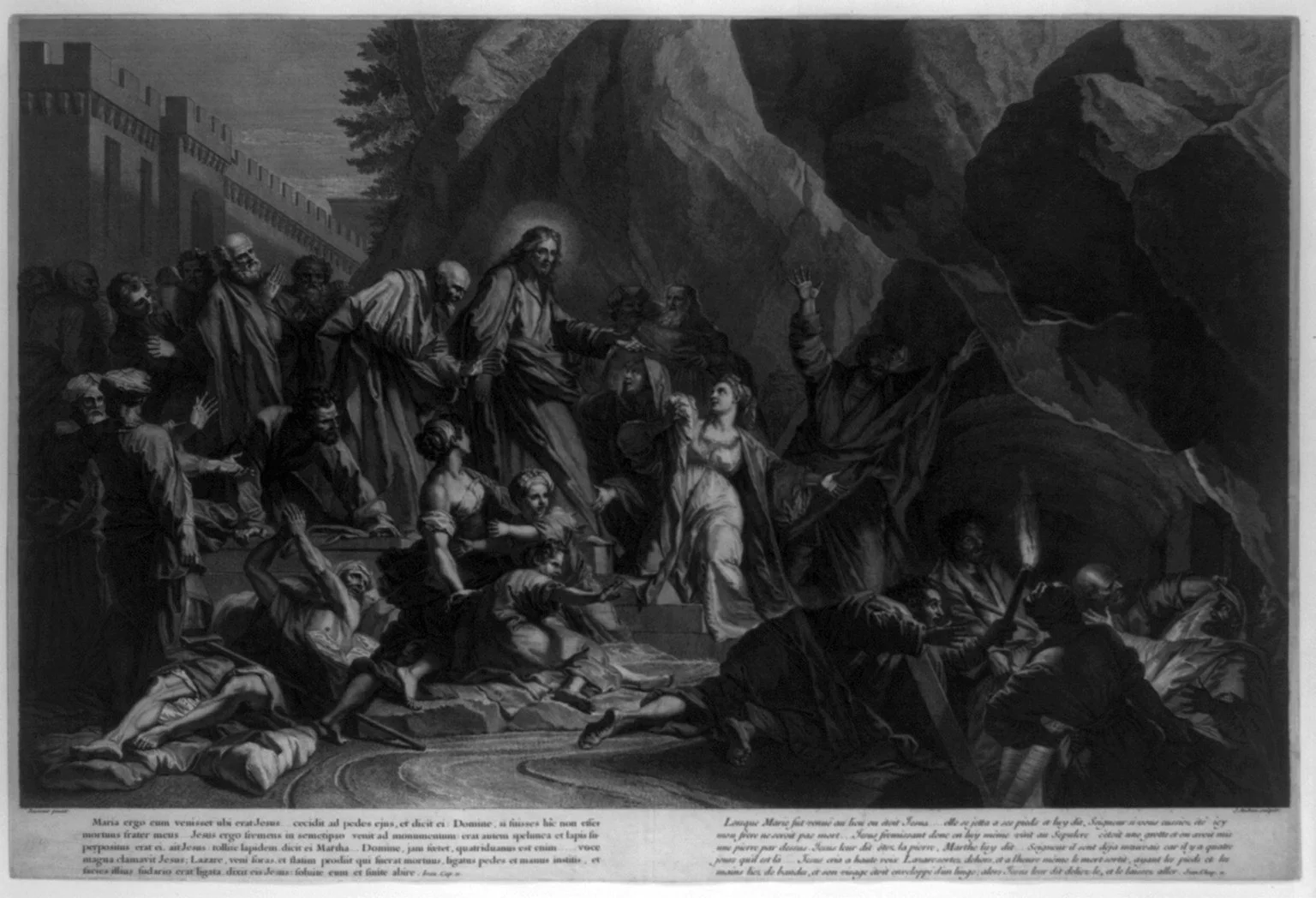
Audran, Jean, 1667-1756, engraver; Jouvenet, Jean, 1644-1717, artist, Public domain, via Wikimedia Commons
Jesus did not merely appear human. He entered human grief, wept with those who mourned, and stood face-to-face with death.
He experienced temptation, yet remained without sin.
He prayed to the Father, obeyed the Father, and lived the human life that we have failed to live.
The eternal Son did not stop being God when He became man. He took on a complete human nature.
As John 1:14 says:
“The Word became flesh and dwelt among us.”
God did not save humanity from a distance.
He entered our suffering.
He walked among the poor, touched those whom society rejected, ate with sinners, confronted hypocrisy, wept with the grieving, and allowed human hands to nail Him to a cross.
Jesus Was More Than a Prophet
Many people are willing to call Jesus a prophet, a moral teacher, or a good man.
But those descriptions are not enough.
Jesus certainly spoke as a prophet, but He did not speak like someone who was merely delivering another person’s message.
The prophets often said, “This is what the Lord says.”
Jesus repeatedly said:
“But I tell you.”
He taught with authority belonging to Him personally.
He did not merely tell people how to find eternal life. He said that eternal life was found in Him.
Jesus declared:
“I am the way, the truth, and the life. No one comes to the Father except through me.”
That statement is found in John 14:6.
A prophet points away from himself and toward God.
Jesus pointed people toward Himself.
He said that a person’s eternal destiny depended upon their response to Him. He claimed authority over the Sabbath, authority to judge humanity, authority to give eternal life, and authority to forgive sins.
Those are not the claims of an ordinary religious teacher.
Jesus Claimed Divine Authority
Jesus did not need to walk through Jerusalem repeating the modern English sentence, “I am God,” to claim deity.
He made that claim within a first-century Jewish context.
In Mark 2:1–12, a paralyzed man was brought before Jesus.
Instead of immediately healing him, Jesus said:
“Son, your sins are forgiven.”
The religious teachers understood the significance of this. They asked:
“Who can forgive sins but God alone?”
Jesus did not correct their theology.
Instead, He healed the man to demonstrate that He possessed the authority He had claimed.
In John 8:58, Jesus said:
“Before Abraham was, I am.”
He did not merely say that He existed before Abraham.
He used language that pointed back to God’s self-revelation in Exodus 3:14.
The people listening understood what He was claiming. They picked up stones to kill Him.
In John 10:30–39, Jesus said:
“I and the Father are one.”
Once again, His opponents attempted to stone Him because, in their words:
“You, being a man, make yourself God.”
Jesus also accepted worship.
After seeing the risen Christ, Thomas declared:
“My Lord and my God!”
Jesus did not rebuke him. He affirmed his belief.
Jesus’ identity was not something Christians slowly invented centuries later.
It is woven throughout the earliest Christian message.
The Son of God and the Son of Man
Jesus frequently called Himself the Son of Man.
That title can sound like a simple way of saying that He was human. But Jesus was drawing from the vision in Daniel 7:13–14.
Daniel saw someone “like a son of man” coming with the clouds of heaven. He was given everlasting dominion, glory, and a kingdom. Every people and nation would serve Him.
Coming with the clouds was imagery associated with God’s authority and presence.
When Jesus used this title during His trial, He declared that His accusers would see the Son of Man seated at the right hand of Power and coming with the clouds of heaven.
The high priest responded by accusing Him of blasphemy.
Jesus also called Himself the Son of God.
This does not mean that God physically produced Jesus or that Jesus was created sometime before the universe.
The Son eternally shares the divine nature with the Father while remaining personally distinct from the Father.
Christianity teaches one God who eternally exists as three persons: the Father, the Son, and the Holy Spirit.
Jesus is not the Father.
Jesus is not the Holy Spirit.
But Jesus is fully God.
As John 1:1–3 says:
“In the beginning was the Word, and the Word was with God, and the Word was God.”
The Word was with God, showing personal distinction.
The Word was God, showing His divine nature.
John then identifies this eternal Word as Jesus Christ, the Word who became flesh.
Why Did Jesus Come?
Jesus did not come merely to give us better advice.
Our deepest problem is not a lack of information.
It is sin.
Sin is not only doing things that society considers especially terrible. It is the rejection of God’s rightful authority over our lives.
We lie, lust, hate, manipulate, envy, worship created things, and place ourselves at the center of reality.
Our sin separates us from the holy God who gave us life.
Jesus came to save sinners.
He said in Mark 10:45:
“The Son of Man did not come to be served, but to serve, and to give his life as a ransom for many.”
He came to reveal the Father, announce God’s kingdom, destroy the works of the devil, call sinners to repentance, and give His life in their place.
The one through whom creation was made entered creation to rescue it.
Colossians 1:15–20 describes Jesus as the image of the invisible God. Everything was created through Him and for Him, and everything is held together by Him.
Yet the Creator willingly entered His creation and allowed Himself to be rejected by it.
Why Was Jesus Crucified?
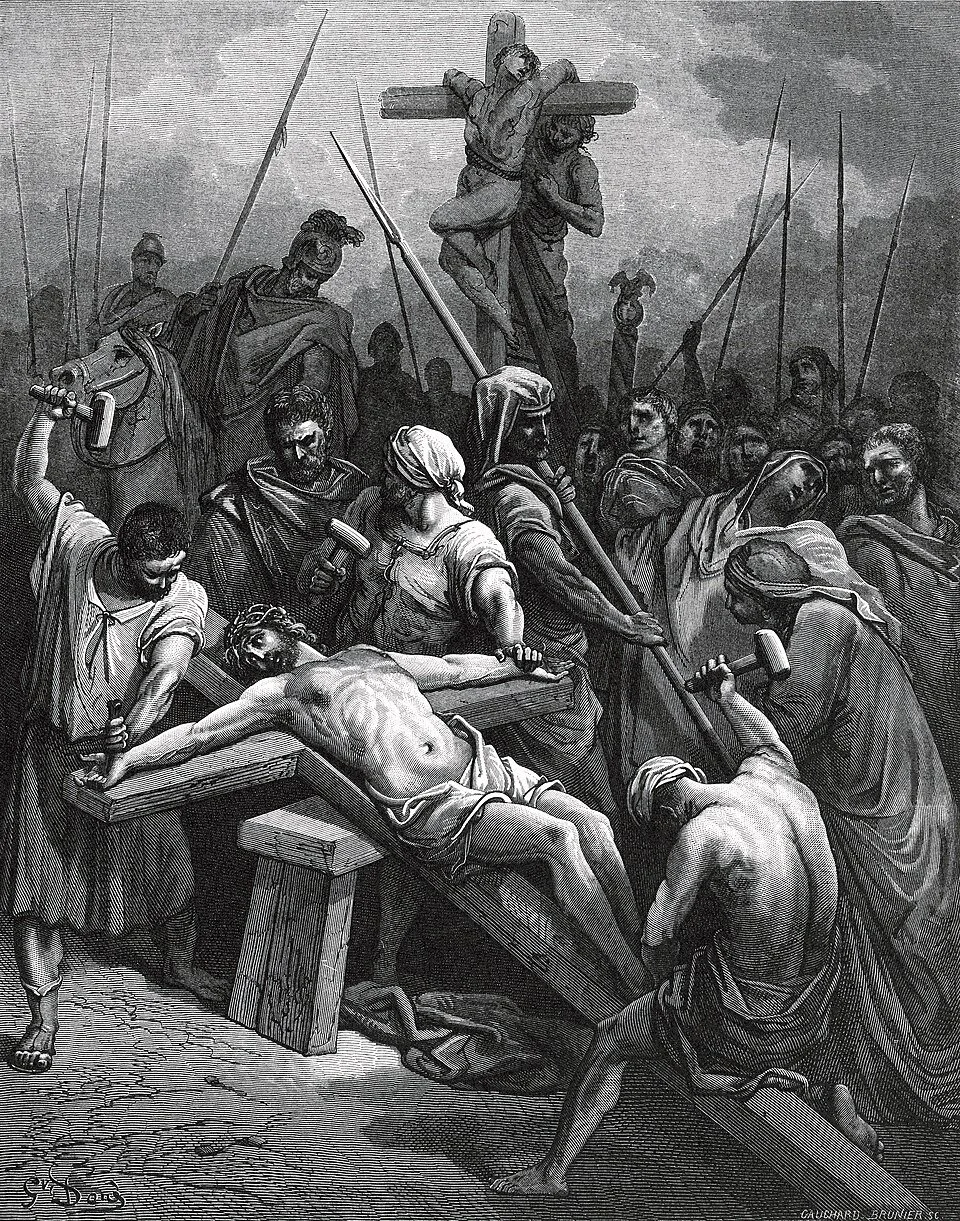
Jesus was crucified under Pontius Pilate.
But His death was not merely the unfortunate ending of a failed religious movement.
Jesus willingly gave His life.
Humanity has sinned against God, and justice cannot simply pretend that evil does not matter.
At the cross, Jesus stood in the place of sinners.
He carried the judgment we deserved so that we could receive the grace we did not deserve.
Isaiah 53 describes the suffering servant who would be pierced because of our rebellion and crushed because of our iniquities.
Centuries later, Jesus identified His mission with that suffering servant.
The cross shows both the seriousness of sin and the depth of God’s love.
God did not save us by lowering His standard of justice.
He satisfied justice Himself.
Jesus was not forced onto the cross against His will. The Father sent the Son, and the Son willingly laid down His life in perfect unity with the Father.
As Jesus said in John 10:18:
“No one takes it from me, but I lay it down on my own.”
Jesus Rose From the Dead
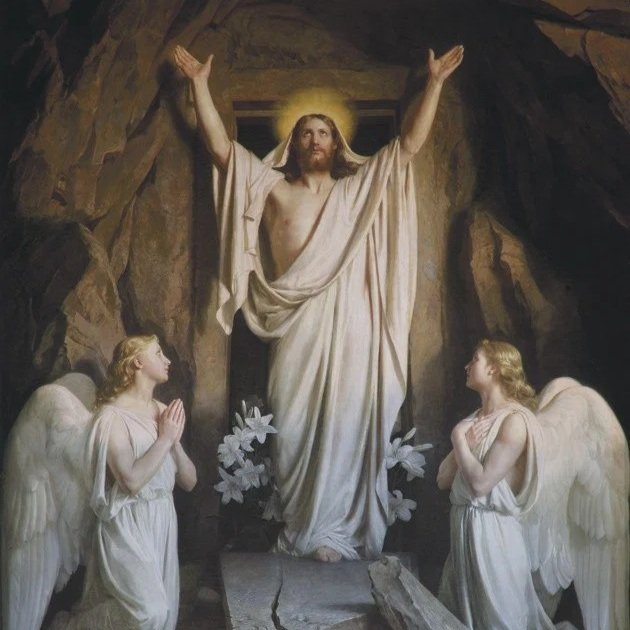
Carl Bloch, Public domain, via Wikimedia Commons
If Jesus remained dead, Christianity would collapse.
The apostle Paul openly admitted this in 1 Corinthians 15:14–19.
If Christ was not raised, Christian preaching is empty, faith is worthless, the apostles were false witnesses, sin remains undefeated, and those who died trusting Christ are lost.
Christianity does not present the resurrection as a metaphor for hope.
It claims that Jesus physically rose from the dead.
The earliest Christians proclaimed that Jesus died for sins, was buried, rose on the third day, and appeared to His followers.
They did not begin preaching this message in some distant country where nobody could investigate it.
They proclaimed it in the same region where Jesus had been publicly crucified.
The resurrection vindicated Jesus’ claims.
Death could not hold Him because He is the Lord of life.
Jesus did not merely return to ordinary life only to die again later. He rose in a glorified body, victorious over death.
Because He lives, those who belong to Him will also live.
Who Is Jesus to You?
Jesus once asked His disciples:
“Who do you say that I am?”
That question still stands.
It is not enough to say that Jesus was influential.
It is not enough to admire His compassion while rejecting His authority.
It is not enough to call Him a good teacher while ignoring what He taught about Himself.
Jesus does not leave us with the option of treating Him as a harmless spiritual guide.
He claimed the authority of God.
He claimed the right to forgive sins.
He claimed that eternal life is found in Him.
He accepted worship.
He predicted His death and resurrection.
Then He rose from the dead.
Jesus is the eternal Son of God, fully divine and fully human.
He is the promised Messiah.
He is the image of the invisible God.
He is the Creator who entered creation.
He is the Savior who died for sinners.
He is the risen Lord who conquered death.
And He is the King before whom every knee will bow.
Philippians 2:5–11 says that although Jesus existed in the form of God, He humbled Himself by taking the form of a servant and becoming obedient to death on a cross.
Because of this, God highly exalted Him:
“At the name of Jesus every knee will bow… and every tongue will confess that Jesus Christ is Lord.”
Jesus does not merely ask to become one part of your life.
He calls you to turn from sin, trust in Him, and follow Him as Lord.
The question is not only whether you know facts about Jesus.
The question is whether you know Him.
Sources and Further Reading
Scripture
Ancient Historical Sources
Tacitus, Annals, Book 15 — Refers to Christus being executed under Pontius Pilate during the reign of Tiberius.
Flavius Josephus, Jewish Antiquities, Book 20.200 — Refers to James as the brother of Jesus, who was called Christ.
Pliny the Younger, Letters, Book 10.96–97 — Describes early Christians gathering and singing hymns to Christ.
Suetonius, The Twelve Caesars, “Claudius” 25 — Describes disturbances connected with “Chrestus,” often discussed in relation to the early Christian movement.
Recommended Books
Richard Bauckham, Jesus and the Eyewitnesses
Craig S. Keener, The Historical Jesus of the Gospels
Michael F. Bird, How God Became Jesus
N. T. Wright, The Resurrection of the Son of God
Brant Pitre, The Case for Jesus
Larry W. Hurtado, Lord Jesus Christ
Robert M. Bowman Jr. and J. Ed Komoszewski, Putting Jesus in His Place
Craig L. Blomberg, The Historical Reliability of the Gospels