Did Jesus Really Rise From the Dead?
Christianity does not ask us to believe that Jesus’ teachings somehow survived after His death.
It makes a much more dangerous claim.
Jesus of Nazareth was crucified, died, was buried, and then physically rose from the dead.
Paul understood exactly how much rested on this. He said that if Christ has not been raised, Christian preaching is empty, Christian faith is worthless, the apostles are false witnesses, sin remains undefeated, and dead Christians are lost (1 Corinthians 15:14–19).
Christianity does not hide its central claim from examination. Paul puts it directly in front of us and tells us what follows if it is false.
So what does the evidence actually show?
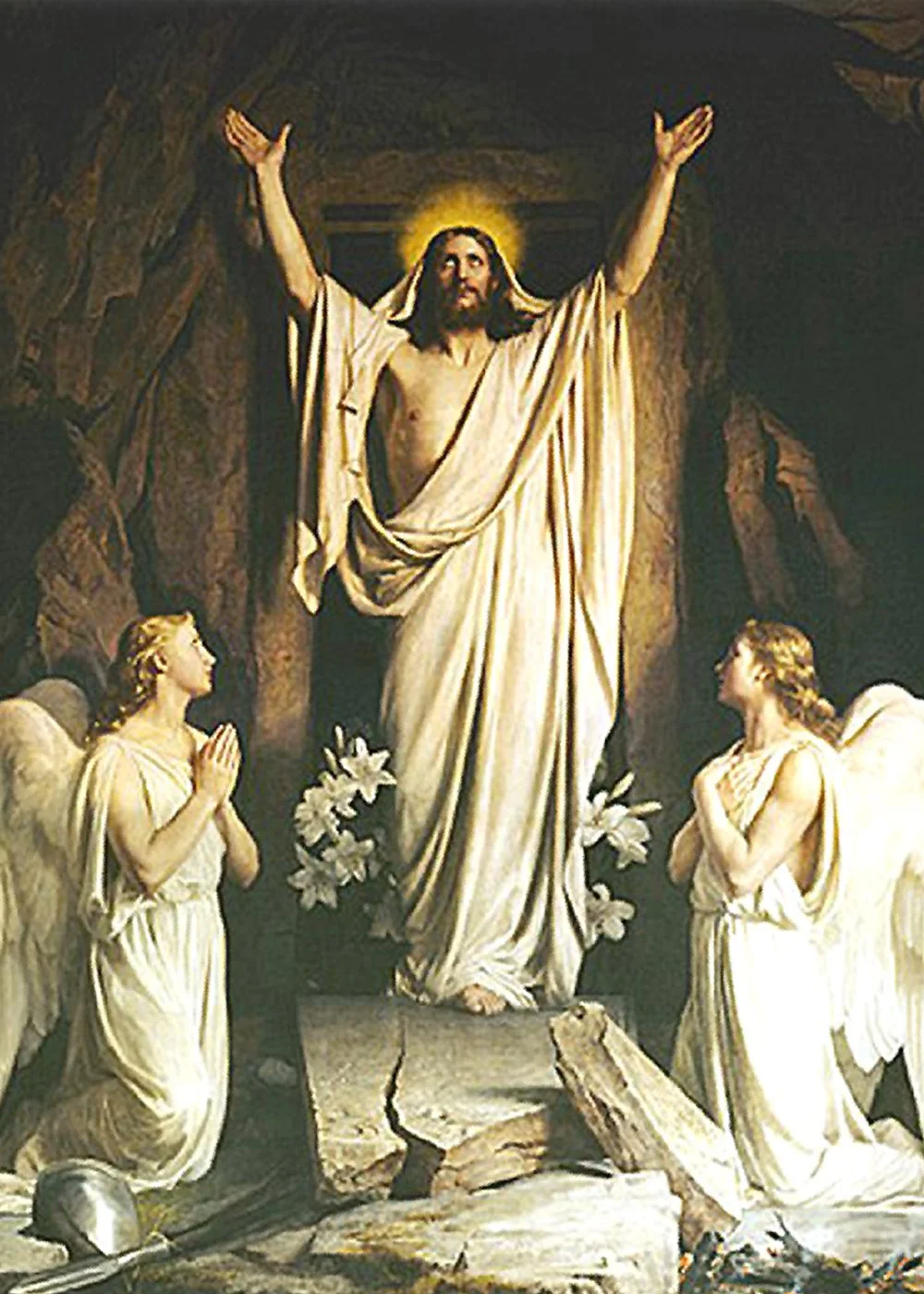
The Resurrection, Carl Heinrich Bloch. Public domain.
What History Can and Cannot Do
History studies events by examining testimony, documents, context, explanatory power, and competing hypotheses.
It cannot put the resurrection into a laboratory and repeat it.
But history cannot repeat the assassination of Julius Caesar either. Historical reasoning deals with traces left by unrepeatable events.
Some historians exclude miracles as historical explanations because historical method normally seeks natural causes. That may be a practical rule for doing ordinary history, but it does not prove that miracles cannot occur.
That would be circular:
Miracles cannot be considered historical explanations.
Therefore, no historical evidence can support a miracle.
Therefore, miracles never happen in history.
The conclusion was built into the method before the evidence was even considered.
At the same time, Christians cannot say, “The Bible says it, so every historian must accept it.” The biblical documents must be examined as historical sources, and alternative explanations must be taken seriously.
The question is which explanation makes the best sense of the evidence we possess.
Jesus Died by Roman Crucifixion
Jesus’ death by Roman crucifixion under Pontius Pilate is one of the least disputed facts concerning His life.
All four Gospels report it, and Paul repeatedly refers to it. The Roman historian Tacitus says Christus suffered the extreme penalty during the reign of Tiberius at the hands of Pontius Pilate (Annals 15.44). Josephus also connects Jesus with execution under Pilate, although the surviving passage has disputesand must be handled carefully.
Roman crucifixion was designed to kill.

The Body of the Dead Christ in the Tomb, Hans Holbein the Younger, c. 1521. Public domain.
Theories suggesting that Jesus merely fainted have to explain how a severely scourged and crucified man survived, escaped or was released unnoticed, appeared to His disciples in a condition they interpreted as glorious victory over death, and then disappeared.
A half-dead Jesus in need of immediate medical care would not have convinced His followers that He had conquered death.
He might have convinced them He had narrowly escaped it.
The Earliest Resurrection Tradition Is Very Early
One of the most important texts is not found in the Gospels. It is in one of Paul’s undisputed letters:
“For I passed on to you as most important what I also received: that Christ died for our sins according to the Scriptures, that he was buried, that he was raised on the third day according to the Scriptures, and that he appeared to Cephas, then to the Twelve.”
Paul uses the language of receiving and passing on tradition. Most scholars therefore recognize that these lines contain material Paul received from other Christians rather than invented while writing 1 Corinthians around the mid-AD 50s.
Paul visited Peter and James in Jerusalem within a few years of his conversion (Galatians 1:18–19). This places him in direct contact with two central people named in the resurrection tradition.
Many scholars date the tradition extremely early, sometimes within a few years of the crucifixion. The exact date cannot be demonstrated with mathematical precision, and scholars dispute whether Paul received its final wording in Jerusalem, Damascus, or somewhere else.
We should not turn a probable early date into a manufactured certainty.
What we can say is that belief in Jesus’ death, burial, resurrection, and appearances existed before Paul wrote 1 Corinthians. It belongs to the earliest recoverable layers of Christianity.
That leaves very little time for the basic resurrection proclamation to grow out of a centuries-long legend.
The Disciples Believed Jesus Appeared to Them
Paul names appearances to Peter, the Twelve, more than five hundred people, James, all the apostles, and finally Paul himself (1 Corinthians 15:5–8).
The list does not give us every detail. Paul does not explain where the appearance to the five hundred happened or provide their names. We cannot claim information he never gives us.
But several points matter.
First, Paul personally knew Peter and James.
Second, Paul presents his own experience as belonging to the same general sequence of appearances.
Third, Paul distinguishes Christ’s death, burial, resurrection, and appearances. “He was raised” is not simply another way of saying that the disciples felt inspired after His death.
Even skeptical scholars commonly accept that at least some of Jesus’ followers had experiences they interpreted as appearances of the risen Jesus.
Bart Ehrman argues for visionary experiences rather than a bodily resurrection. He nevertheless recognizes Peter’s experience as an important catalyst for resurrection belief.
So the main dispute is not between “the disciples experienced something” and “nothing happened.” The dispute is over what best explains their experiences and the resulting belief.
Paul Was Not Expecting to Meet Jesus
Paul was not an emotionally devastated disciple desperately hoping Jesus would return.
He was a persecutor of the Church.
Paul admits this in Galatians 1:13–23, 1 Corinthians 15:9, and Philippians 3:4–8. Acts also makes his persecution of the Church a major part of its narrative.
Something transformed Paul from an opponent of the Christian movement into one of its most influential missionaries.
Paul’s own explanation is direct:
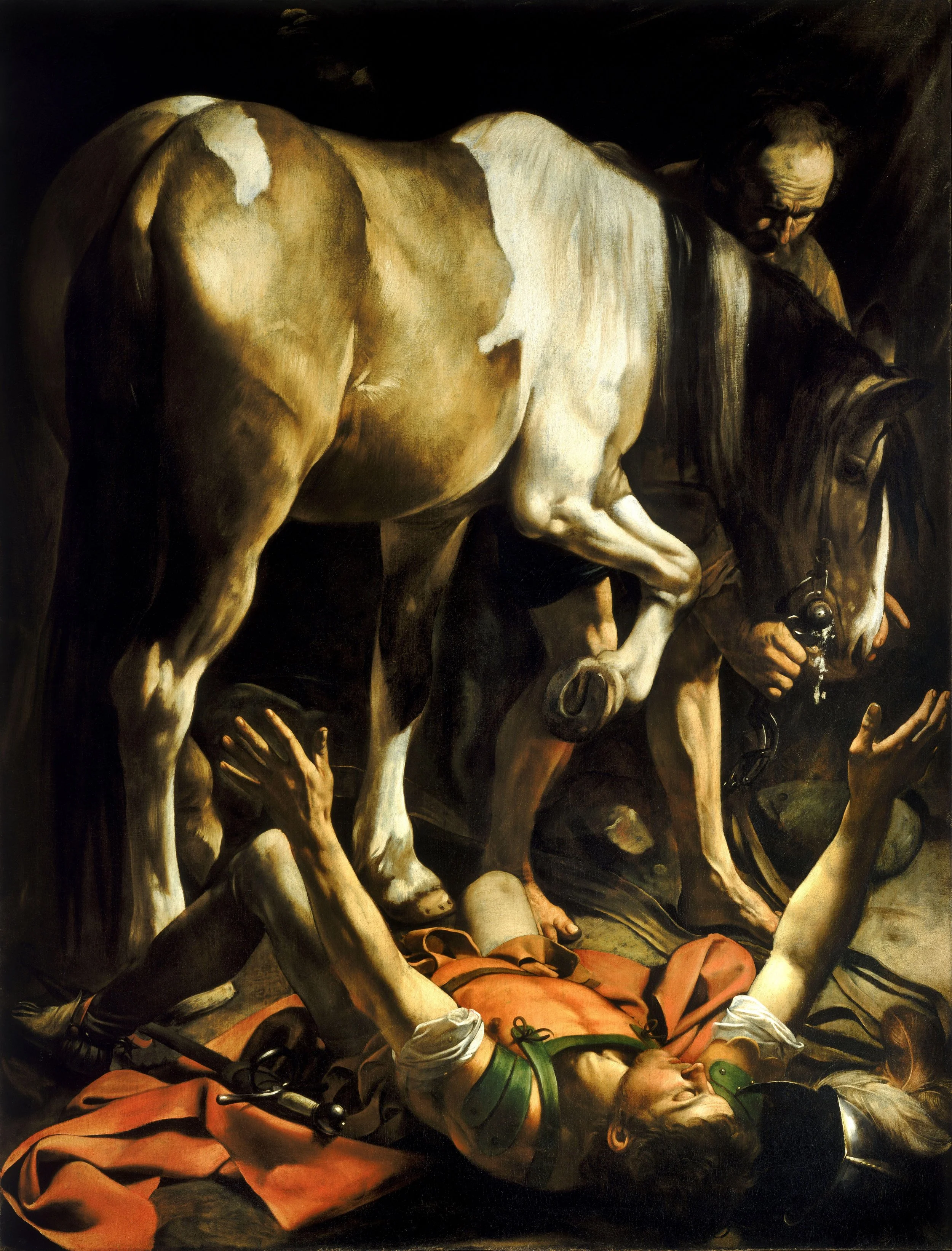
“Last of all, as to one born at the wrong time, he also appeared to me.”
A person can argue that Paul experienced a vision generated by his mind. But that is an explanation of the evidence, not a dismissal of it.
It still has to account for why a committed opponent experienced precisely the kind of event that overturned his previous convictions and redirected the rest of his life.
James Also Became a Believer
John explicitly says Jesus’ brothers did not believe in Him during His ministry (John 7:5). Mark also depicts serious tension between Jesus and His family, who came to restrain Him and later stood outside asking for Him (Mark 3:20–21, 31–35).
Yet after the crucifixion, James appears as a leader in the Jerusalem church (Galatians 1:19; 2:9; Acts 15).
Paul specifically reports an appearance to James in 1 Corinthians 15:7.
Josephus later reports the execution of “James, the brother of Jesus who was called Christ” in Antiquities 20.200. Unlike the longer Josephus passage concerning Jesus, this reference is widely regarded as authentic.
James’s conversion does not prove the resurrection by itself. People can change their beliefs for many reasons.
But it belongs in the cumulative case. Paul’s early account identifies an appearance to James, and James subsequently emerges as a central leader among the people proclaiming that Jesus rose.
What About the Empty Tomb?
All four Gospels report that women discovered Jesus’ tomb empty.

The Holy Women at the Tomb, William-Adolphe Bouguereau, 1890. Public domain.
There are several reasons historians consider this tradition significant.
The burial and empty-tomb accounts are tied to named individuals, including Joseph of Arimathea and several women. The women are not anonymous symbols added only to make a theological point.
Women could testify in ancient Jewish contexts, so it is misleading to say their testimony was universally inadmissible. Still, women generally held lower public status than men in the surrounding culture. If someone were freely inventing witnesses to make the story as persuasive as possible, selecting women as the first witnesses would be an unusual apologetic strategy.
The proclamation also began in the same region where Jesus had been executed and buried according to the Gospel accounts. If the location of an occupied tomb remained known and accessible, it could have seriously damaged the message.
However, we must not overstate the case.
Paul does not explicitly describe women finding the empty tomb in 1 Corinthians 15, and some historians doubt whether Jesus received the kind of identifiable burial described in the Gospels. Others accept the burial while remaining unsure about later narrative details.
The empty tomb has substantial scholarly support, but it is not accepted by every historian.
The case does not rest on pretending every disputed point is settled. The strength comes from asking what best explains the evidence when it is considered together.
The Resurrection Was Not What the Disciples Expected
First-century Jews believed in resurrection, but resurrection normally meant the bodily raising of the dead at the end of the age.
It did not mean one individual rising in the middle of history while the rest of the dead remained in their graves.
If Jesus died and the disciples wanted to preserve His importance, they had other categories available. They could say He was a martyr, that His soul was with God, that God would raise Him on the last day, or that another person would complete His mission.
Instead, they proclaimed that the end-time resurrection had begun with Jesus.
N. T. Wright argues that the combination of the empty tomb and appearances best explains this distinctive mutation in Jewish resurrection belief. One does not have to accept every part of Wright’s reconstruction to recognize the historical question: Why did this particular claim arise?
“Because they were sad” is not enough.
It does not explain why grief produced belief in an individual bodily resurrection rather than one of the other beliefs already available to them.
Could the Disciples Have Hallucinated?
Hallucination or visionary-experience theories are among the most serious naturalistic alternatives.
Grieving people sometimes experience a deceased loved one’s presence. Religious visions occur. Individuals can sincerely interpret internal experiences as external events.
Christians should take this explanation seriously enough to answer it.
It may account for an individual appearance experience. It is especially relevant to Paul, whose experience is described differently in some respects from the physical encounters recorded in the Gospels.
But the theory faces several questions:
Why did different people and groups interpret their experiences as bodily resurrection?
What produced the early burial-and-resurrection formula?
How does it relate to the empty-tomb tradition, if that tradition is historical?
Why did Paul, an opponent rather than a grieving follower, experience Jesus?
Why did the experiences generate a new claim about resurrection rather than ordinary visions of a vindicated martyr?
Calling an experience a hallucination gives it a possible psychological label. It does not automatically explain the whole historical case.
The resurrection brings the appearances, the transformed proclamation, the conversion of opponents, and the empty-tomb evidence together under one explanation. A vision theory may explain some of that evidence, but it needs additional explanations for the rest.
Could the Story Have Become a Legend?
Legends can develop quickly. Christians should not rely on the careless claim that legends always require several centuries.
They do not.
But the resurrection claim appears too early to be dismissed as a late addition.
Paul was writing within the lifetime of the first Christian generation. He knew Peter and James. He records inherited resurrection tradition and identifies living witnesses. His letters demonstrate that bodily resurrection was already central, not a later decoration added after eyewitnesses disappeared.
The Gospel narratives may contain developed literary and theological presentation. That does not mean their central claim originated when the final texts were written.
The resurrection proclamation precedes the Gospels.
Could the Body Have Been Stolen?
A stolen body could explain an empty tomb.
It does not explain why the disciples sincerely believed Jesus appeared to them.
The suggestion that the disciples stole the body also requires us to believe they deliberately created a message that exposed them to hardship while knowing its central claim was false.
People can suffer for false beliefs. Sincerity does not make a belief true.
But people do not normally accept suffering for a claim they personally fabricated and know to be false. That is a different situation from dying for something received from another person.
We do not need exaggerated martyrdom stories to make this point. The deaths of Peter, Paul, and James have much stronger historical support than the elaborate later accounts told about every apostle.
The evidence supports the disciples’ sincerity. It does not justify repeating every later martyrdom legend as fact.
Could They Have Gone to the Wrong Tomb?
The wrong-tomb theory explains, at most, an initial failure to find the body.
It does not explain the appearance traditions, Paul’s conversion, James’s conversion, or why opponents could not correct the mistake once resurrection preaching began.
If the named burial accounts are historical, it also requires the people connected to the burial to remain confused about the location.
Possible does not mean probable.
A successful explanation must account for the whole body of evidence, not merely one part.
Did Christianity Borrow a Pagan Resurrection Myth?
Parallels are often claimed between Jesus and dying-and-rising pagan gods.
But vague similarity is not historical dependence.
The earliest Christians were Jews grounded in Israel’s Scriptures. Their language about resurrection came from Jewish expectations concerning God raising the dead, not from a generic cycle of vegetation myths.
The alleged pagan parallels also differ significantly from the claim being made about Jesus. Seasonal stories concerning gods, symbolic descents to the underworld, and the revivification of mythological figures are not automatically equivalents of a recent Jewish teacher being raised bodily in history.
To demonstrate borrowing, we need more than two stories containing death and life. We need evidence that the Christians knew and used a particular story, evidence showing the direction of dependence, meaningful and distinctive similarities, and some explanation for the thoroughly Jewish framework of the Christian proclamation.
That case has not been established.
What the Resurrection Explains
The resurrection explains why defeated disciples came to proclaim that the crucified Jesus was Lord.
It explains why resurrection, not merely immortality or spiritual survival, stood at the center of their message.
It explains the appearance traditions involving followers, a skeptic, and an opponent.
It explains why the shameful cross was reinterpreted as God’s victory.
It explains the empty tomb if the Gospel tradition is historical.
Naturalistic theories can explain individual pieces. Grief visions may explain some experiences. Legendary development may explain some expansion in the later narratives. Cognitive dissonance may explain why a movement tried to survive its leader’s death.
But stacking several possible explanations together is not automatically simpler than one explanation covering the evidence as a whole.
The Christian claim is that Jesus actually rose.
The resurrection should not be ruled out merely because it is miraculous. If God exists and can act in history, then the real question is whether the resurrection best explains the evidence.
What About Faith?
The resurrection is not a mathematical theorem.
Historical arguments can bring a person to the question, expose weak alternatives, and demonstrate that Christianity is not asking for blind belief.
But the resurrection also confronts us personally.
If Jesus rose, He is not merely an ancient teacher whose ideas we may select according to preference.
He is the living Lord.
His resurrection means the cross accomplished what He said it would accomplish. Sin and death do not have the final word. Judgment is real. Forgiveness is available. New creation has already begun.
Christian hope is not that human beings naturally escape their bodies and float away.
It is that the God who raised Jesus will raise His people and restore His creation (Romans 8:11, 18–25; 1 Corinthians 15:20–28; Revelation 21:1–5).
That is why the resurrection cannot be reduced to a comforting metaphor.
A metaphor cannot account for what Peter believed he saw.
A symbol does not explain what confronted Paul.
A moral lesson was not crucified and buried under Pontius Pilate.
Christianity stands or falls on something God did in history.
The evidence does not compel belief by removing every possible alternative. Almost nothing in ancient history meets that standard.
But it does give us strong reasons to take the claim seriously.
Jesus was crucified. His followers very early proclaimed that God raised Him. Individuals and groups believed He appeared to them. Paul moved from persecution to proclamation. James moved from unbelief to leadership. The empty-tomb tradition stands at the heart of every Gospel’s resurrection account.
The resurrection makes sense of that evidence together.
And if Jesus really rose from the dead, then the appropriate response is not merely to admit that Christianity won an argument.
It is to follow Him.
Continue Exploring the Evidence

Sources
Dale C. Allison Jr., The Resurrection of Jesus: Apologetics, Polemics, History.
Michael R. Licona, The Resurrection of Jesus: A New Historiographical Approach.
Gary R. Habermas and Michael R. Licona, The Case for the Resurrection of Jesus.
Gerd Lüdemann, The Resurrection of Jesus: History, Experience, Theology.
Ignatius of Antioch, Letter to the Smyrnaeans, chapters 1–3.