What Is Salvation?

Gustave Brion, Jesus and Peter on the Water, 1863, public domain
Rescue, Reconciliation, and Life in Christ
Salvation is one of those Christian words people hear so often that it can start to lose its meaning.
Some hear it and think only about going to heaven instead of hell. Others think it means becoming religious, cleaning up your behavior, or repeating a prayer. Still others hear Christians talk about being “saved” and wonder what we believe we need saving from.
That is a fair question.
The short answer is this: salvation is God rescuing sinners from sin, judgment, corruption, and death, reconciling us to Himself through Jesus Christ, giving us new life by the Holy Spirit, adopting us into His family, and promising to raise us bodily into a restored creation.
That is much bigger than escaping punishment after death. It is forgiveness, but it is not less than forgiveness. It is a changed life, but it is not something we achieve by changing ourselves. It begins now, continues through the Christian life, and will be completed when Christ raises His people from the dead.
Most importantly, salvation is not an abstract spiritual process. Salvation is found in a Person. Jesus does not merely point toward rescue. He is the Savior.
Jump to a Section
What Do We Think We Need Saving From?
The Bible’s Diagnosis of the Human Condition
Salvation Begins With God, Not Us
What Did Jesus Accomplish on the Cross?
The Resurrection Is Part of Salvation
Salvation Is by Grace, Received Through Faith
Repentance Is Not Self-Salvation
What About Good Works and Baptism?
Salvation Has a Past, Present, and Future
Salvation Means Adoption, Not Mere Acquittal
Can a Christian Have Assurance?
Is Salvation Only Available Through Jesus?
Primary Sources and Further Study
What Do We Think We Need Saving From?
Before we can understand salvation, we have to diagnose the problem.
Human beings have always known that something is wrong with us and with the world. We disagree about what the problem is, but we keep trying to name it.
Aristotle’s Nicomachean Ethics asks what the highest human good is and connects it to a life shaped by virtue. That is a serious insight. A good life cannot be reduced to pleasure, money, or passing emotion. Character matters.
The Stoic philosopher Epictetus located much of our misery in disordered desire, fear, and our attempt to control what is not ours to control. There is wisdom in learning self-control and refusing to let circumstances rule the soul.
In Plato’s Phaedo, Socrates faces death by reasoning about the soul, purification, and immortality. Plato understood that death is not a side issue. Any philosophy of life that cannot face death is incomplete.
Centuries later, Blaise Pascal observed how we fill our lives with diversion because silence forces us to confront our misery and mortality. We stay busy, entertained, outraged, ambitious, or numb because we do not want to sit still long enough to face ourselves.
Søren Kierkegaard described despair as a sickness of the self. A person can refuse to be who he is, try to create himself without God, or live as a copy of the crowd while never becoming a truthful self before the One who made him.
These thinkers do not all agree, and Christianity does not simply absorb their systems. Still, each touches part of the wound. We are not living as we should. Our desires rule us. Death hangs over us. We hide from ourselves. We are alienated even within our own souls.
But Christianity goes deeper. Our problem is not merely a lack of knowledge, discipline, virtue, authenticity, or peace. We have sinned against the God who made us.
We do not only need a better philosophy. We need forgiveness. We do not only need stronger habits. We need new hearts. We do not only need help accepting death. We need death defeated.
The Bible’s Diagnosis of the Human Condition
The Bible begins with dignity, not worthlessness. Human beings were created in the image of God to know Him, represent Him, love one another, and exercise faithful care over creation (Genesis 1:26–28).
Sin is the rejection of that good purpose. It is not merely breaking an arbitrary rule. Sin is distrusting God, refusing His rightful authority, and trying to define good and evil for ourselves. It damages our relationship with God, other people, creation, and even our own selves.
This is why the Bible describes our condition in several ways:
We are guilty and fall short of God’s glory (Romans 3:9–26).
We are enslaved to sin (John 8:34–36; Romans 6:15–23).
We are alienated from God and hostile toward Him (Colossians 1:21–23).
We are spiritually dead, unable to make ourselves alive (Ephesians 2:1–10).
Our bodies are subject to corruption and death (Romans 5:12–21).
These are not five competing explanations. They are different views of the same disaster.
If our only problem were ignorance, a teacher would be enough. If our only problem were bad habits, a coach would be enough. If our only problem were an unjust environment, new circumstances would be enough.
We do need truth, discipline, and justice, but none of those can erase our guilt, reconcile us to God, replace a rebellious heart, or raise the dead.
We need God to do for us what we cannot do for ourselves.
Salvation Begins With God, Not Us
Christian salvation does not begin with human beings climbing toward God. It begins with God coming for us.
God did not wait for humanity to become lovable. He loved His enemies. He did not offer salvation as a wage for the morally impressive. He offered mercy to the guilty.
John 3:16–18 says that God loved the world and gave His Son so that whoever believes in Him will not perish but have eternal life.
Romans 5:6–11 says Christ died for us while we were weak, sinful, and hostile to God.
Titus 3:3–7 places salvation in God’s goodness, mercy, and the renewing work of the Holy Spirit, not in righteous works we performed.
The Father sends the Son. The Son becomes truly human, lives without sin, dies for us, and rises bodily from the grave. The Holy Spirit opens blind eyes, gives new birth, unites believers to Christ, and begins transforming them.
Salvation is the work of the triune God from beginning to end.
What Did Jesus Accomplish on the Cross?
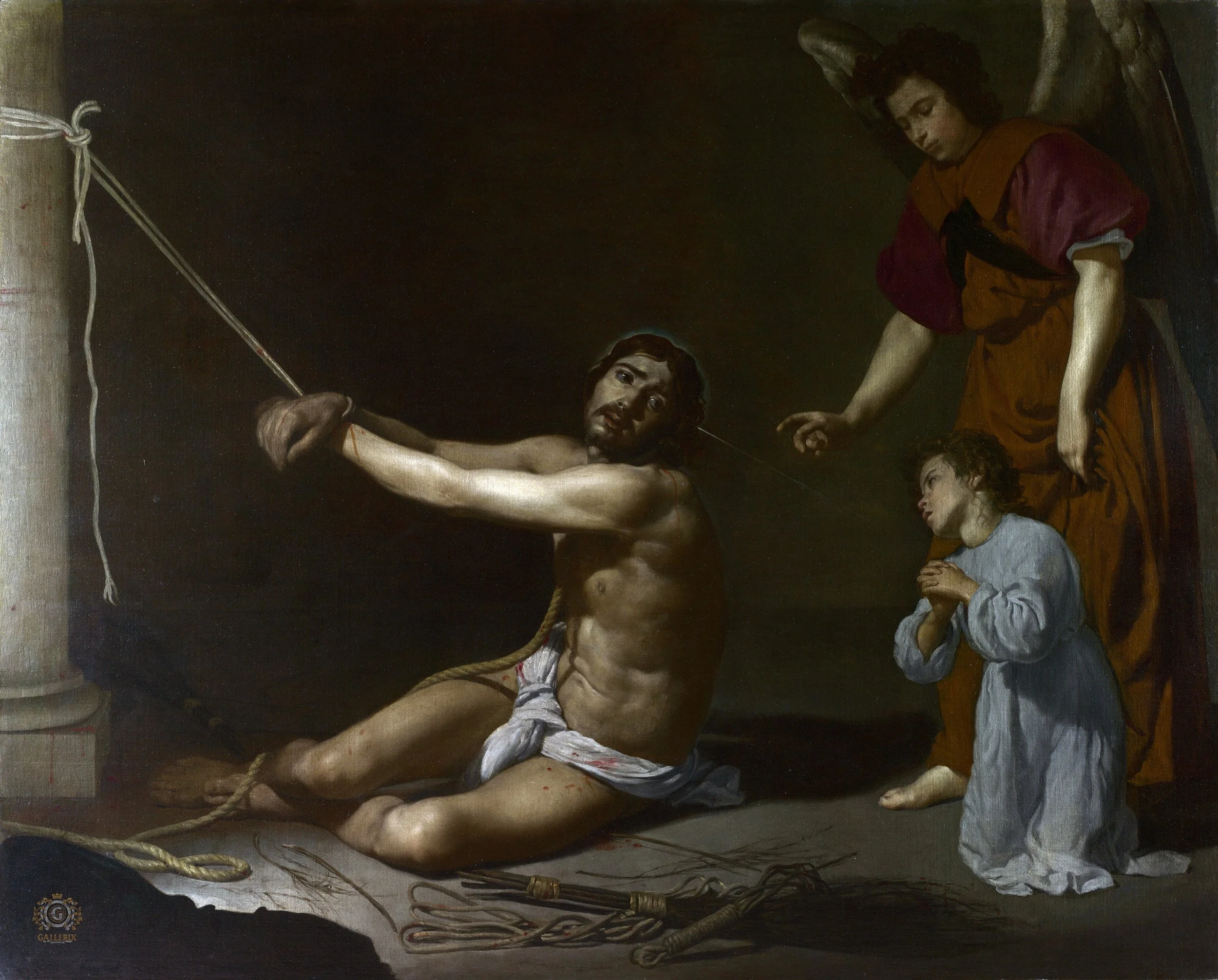
The cross is not God losing control. It is not Jesus reluctantly calming down an otherwise unwilling Father.
The Father loves and sends.
The Son loves and willingly gives Himself.
The Spirit applies Christ’s finished work to His people.
The New Testament uses several pictures to explain what happened at the cross because the work of Christ is too rich to fit inside one small slogan.
Jesus is our substitute. He bears our sins in His body and suffers for the unrighteous to bring us to God (Isaiah 52:13–53:12; 1 Peter 2:21–25; 1 Peter 3:18).
Jesus provides atonement. Our wrongdoing has ruptured communion with God, and Christ deals with the guilt at the center of that rupture.
The Stanford Encyclopedia of Philosophy’s overview of atonement helpfully describes atonement as addressing wrongdoing so that a broken relationship can be reconciled. Scripture goes further and identifies God Himself as the One who acts in Christ to reconcile us (Romans 3:21–26; 2 Corinthians 5:17–21).
Jesus pays our ransom and redeems us from bondage (Mark 10:45; 1 Peter 1:18–21).
Jesus is the victorious King who defeats the powers of sin, Satan, and death (Colossians 2:13–15; Hebrews 2:14–18).
Jesus also reveals God’s love and gives us the perfect pattern of self-giving obedience (Romans 5:8; Philippians 2:5–11).
But He is not only an example. An example can show a drowning person how to swim. It cannot bring a dead person to life.
Christ bears guilt, repairs the breach, breaks bondage, defeats our enemies, and brings us home.
Christians have sometimes argued as if we must choose only one of these biblical pictures. We do not.
The philosophical discussion of Christian theology recognizes that the Christian tradition has used multiple models to explain Christ’s saving work. Scripture gives us a full Christ, not a thin theory.
The Resurrection Is Part of Salvation
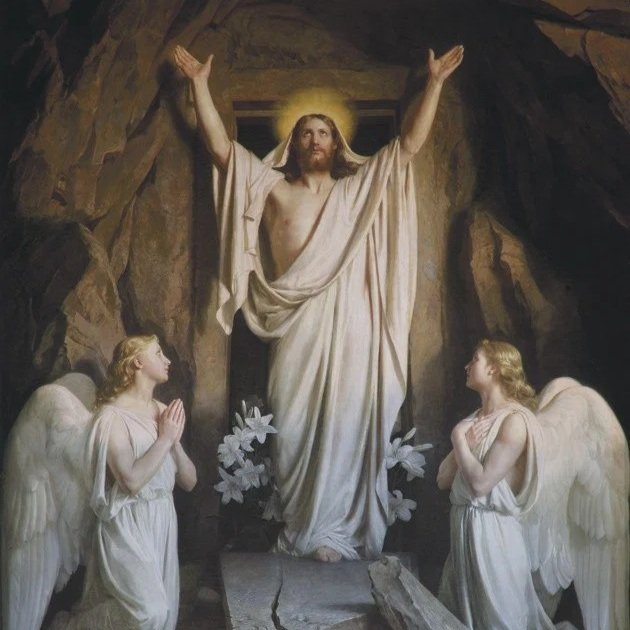
The Resurrection, Carl Heinrich Bloch, 1881. Source: Brigham Young University Museum of Art. Public domain.
If Jesus only died, death still won.
The resurrection is not an inspirational ending added to the real message of the cross. It is God’s public victory over death, the vindication of Jesus, and the beginning of new creation.
Paul says the Gospel he received and delivered was that Christ died for our sins, was buried, rose on the third day, and appeared to witnesses (1 Corinthians 15:1–8).
Later in the same chapter, he says that if Christ was not raised, Christian faith is futile and we remain in our sins (1 Corinthians 15:12–28).
The early Christian writer Athanasius explained Christ’s incarnation, death, and resurrection as God’s rescue of humanity from corruption and death. Jesus assumed our mortal humanity, gave Himself for us, and rose so that death would not have the final word over those united to Him.
Christian hope is not the soul escaping the body forever.
Plato was right to take death seriously, but the biblical answer is not that physical existence was a mistake. God created embodied human life and called it good. Sin brought death. Jesus rose bodily.
Our final hope is bodily resurrection and a restored creation (1 Corinthians 15:35–58; Revelation 21:1–5).
God does not throw His creation away.
He makes all things new.
Salvation Is by Grace, Received Through Faith
Grace means salvation is a gift we do not deserve and cannot earn.
That offends human pride because we want some reason to congratulate ourselves. We compare our worst actions with someone else’s, point to our good intentions, or imagine that religious effort puts God in our debt.
It does not.
Ephesians 2:8–10 holds the order together. We are saved by grace through faith, not by our works, and then we are created in Christ for good works.
Works are not the price of salvation.
They are its fruit.
Faith is not pretending to know something you have no reason to believe. It is also more than agreeing that God exists or that Jesus lived.
Saving faith is personal trust in Jesus Christ, receiving Him as He truly is and resting in what He has done rather than your own moral record.
Faith does not earn salvation.
Faith is the open hand that receives Christ.
Repentance Is Not Self-Salvation
Jesus calls people to repent and believe the Gospel (Mark 1:14–15). Peter does the same in Acts 2:36–41.
Repentance means a real change of mind and direction toward God. It includes honesty about sin, sorrow over it, and a willingness to leave it.
It is not becoming sinless before Jesus will accept you. If you could cure yourself first, you would not need a Savior.
Repentance and faith belong together.
In repentance, I stop defending my rebellion.
In faith, I entrust myself to Christ.
That does not mean Christians never struggle again. It means the struggle has changed sides.
A believer can stumble badly, but he can no longer make peace with sin as if Christ has no claim over his life. He confesses, returns, and keeps following.
What About Good Works and Baptism?
The Bible will not allow us to say good works save us. It also will not allow us to say that a life can remain completely untouched by salvation.
James confronts a so-called faith that produces no obedience, mercy, or action (James 2:14–26).
He is not teaching that we purchase grace by accumulating deeds. He is exposing empty profession. Living faith bears fruit because the Spirit makes people alive.
Baptism also matters.
Jesus commanded it (Matthew 28:18–20), and the apostles closely connected repentance, faith, baptism, forgiveness, and entrance into the visible Christian community.
Christians disagree about the exact relationship between baptism and regeneration, and about who should receive baptism. Those differences should be represented honestly.
What we should not do is reduce baptism to meaningless decoration or turn it into a human achievement that places God in our debt.
Baptism is Christ’s command and the God-given sign of belonging to Him. It points away from our merit and toward union with Christ in His death and resurrection (Romans 6:1–11).
Salvation Has a Past, Present, and Future
The New Testament can say believers have been saved, are being saved, and will be saved.
We have been justified. God declares the believer righteous in Christ, forgives sin, and ends our condemnation (Romans 5:1–2; Romans 8:1–4).
We are being sanctified. The Holy Spirit reshapes our loves, habits, relationships, and character so we increasingly reflect Jesus (2 Corinthians 3:17–18; Galatians 5:16–25).
This growth is real, but it is unfinished in this life.
We will be glorified. Christ will return, raise His people, remove every trace of sin and corruption, and bring us into the fullness of life with God (Romans 8:18–30; Philippians 3:20–21).
Salvation is not only a past decision or a future destination. It is a new standing before God, a new power at work within us, and a promised future that death cannot cancel.
Salvation Means Adoption, Not Mere Acquittal
Imagine a guilty person standing before a judge.
An acquittal would already be astonishing. But the Gospel goes further.
The Judge brings the former rebel home and calls him His child.
Believers receive the Spirit of adoption and cry out to God as Father (Romans 8:14–17).
They are united to Christ, welcomed into God’s household, and made heirs of the coming kingdom (Galatians 4:4–7; Ephesians 1:3–14).
This is where the Christian answer reaches deeper than self-invention.
Kierkegaard was right that the self becomes sick when it refuses its foundation and tries to exist apart from the power that established it. Salvation does not erase your personhood. It restores you to the God in whose image you were made.
In Christ, you do not disappear.
You finally begin to become who you were created to be.
Can a Christian Have Assurance?
Assurance is not confidence that we performed a conversion ritual correctly. It is confidence in Jesus Christ and His promise.
The object of faith matters more than the intensity of faith.
A trembling hand can receive a strong Savior.
John 10:27–30 describes Christ’s sheep hearing His voice, following Him, and being held securely in His hand.
Romans 8:31–39 grounds security in God’s action, Christ’s death and resurrection, and His continuing intercession.
1 John 5:11–13 says believers can know they have eternal life because that life is in the Son.
Self-examination still matters. Scripture warns against empty profession and calls Christians to persevere.
But constant obsession with the quality of our own faith can quietly shift our attention away from Christ.
Assurance grows as we look to Him, trust His Word, see the Spirit’s fruit, remain with His people, and keep returning to grace.
Is Salvation Only Available Through Jesus?
Christianity makes an exclusive claim and a worldwide invitation.
Jesus said He is the way, the truth, and the life, and that no one comes to the Father except through Him (John 14:6).
Peter said salvation is found in no one else (Acts 4:8–12).
That claim is exclusive because Jesus is unique.
If our problem is real guilt before God, we need the One who bore sin.
If our problem is death, we need the One who rose.
If our problem is separation from the Father, we need the Son who brings us home.
But the invitation is not restricted by ethnicity, class, intelligence, reputation, or the depth of someone’s past sin.
The Gospel is offered to everyone.
Whoever comes to Christ will not be cast out (John 6:35–40).
There are not good people who need a little spiritual encouragement and bad people who need salvation.
There are sinners who know they need mercy and sinners who do not.
How Do I Receive Salvation?
You do not need to wait until you feel worthy.
You will never make yourself worthy of grace. That is why it is grace.
Come to Jesus honestly. Confess your sin without hiding behind comparison or excuse. Believe that He is Lord, that He died for sinners, and that God raised Him from the dead.
Entrust yourself to Him.
Turn from the life you ruled for yourself and begin following Him (Romans 10:9–13).
You can speak to God in your own words. A prayer does not save because you found a perfect formula.
Jesus saves.
Call on Him because you believe His promise.
Then do not try to follow Christ alone. Be baptized, join a faithful local church, learn Scripture, pray, receive correction, serve others, and keep walking with believers who will point you back to Christ.
The Christian life is not the payment plan for a gift supposedly given for free.
It is the life that begins when the dead are made alive.
The Heart of Salvation
Philosophy can help us ask what the good life is, why our desires enslave us, how we face death, and why we run from ourselves.
Those are real questions, and Christians should not be afraid of them.
But the Gospel is not advice for managing the symptoms of a mortal condition.
It is news.
God has acted in history.
The Son of God became man.
Jesus lived the faithful life we failed to live.
He bore our sins on the cross.
He rose bodily from the grave.
He reigns as Lord.
He gives forgiveness, the Holy Spirit, adoption, a new community, and the hope of resurrection to everyone who turns to Him in faith.
Salvation is rescue from judgment, but it is more.
It is freedom from sin’s mastery.
It is reconciliation with God.
It is healing for the corrupted self.
It is adoption into a family.
It is the recovery of our true humanity in Christ.
It is life stronger than death.
We are saved from sin, judgment, and death.
We are saved by the grace of God through the life, death, and resurrection of Jesus Christ.
We are saved into communion with God, holiness, love, and His people.
We are saved for resurrection life in God’s restored creation.
Salvation belongs to the Lord.
And in Jesus Christ, it is offered to you.
For the message at the center of Christianity, read What Is the Gospel?.
To examine the identity of the Savior, read Who Is Jesus?.
For the historical claim on which Christian hope stands, read Did Jesus Really Rise from the Dead?.
Primary Sources and Further Study
Key Biblical Passages
Genesis 1:26–28: Humanity created in God’s image
Isaiah 52:13–53:12: The servant who bears sin
John 3:14–18: God’s love, faith, life, and judgment
Romans 3:9–26: Universal sin and justification by grace
Romans 5:6–21: Reconciliation and life in Christ
Romans 6:1–23: Union with Christ and freedom from sin
Romans 8: No condemnation, adoption, transformation, and future glory
1 Corinthians 15: The Gospel and bodily resurrection
2 Corinthians 5:14–21: New creation and reconciliation
Ephesians 1:3–14: Redemption, adoption, and the Spirit
Ephesians 2:1–10: Salvation by grace through faith
Titus 3:3–7: Mercy, renewal, justification, and eternal life
1 Peter 2:21–25: Christ bearing our sins
Revelation 21:1–5: The restoration of creation
Philosophical Sources
Aristotle, Nicomachean Ethics, Book I: Virtue, happiness, and the highest human good
Epictetus, Discourses and Enchiridion: Desire, control, moral discipline, and inner freedom
Plato, Phaedo: Death, purification, and immortality
Blaise Pascal, Pensées: Human misery, mortality, and diversion
Stanford Encyclopedia of Philosophy, “Existentialism”: Kierkegaard on despair, selfhood, and estrangement
Stanford Encyclopedia of Philosophy, “Atonement”: Wrongdoing, reparation, reconciliation, and philosophical accounts of Christ’s work
Stanford Encyclopedia of Philosophy, “Philosophy and Christian Theology”: Sin, atonement, salvation, and major models in the Christian tradition
Historical Christian Source
Athanasius, On the Incarnation: Christ’s incarnation, death, resurrection, and victory over corruption