What Is the Logos?
When John opens his Gospel, he does not begin with Bethlehem, Mary, Joseph, or a manger.
He goes further back than Abraham, further back than Adam, and further back than the first moment of creation.
He begins with this:
“In the beginning was the Word, and the Word was with God, and the Word was God” (John 1:1).
The Greek word translated “Word” is Logos.
It can mean word, speech, message, account, or reason. By the first century, it also carried a long history in Greek philosophy and Jewish thought. Philosophers had used it while asking what holds reality together. Jewish writers spoke about the Word and Wisdom of God in creation, revelation, and salvation.
Then John makes a claim none of those systems could reach on their own.
The Logos is not merely a spoken sound, an abstract idea, a law of nature, or a philosophical bridge between God and the world.
The Logos is personal.
The Logos is eternal.
The Logos is God.
The Logos made all things.
And the Logos entered His own creation as Jesus Christ.
That is what makes John’s opening so powerful. He takes one of humanity’s deepest questions, the question of what gives reality its order, meaning, and intelligibility, and answers it with a person.
The foundation of reality is not an impersonal principle.
He has a face.
Jump to a Section
The Word and Wisdom of God in Scripture
Philo and the World Before John
The Logos Is God, Not a Created Being
What Does Logos Mean?
Logos is a Greek word with a wider range than the English word “word.”
Depending on the context, it can refer to speech, a statement, a message, an explanation, an account, or reason itself. That is why English words such as “logic” are related to it.
Translating Logos as “Word” is still appropriate in John 1. John is clearly drawing our attention to God speaking in creation.
But we should not hear “word” as if John means one item in a sentence. He is speaking about God’s living self-expression, His wisdom, reason, revelation, and creative power.
When I speak, my words reveal something of what is in my mind. They make my thoughts known to someone else.
That comparison has limits when we speak about God, but it helps us understand the title.
Jesus does not merely bring us information about God.
He is God making Himself known.
That is why John later says that the Son has made the Father known in John 1:18.
Jesus can say, “Whoever has seen me has seen the Father,” because He is the perfect revelation of the God no creature could discover by its own effort (John 14:9).
The Logos is God expressed without God being divided.
The Logos in Greek Philosophy
John did not invent the word Logos.
Greek thinkers had used it for centuries, although they did not all mean the same thing by it.
Around the sixth and fifth centuries BC, the philosopher Heraclitus used logos for the common account or rational order according to which reality operates.
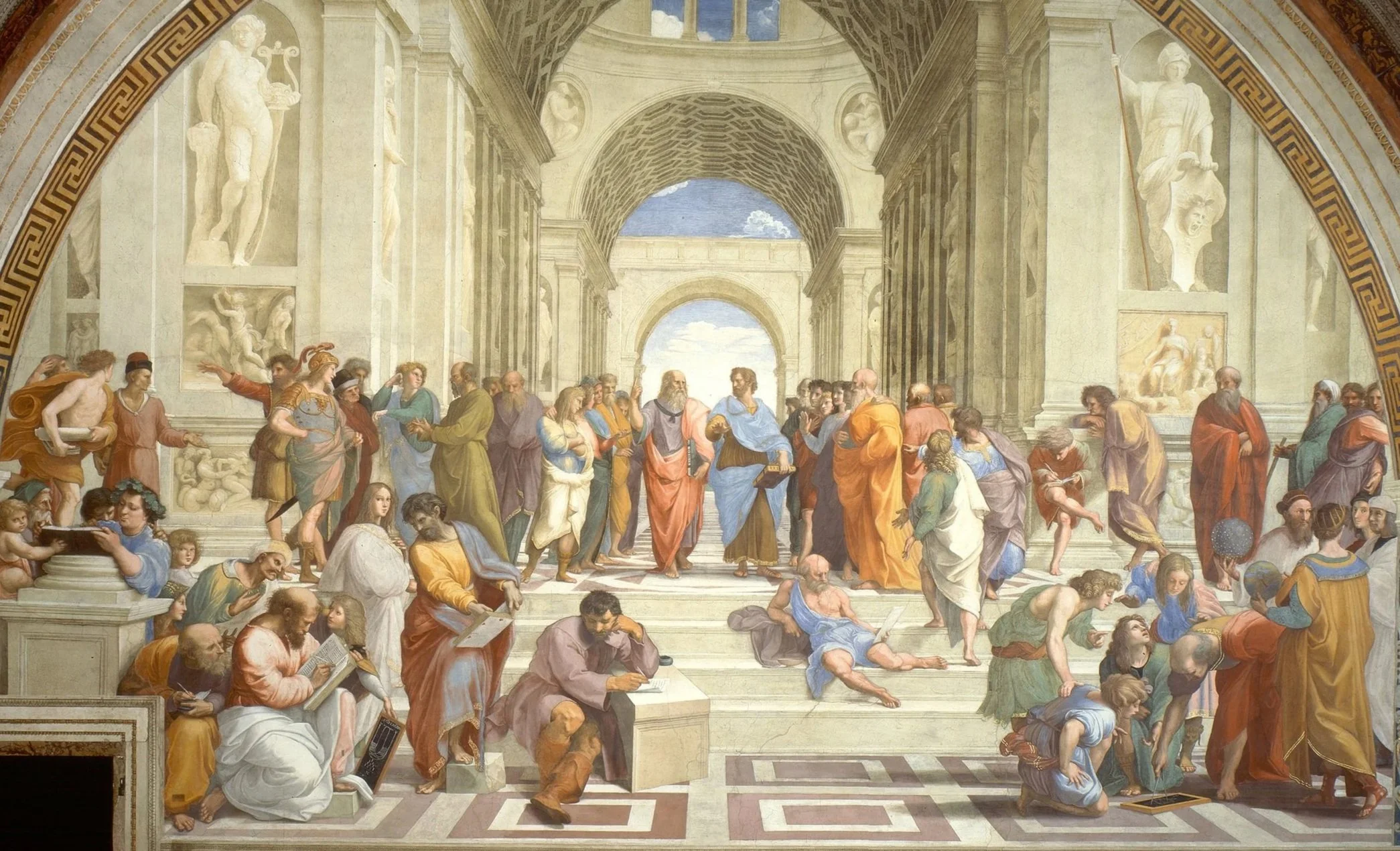
One surviving fragment says it is wise to listen to the Logos and recognize that all things are one.
The Stanford Encyclopedia of Philosophy’s discussion of Heraclitus explains that his Logos was a truth or message available in the structure of the world, even though most people failed to understand it.
Centuries later, the Stoics developed the idea further.
They believed the cosmos was ordered and governed by a divine rational principle. Human reason was connected to the reason that structured the whole.
Their Logos was not the eternal Son of the Father. It was closer to the rational principle woven into nature itself.
The Stanford Encyclopedia of Philosophy’s overview of Stoicism describes this connection between human reason and the rational order governing the cosmos.
This matters because the ancient world was already asking real questions:
Why is the universe ordered?
Why can the human mind understand it?
What makes truth, reason, and moral order possible?
Those are good questions.
Christianity does not mock them.
But John gives an answer philosophy could not discover by staring at the universe alone.
The order behind creation is not merely something.
He is someone.
Heraclitus spoke of a Logos people failed to understand.
John says the true Light came into the world, and the world did not recognize Him (John 1:9–10).
The Stoics spoke about reason within the cosmos.
John says the Logos existed before the cosmos and that the cosmos came into being through Him (John 1:1–3).
John is not placing Jesus inside a Greek system.
He is confronting every system with the person who made the world those systems are trying to explain.
The Word and Wisdom of God in Scripture
The most important background to John 1 is not Greek philosophy by itself.
It is the Jewish Scripture John had known all his life.
John begins with “In the beginning” because he wants us to hear Genesis 1:1.
In Genesis, God creates by speaking.
“And God said” is repeated throughout the chapter.
God does not struggle with creation or form it with help from another god.
He speaks, and reality obeys.
Psalm 33:6 says the heavens were made by the word of the Lord. Verse 9 explains why: “For he spoke, and it came to be.”
God’s Word is not empty information.
His Word acts.
It creates, reveals, judges, heals, and accomplishes His purpose.
Isaiah 55:10–11 describes God’s Word going out from Him and succeeding in the purpose for which He sends it.
The Word of God is God in action, making His will known and bringing it to pass.
Jewish Wisdom literature adds another important layer.
In Proverbs 8:22–31, Wisdom is poetically described as present before and during creation.
Wisdom of Solomon 7:22 through 8:1 speaks of divine Wisdom as pure, powerful, and ordering all things well.
Sirach 24 also personifies Wisdom as coming from God and dwelling among His people.
Christians should handle those passages carefully.
Proverbs 8 is poetry about Wisdom. It is not a simple biography of Jesus, and every line should not be pressed into a one-to-one description of the Son.
Still, the larger pattern matters.
Before John wrote his Gospel, Jewish readers already had biblical categories for God’s Word and Wisdom being active in creation, revelation, and life.
John does not abandon that Jewish foundation.
He brings it to its fulfillment.
The God who created by His Word has made that Word known.
The Wisdom through whom all things hold together is not merely a poetic figure.
God’s eternal Word has come to dwell among us.
Philo and the World Before John
Philo of Alexandria is important because he shows how a Greek-speaking Jewish thinker near the time of Jesus used the word Logos.
Philo tried to explain the Torah while also engaging Greek philosophical ideas, especially Platonism and Stoicism.
He spoke about the Logos as God’s reason, image, and instrument in creation.
In his work On the Creation, he described the intelligible pattern of the world as existing in the divine Logos before the visible world was formed.
An English text of Philo’s On the Creation preserves this discussion.
The Internet Encyclopedia of Philosophy’s overview of Philo explains how his Logos joined Jewish teaching about God’s creative speech with Greek philosophical categories.
There are obvious points of contact with John.
Both speak of the Logos in relation to God, creation, divine reason, and God’s image.
Scholars continue to study the relationship between John’s prologue, Jewish Wisdom traditions, Philo, and the philosophical world around them. One example is this study of John 1 and Jewish Wisdom traditions.
But similarity is not identity.
Philo’s language about the Logos can shift from one passage to another.
Sometimes it sounds like God’s reason, sometimes like an intermediary power, and sometimes it is strongly personified.
John is far more direct.
He does not leave the Logos floating between poetry, philosophy, and metaphysics.
John tells us who the Logos is.
“The Word became flesh and dwelt among us” (John 1:14).
Then he names the historical person through whom grace and truth came:
Jesus Christ (John 1:17).
Philo helps us understand the intellectual world in which John wrote.
He does not explain Jesus away.
What John Does With the Logos
John gathers the deepest themes attached to the Logos and centers them in Jesus.
The Greek philosopher could ask about the rational order of reality.
The Jewish reader could think of God’s creative Word and life-giving Wisdom.
John says both questions reach their answer in Christ.
Look at the claims he makes in just a few verses:
The Logos already existed in the beginning.
John does not say the Word came into existence in the beginning. He says the Word was (John 1:1).
The Logos was with God.
There is real personal distinction. The Word is not simply another label for the Father.
The Logos was God.
The distinction does not make the Word a lesser deity or a created messenger.
Everything created came through Him.
John places the Logos on the Creator’s side of the line between Creator and creation (John 1:3).
Life and light are in Him.
He does not merely point toward life as an outside teacher. He is its source (John 1:4).
The Logos entered the world He made.
The eternal Word became truly human without ceasing to be who He eternally is (John 1:10–14).
The Logos reveals the Father.
The Son makes the unseen God known (John 1:18).
John does not gradually turn an ordinary man into a divine idea.
He begins with the eternal divine Logos and then tells us that this Logos became man.
That direction matters.
Jesus is not a human being who climbed high enough to become God.
He is God the Son who humbled Himself and came near to us.
How the Logos Is Jesus
Someone may ask whether John 1 ever plainly identifies the Logos as Jesus.
It does.
John says the Word became flesh and lived among the disciples.
They saw His glory, the glory of the unique Son from the Father (John 1:14).
A few verses later, he says grace and truth came through Jesus Christ, and then speaks again of the unique Son who makes the Father known (John 1:17–18).
The movement of the passage is clear.
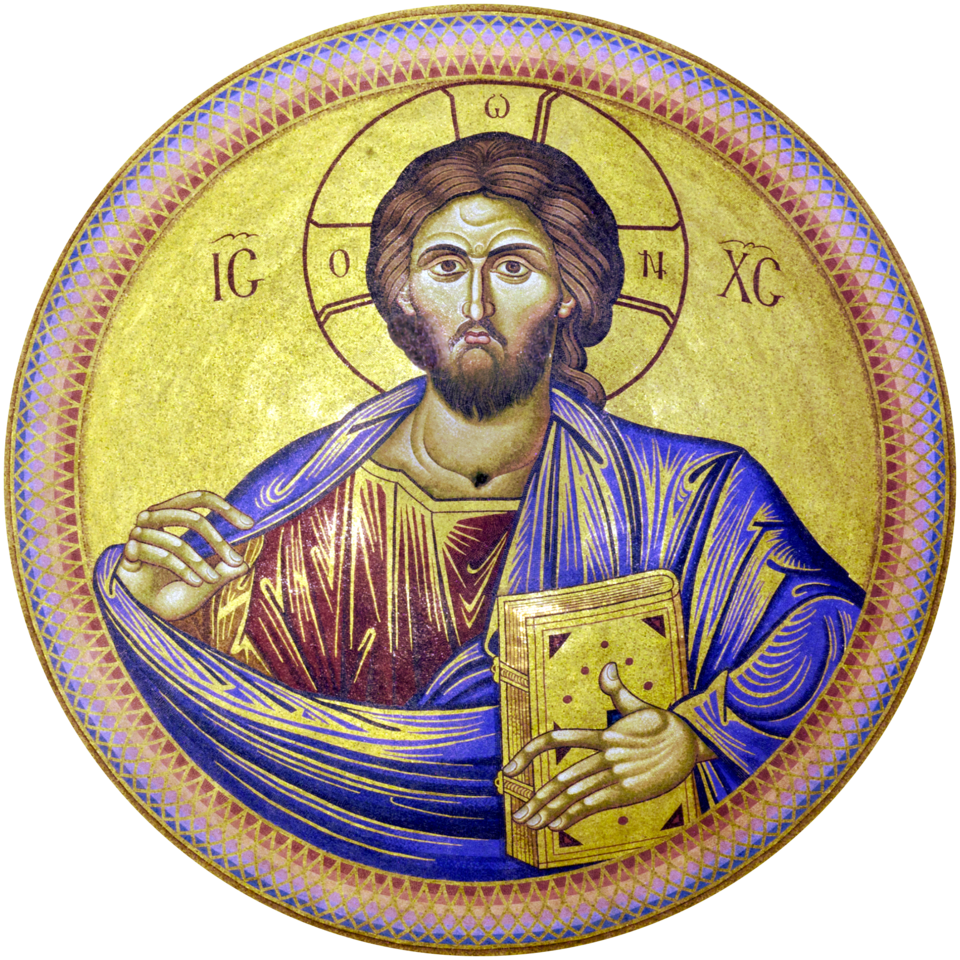
The Word, the Son, and Jesus Christ are the same person.
The rest of the New Testament confirms the same identity, even when it does not always use the title Logos.
The rest of the New Testament confirms the same identity, even when it does not always use the title Logos.
Colossians 1:15–17 calls the Son the image of the invisible God and says all things were created through Him and for Him.
Hebrews 1:1–3 says God has spoken through His Son, through whom He created the world, and calls the Son the exact imprint of God’s nature.
First Corinthians 8:6 places Jesus within the Christian confession of the one God and says all things exist through Him.
First John 1:1–3 calls Jesus the Word of life whom the apostles heard, saw, and touched.
Revelation 19:13 gives the returning Christ the name “The Word of God.”
The same one who was beyond their sight became visible.
The one through whom matter was created could be touched.
The source of life could bleed.
The eternal Word could speak with a human voice.
This is not because the Logos stopped being God.
It is because the Logos truly became man.
The Logos Is God, Not a Created Being
John’s language leaves no room for placing the Logos among the things God made.
John 1:3 says all created things came into being through Him.
If every created thing came through the Logos, the Logos cannot belong to the category of created things.
John has already told us why:
The Logos was in the beginning, and the Logos was God.
Some object that John 1:1 should be translated “the Word was a god” because the Greek word for God does not have the definite article in the final clause.
But Greek does not use the article exactly as English does.
The sentence identifies what the Logos is while maintaining the distinction between the Logos and the Father.
The NET Bible’s translation notes on John 1:1–18 explain why the passage presents the Logos as fully divine and later as truly human.
The wording is careful for a reason.
“The Word was with God” tells us the Word is not the Father.
“The Word was God” tells us the Word shares the divine nature.
This is not belief in two gods.
It is part of the biblical foundation for the Trinity: one God, with real personal distinction between the Father, the Son, and the Holy Spirit.
Others point to Jesus being called “the firstborn of all creation” in Colossians 1:15.
But the next verses explain the title.
All things were created through Him and for Him, and He is before all things (Colossians 1:16–17).
In Scripture, “firstborn” can describe rank and inheritance, not merely the first being created.
God even promises to make David “the firstborn, the highest of the kings of the earth” (Psalm 89:27).
Jesus is firstborn over creation because He is supreme over it.
Creation exists through Him, for Him, and under Him.
Why the Logos Became Flesh
The incarnation is not an interesting philosophical footnote.
It is the center of the Christian hope.
Humanity’s problem is not only that we lack information.
We are separated from God by sin.
We do not merely need a better teacher to give us ideas.
We need God to rescue us.
The eternal Word became flesh because the God who made us chose to enter the suffering of the world we had broken.
Jesus lived the righteous life we failed to live.
He revealed the Father without distortion.
He carried our sin to the cross, died in our place, and rose bodily from the grave.
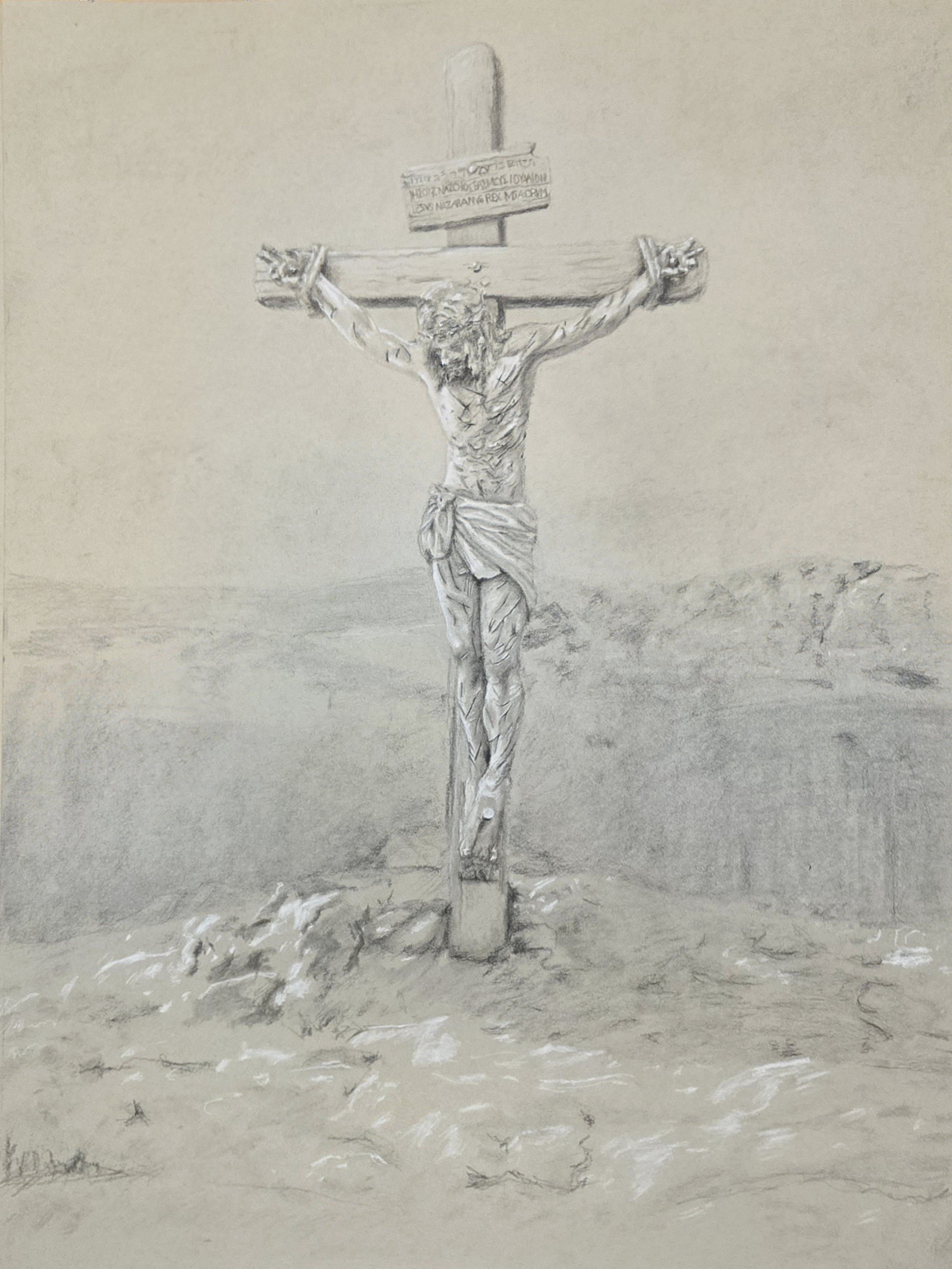
The One through whom all things were made allowed nails made from His creation to be driven through His hands.
That should stop us.
The Logos did not become flesh because God needed to learn what human pain felt like.
God knows all things.
He became flesh so He could act within our humanity, obey where Adam failed, bear our judgment, defeat death, and bring us to the Father.
Hebrews 2:14–18 says the Son shared in flesh and blood, destroyed the power of death through death, and became a merciful and faithful high priest.
Philippians 2:5–11 describes Christ humbling Himself to the point of death on a cross before being exalted as Lord.
John summarizes the result in personal terms.
Those who receive Christ and believe in His name are given the right to become children of God (John 1:12–13).
The Logos became what we are, without sin, so that by grace we could be adopted into the family of God.
Did Christianity Borrow This From Greek Philosophy?
The short answer is no, not in the way that objection is usually meant.
John used a Greek word that already carried philosophical meaning.
He wrote in Greek to people living in a world shaped by Greek language and ideas.
Recognizing that context is not a threat to Christianity.
Communication always uses words the audience can understand.
But using a familiar word is not the same as accepting every belief attached to it.
John’s Logos differs sharply from the philosophical alternatives:
The Logos is not an impersonal law inside the universe. He personally existed with God before creation.
The Logos is not part of an eternal material cosmos. Everything created came into being through Him.
The Logos is not a lesser divine intermediary protecting God from contact with matter. He is God, and He truly became flesh.
The Logos is not reached by intellectual ascent. He comes down to us in grace.
The Logos is not a theory. He is Jesus Christ, who lived in history, was seen by witnesses, died, and rose again.
The Old Testament already taught that God creates, reveals, and acts through His Word.
Jewish Wisdom traditions already connected divine Wisdom with creation and life.
Philo shows that Jewish thinkers could use Logos while remaining engaged with the Torah.
Greek philosophy supplied questions and vocabulary, but John’s answer is controlled by the biblical story and the historical person of Jesus.
Christianity did not take an impersonal Greek principle and pretend it was Jesus.
John announces that every fragment of truth people were reaching for finds its source and fulfillment in the real Christ.
The early Christians understood the claim this way.
In the second century, Justin Martyr argued that whatever truth philosophers had grasped came from the Logos, but that the Logos Himself became man as Jesus Christ.
His First Apology did not place Jesus beneath philosophy.
It placed every true insight beneath Jesus.
Why This Matters
The doctrine of the Logos tells us what kind of world we live in.
Reality is not meaningless at its foundation.
Reason is not a lucky accident produced by a universe that has no mind behind it.
Truth matters because all things were made through the One who is true.
The human mind can genuinely know the world because both the mind and the world come from the wisdom of the same Creator.
It also tells us what God is like.
God is not silent, distant, or unknowable in the absolute sense.
He has spoken.
More than that, His eternal Word has come near.
Jesus is not one religious teacher among many giving his private opinion about God.
He is the one through whom God made the world and the one who makes the Father known.
That means we cannot reduce Jesus to a moral example, a prophet, a spiritual guide, or an inspiring philosopher.
Those titles are too small.
Before Abraham existed, He is.
Before creation began, He was with God and was God.
Every atom exists through Him.
Every breath is borrowed from Him.
Every human search for truth depends on the light He gives.
And still, He came to save us.
The deepest truth behind the universe did not remain an abstraction.
The Logos became flesh.
He entered time, walked among sinners, touched lepers, welcomed children, confronted hypocrisy, wept at a tomb, carried a cross, and rose from the dead.
So what is the Logos?
The Logos is God’s eternal Word, Wisdom, reason, self-expression, and creative power, not as an impersonal force, but as the divine Son.
How is the Logos Jesus?
Because the eternal Son through whom all things were made took on human flesh and entered history as Jesus of Nazareth.
The Word did not merely speak through Jesus as if He were one prophet among others.
The Word became flesh.
The order behind the universe is personal.
The meaning we are looking for is personal.
The God we could never climb high enough to reach came down to us.
His name is Jesus.
Sources and Further Reading
Scripture References
John 1:1–18: The eternal Word becomes flesh
Genesis 1:1–3: God creates through His spoken command
Psalm 33:6–9: The heavens made by the Word of the Lord
Proverbs 8:22–31: Wisdom poetically present with God in creation
Isaiah 55:10–11: God’s Word accomplishes His purpose
Colossians 1:15–20: All things created through and for Christ
Hebrews 1:1–3: The Son as the exact imprint of God’s nature
First Corinthians 8:6: All things exist through Jesus Christ
First John 1:1–3: The apostles saw and touched the Word of life
Revelation 19:11–16: Christ named the Word of God
Jewish Wisdom and Historical Sources
Wisdom of Solomon 7:22 through 8:1: Divine Wisdom and the ordering of creation
Sirach 24: Wisdom coming from God and dwelling among His people
Philo, On the Creation: Philo’s discussion of the Logos and creation
Justin Martyr, First Apology: An early Christian explanation of Christ as the incarnate Logos
Philosophy and Scholarly Sources
Stanford Encyclopedia of Philosophy: Heraclitus
Stanford Encyclopedia of Philosophy: Stoicism
Internet Encyclopedia of Philosophy: Philo of Alexandria
NET Bible Notes on John 1:1–18
“Rethinking John 1:1,” Novum Testamentum 63
Further Reading
C. S. Lewis, Mere Christianity
Lewis’s best-known introduction to the Christian faith. Book Two contains the argument commonly summarized as “Lord, liar, or lunatic,” which challenges the idea that Jesus can be accepted merely as a good moral teacher while His claims to divine authority are rejected. Book Four describes the Son as the Father’s eternal self-expression, which closely connects with John’s description of Jesus as the Logos.
Lewis calls the incarnation the Grand Miracle. He examines what it means for the eternal and uncreated Son to enter the nature He created, become human, die, and rise again.
C. S. Lewis, The Abolition of Man
Lewis defends the existence of an objective moral order, which he calls the Tao. His Tao should not be confused with John’s Logos, but the book is helpful for understanding Lewis’s argument that truth and moral value are discovered rather than invented by individual preference.
Athanasius, On the Incarnation of the Word
A classic early Christian explanation of why the divine Word became human to rescue, renew, and restore His creation.
D. A. Carson, The Gospel According to John
A detailed evangelical commentary on John’s Gospel, including the prologue and its presentation of Jesus as the eternal Word.