Modalism: Is God One Person Wearing Three Masks?
Modalism teaches that God is only one person who appears or reveals Himself in three different ways.
Sometimes He acts as the Father. Sometimes He appears as the Son. Sometimes He operates as the Holy Spirit.
The Father, Son, and Holy Spirit are therefore not eternally distinct persons. They are supposedly three roles, manifestations, titles, or modes of the same divine person.
Modern Oneness theology expresses this in slightly different ways, but it similarly rejects the belief that the Father, Son, and Holy Spirit are three eternally distinct divine persons.
This may sound like an easy way to protect belief in one God, but it does not accurately represent what Scripture teaches.
The Bible does not present one divine person switching between three roles.
It presents one God who eternally exists as three distinct persons: the Father, the Son, and the Holy Spirit.
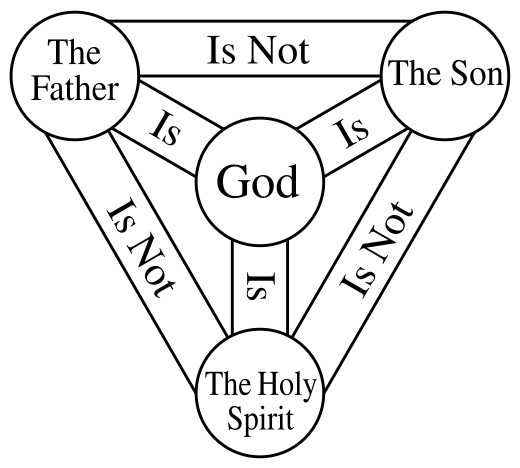
The Father is God.
The Son is God.
The Holy Spirit is God.
But the Father is not the Son, the Son is not the Spirit, and the Spirit is not the Father.
That is not three gods.
It is one indivisible divine being eternally existing as three distinct persons.
The Trinity Is Not One Person Wearing Three Masks
Christians do not believe that three equals one in the same sense.
God is not three beings and one being.
God is not three persons and one person.
God is one being who exists as three persons.
One what. Three whos.
Modalism removes the three whos and replaces them with one person acting under three different titles.
The problem is that Scripture repeatedly shows the Father, Son, and Holy Spirit personally relating to one another.
They speak to one another.
They love one another.
They send and are sent by one another.
They glorify one another.
They testify about one another.
They perform different actions at the same time.
These are not things one person does merely by changing roles.
These are personal relationships between distinct persons.
The Baptism of Jesus Makes Modalism Impossible
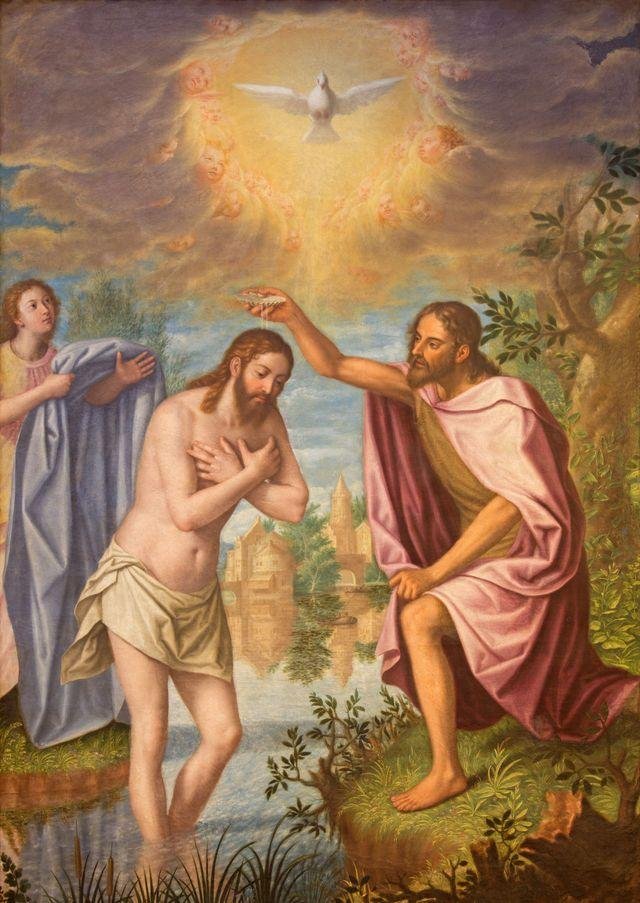
The baptism of Jesus is one of the clearest passages against modalism.
“When Jesus was baptized, he went up immediately from the water. The heavens suddenly opened for him, and he saw the Spirit of God descending like a dove and coming down on him. And a voice from heaven said, ‘This is my beloved Son, with whom I am well-pleased.’”
All three persons are present at the same time.
The Son is standing in the water.
The Holy Spirit descends upon Him.
The Father speaks from heaven.
Jesus is not throwing His voice into heaven while transforming into a dove and remaining in the Jordan River.
Someone may respond that God is omnipresent and can manifest Himself in several places at once.
That misses the point.
The issue is not merely that three things appear simultaneously. The issue is the personal relationship taking place between them.
The Father speaks about the Son.
He calls Jesus “my beloved Son.”
The Spirit descends upon the Son.
The Son receives the Spirit and the Father’s declaration.
This is not one person merely appearing in three locations.
The text presents a speaker, the person spoken about, and the Spirit descending upon Him.
Modalism cannot explain this without turning the passage into a performance where God pretends to be three persons who are interacting with one another.
But Scripture gives us no reason to believe God is acting out a conversation with Himself.
The natural reading is the Trinitarian one.
The Father, Son, and Holy Spirit are distinct persons who simultaneously act in perfect unity.
The Son Was With the Father Before Creation
Modalism sometimes treats the Son as a role God began playing at the incarnation.
But Scripture teaches that the Son personally existed with the Father before the world existed.
“In the beginning was the Word, and the Word was with God, and the Word was God. He was with God in the beginning.”
The Word was God, yet the Word was also with God.
John is not saying that the Word was with Himself.
He presents both unity and distinction.
The Word shares the divine nature, but He is personally distinguished from the one He is with.
Jesus later prayed:
“Now, Father, glorify me in your presence with that glory I had with you before the world existed.”
Jesus did not say that He had glory while acting under the title of Father.
He said that He had glory with the Father before the world existed.
That is personal relationship before creation.
Jesus also said:
“You loved me before the world’s foundation.”
The Father loved the Son before creation.
The Son was not merely a future role God would eventually enter. He was eternally loved by the Father.
Modalism cannot preserve the natural meaning of these words.
If the Father and Son are the same person, then the Father’s eternal love for the Son becomes one person loving Himself under two different titles.
But Jesus describes a real relationship between Himself and the Father.
The Father is the lover.
The Son is the beloved.
They shared glory together before the world existed.
The Father and Son Love One Another
The relationship is not one-sided.
Jesus said:
“On the contrary, so that the world may know that I love the Father, I do as the Father commanded me.”
The Father loves the Son.
The Son loves the Father.
The Son willingly obeys and glorifies the Father.
These statements describe a genuine relationship between an “I” and a “You.”
This is also why the Argument from Eternal Relational Love matters.
God did not need to create before He could love another person.
The Father and Son already knew and loved one another before the foundation of the world.
Modalism turns this eternal relationship into divine self-love disguised by different names.
That is not what Jesus describes.
Jesus Prays to the Father
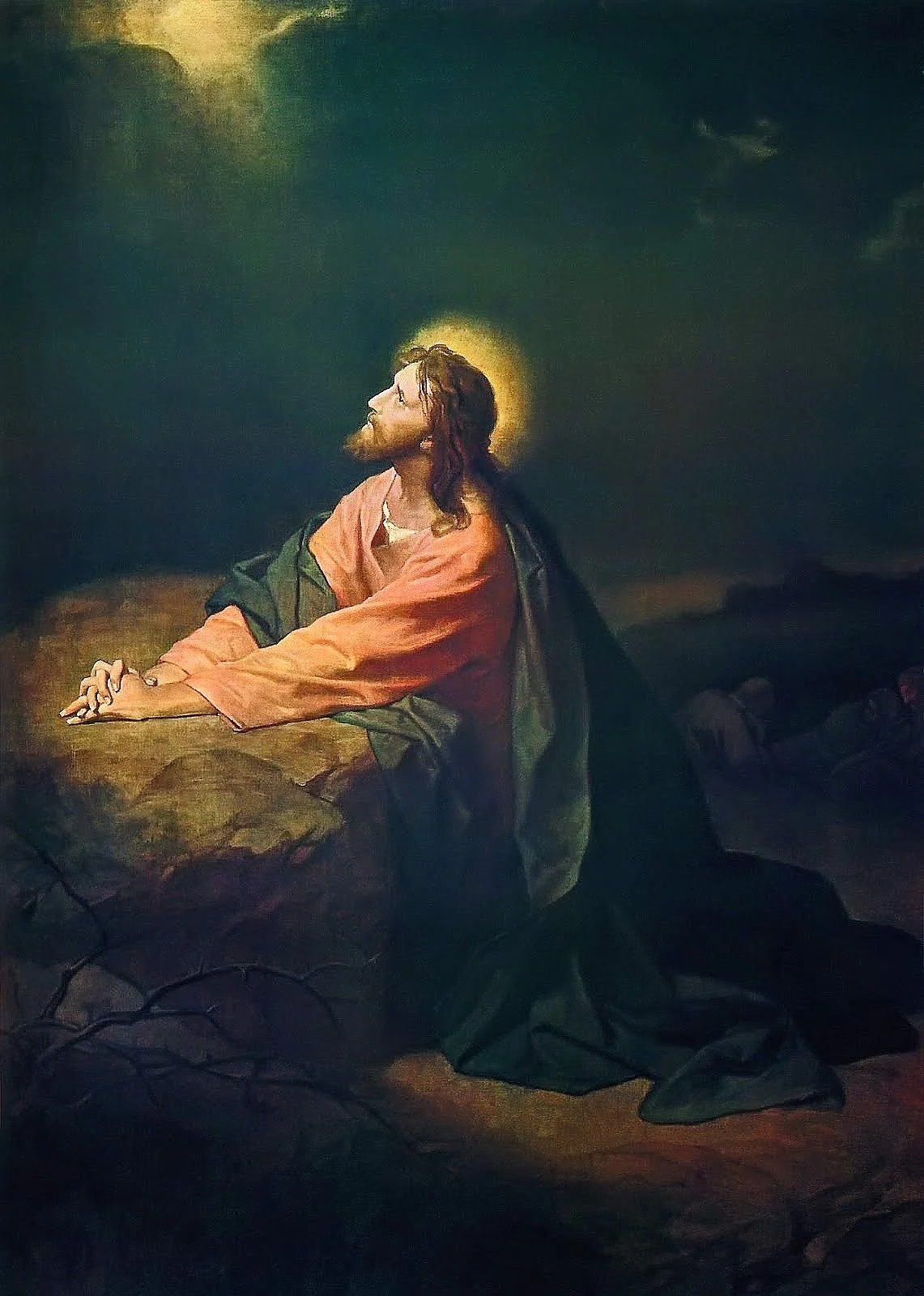
Throughout the Gospels, Jesus speaks to the Father.
Before His crucifixion, Jesus prayed:
“Father, if you are willing, take this cup away from me. Nevertheless, not my will, but yours, be done.”
This is not one person pretending to speak to another version of Himself.
The Son submits His human will to the Father.
There is a real “I” and a real “You.”
There is the will of the Son and the will of the Father, not in sinful conflict, but personally distinguished.
Some modalists respond that the human side of Jesus was praying to His divine side.
But natures do not speak to one another.
Persons speak.
Jesus’ human nature is not a separate human person speaking to the divine person within Him.
Jesus is one person, the eternal Son, who possesses both a divine nature and a human nature.
The person speaking is the Son.
The person He addresses is the Father.
Calling the prayer a conversation between Christ’s human and divine natures does not solve the problem.
It confuses the distinction between a person and a nature.
Jesus repeatedly refers to the Father as the one who sent Him:
“I have come down from heaven, not to do my own will, but the will of him who sent me.”
The sender and the one sent are distinct.
The Father sends.
The Son is sent.
The Son obeys the Father and accomplishes the work the Father gave Him.
This distinction appears throughout the entire ministry of Jesus.
It is not built on one isolated verse.
The Father Speaks to the Son as God
Hebrews records the Father addressing the Son:
“But to the Son: Your throne, God, is forever and ever, and the scepter of your kingdom is a scepter of justice.”
The Father calls the Son God.
The passage continues:
“You have loved righteousness and hated lawlessness; this is why God, your God, has anointed you with the oil of joy beyond your companions.”
This passage simultaneously teaches the deity of the Son and His distinction from the Father.
The Son is called God.
Yet the Son is addressed by another divine person who is called His God.
The Father speaks.
The Son is addressed.
The Son is fully God, but the Son is not the Father.
Modalism cannot simply say that God is speaking under two different roles.
The text presents one person addressing another person.
Jesus Asked the Father to Send Another Helper
Jesus told His disciples:
“And I will ask the Father, and he will give you another Counselor to be with you forever. He is the Spirit of truth.”
Every part of this statement contradicts modalism.
The Son asks.
The Father gives.
The Holy Spirit comes.
Jesus calls the Spirit another Counselor.
The Spirit is not merely Jesus changing into another mode.
Jesus distinguishes the Spirit from Himself while identifying Him as another divine Helper who will continue Christ’s work among His people.
Jesus later said:
“When the Counselor comes, the one I will send to you from the Father, the Spirit of truth who proceeds from the Father, he will testify about me.”
The Son sends the Spirit from the Father.
The Spirit proceeds from the Father.
The Spirit testifies about the Son.
The Father, Son, and Spirit are not interchangeable names for the same person.
They are personally distinguished while acting together in the one work of God.
The Holy Spirit Does What Only a Person Can Do
Modalism reduces the Holy Spirit to another manifestation of the same divine person.
Others speak about the Spirit as though He were merely God’s power.
But Scripture describes the Holy Spirit personally.
The Spirit Speaks
“The Holy Spirit said, ‘Set apart for me Barnabas and Saul for the work to which I have called them.’”
The Spirit says, “Set apart for me” and refers to work “I have called them” to perform.
The Spirit does not merely transmit someone else’s words.
He personally speaks and calls.
The Spirit Chooses and Wills
“One and the same Spirit is active in all these, distributing to each person as he wills.”
An impersonal force does not possess a will.
The Spirit decides how spiritual gifts will be distributed.
The Spirit Teaches
“But the Counselor, the Holy Spirit, whom the Father will send in my name, will teach you all things and remind you of everything I have told you.”
The Father sends the Spirit in the Son’s name.
The Spirit teaches the disciples and reminds them of what the Son said.
Once again, the Father, Son, and Spirit are distinguished within the same sentence.
The Spirit Testifies
“The Spirit himself testifies together with our spirit that we are God’s children.”
The Spirit personally bears witness.
The Spirit Intercedes
“The Spirit himself intercedes for us with inexpressible groanings.”
The Spirit does not merely give us power to pray.
He personally intercedes for us.
The Spirit Can Be Grieved
“And don’t grieve God’s Holy Spirit.”
An impersonal power cannot be grieved.
Grief is a personal response.
The Spirit Hears and Glorifies the Son
Jesus said:
“When the Spirit of truth comes, he will guide you into all the truth. For he will not speak on his own, but he will speak whatever he hears. He will also declare to you what is to come. He will glorify me.”
The Spirit hears.
The Spirit speaks.
The Spirit guides.
The Spirit declares.
The Spirit glorifies the Son.
An impersonal force does not speak, choose, teach, testify, intercede, hear, glorify, or experience grief.
These are personal actions.
The Holy Spirit is not the Father or the Son appearing under a different title.
He is a distinct divine person who acts according to His will while remaining perfectly united with the Father and the Son.
The Father, Son, and Spirit Act Together
The Bible often describes salvation through the work of all three persons.
Paul writes:
“When the time came to completion, God sent his Son, born of a woman, born under the law, to redeem those under the law, so that we might receive adoption as sons. And because you are sons, God sent the Spirit of his Son into our hearts, crying, ‘Abba, Father!’”
The Father sends the Son.
The Son accomplishes redemption.
The Father then sends the Spirit of the Son into believers.
Paul gives the same pattern elsewhere:
“For through him we both have access in one Spirit to the Father.”
Through the Son, in the Spirit, we come to the Father.
These distinctions are not meaningless theological details.
They are part of the Gospel itself.
The Father sends the Son to save us.
The Son gives Himself for us.
The Holy Spirit applies that salvation to us and brings us into fellowship with the Father.
Modalism confuses these personal relationships and changes the biblical shape of salvation.
What About “I and the Father Are One”?
Jesus said:
“I and the Father are one.”
Modalists sometimes read this as though Jesus said, “I am the Father.”
But that is not what He said.
Jesus identifies Himself and the Father as an “I” and another person.
“I and the Father.”
Then He says they are one.
The statement contains both distinction and unity.
The wider context concerns the divine power by which Christ protects His sheep.
Jesus says that no one can snatch them from His hand, and then says no one can snatch them from the Father’s hand.
The Father and Son perform the same divine work with the same divine power.
They are one, but they are not one person.
Jesus later prayed that His followers would be one:
“May they all be one, as you, Father, are in me and I am in you.”
Jesus was not praying that every Christian would become the same person.
He was praying for unity.
Likewise, when Jesus says He and the Father are one, He is not erasing their personal distinction.
He is claiming a divine unity so profound that His enemies understand Him as making Himself equal with God.
The Father and Son are one.
But they are not the same person.
What About “Anyone Who Has Seen Me Has Seen the Father”?
Jesus told Philip:
“The one who has seen me has seen the Father.”
Jesus is not claiming to be the person of the Father.
He is explaining that He perfectly reveals the Father.
The Son is described elsewhere as:
“The image of the invisible God.”
Hebrews describes the Son as:
“The exact expression of his nature.”
To see Jesus is to see exactly what the Father is like because the Son perfectly reveals the same divine nature.
But Jesus continues speaking about Himself and the Father as personally distinct:
“Don’t you believe that I am in the Father and the Father is in me?”
Jesus does not say, “I am the Father.”
He says He is in the Father and the Father is in Him.
This is mutual indwelling, not personal identity.
The entire chapter distinguishes the Son who speaks, the Father who sent Him, and the Spirit whom the Father will send in the Son’s name.
Taking one statement out of that context and using it to erase those distinctions does not work.
What About Isaiah Calling Jesus “Everlasting Father”?
Isaiah prophesied that the coming Messiah would be called:
“Wonderful Counselor, Mighty God, Eternal Father, Prince of Peace.”
This does not mean that Jesus is the person of God the Father.
The title describes the Messiah’s eternal, fatherly care and rule over His people.
It does not erase the distinction between the Father and the Son taught throughout Scripture.
A fatherly title is not the same thing as identifying Jesus as the person called the Father within the Trinity.
Jesus is also called the Prince of Peace.
That does not mean He is a created prince who is less than God.
These titles describe who the Messiah is and what kind of ruler He will be.
The same Scriptures that call the Son “Mighty God” and “Eternal Father” also show the Father speaking to the Son, loving the Son, sending the Son, and glorifying the Son.
One title should not be interpreted in a way that contradicts the clear personal relationships revealed throughout the rest of Scripture.
What About the Fullness of God Dwelling in Jesus?
Paul writes:
“For the entire fullness of God’s nature dwells bodily in Christ.”
This means that Jesus is fully God.
It does not mean Jesus is the Father, Son, and Holy Spirit as one person.
The entire divine nature belongs to the Son because the Son is fully divine.
The Father is also fully God.
The Holy Spirit is also fully God.
The divine nature is not divided into thirds.
The Father is not one-third of God.
The Son is not one-third of God.
The Spirit is not one-third of God.
Each person fully possesses the one indivisible divine nature.
Colossians 2:9 proves the full deity of Christ.
It does not prove modalism.
What About Baptism in the Name of Jesus?
Some Oneness believers argue that because people were baptized in Jesus’ name in Acts, Matthew 28:19 cannot be describing three distinct persons.
But this conclusion does not follow.
Jesus commanded His disciples:
“Go, therefore, and make disciples of all nations, baptizing them in the name of the Father and of the Son and of the Holy Spirit.”
The book of Acts describes converts being baptized in the name of Jesus Christ to identify them with Jesus as the risen Messiah and Lord.
See Acts 2:38, Acts 8:16, Acts 10:48, and Acts 19:5.
These descriptions do not cancel or rewrite Jesus’ command.
Being baptized in Jesus’ name means being baptized under His authority and confessing allegiance to Him.
It does not mean that Jesus is personally the Father and the Holy Spirit.
The apostles could baptize people in the name of Jesus while obeying Christ’s command to baptize in the one name of the Father, Son, and Holy Spirit.
One Name, Three Distinct Persons
Jesus commanded His disciples to baptize:
“In the name of the Father and of the Son and of the Holy Spirit.”
Notice that Jesus says “name,” not “names.”
There is one divine name and one divine authority.
Yet within that one name are the Father, Son, and Holy Spirit.
Jesus does not say:
“In the name of the Father, who later became the Son, who now acts as the Spirit.”
He names all three together.
The one name reveals the unity of God.
The Father, Son, and Holy Spirit reveal the personal distinctions within God.
Paul gives the same Trinitarian pattern:
“The grace of the Lord Jesus Christ, and the love of God, and the fellowship of the Holy Spirit be with you all.”
The Son gives grace.
The Father gives love.
The Spirit gives fellowship.
Three distinct persons act together in perfect divine unity.
Peter opens his first letter with the same pattern:
“According to the foreknowledge of God the Father, through the sanctifying work of the Spirit, to be obedient and to be sprinkled with the blood of Jesus Christ.”
The Father foreknows and chooses.
The Spirit sanctifies.
Jesus Christ cleanses through His blood.
This is not one person being described under three temporary roles.
It is the united work of three distinct divine persons.
Modalism Changes the Meaning of God’s Love
Scripture does not merely say that God began loving after He created something.
God is eternally love.
Before creation, the Father loved the Son.
The Son loved the Father.
The Spirit is personally distinguished from both and brings believers into fellowship with God through the Son.
God did not create because He was lonely or needed someone to love.
Love already existed eternally within God.
Modalism reduces this eternal relationship to one person loving Himself under different titles.
But self-love is not the highest form of love.
Relational love requires a real beloved.
The Gospel reveals that the Father loved the Son before the foundation of the world.
The Son willingly came to glorify the Father.
The Spirit glorifies the Son and brings us into fellowship with God.
God is not a solitary person acting out relationships.
God is eternally relational within His own being.
Modalism Does Not Simplify Scripture
Modalism is often presented as the simpler view.
There is one God, so there must be one divine person.
The Father, Son, and Holy Spirit must therefore be different titles for that one person.
But this does not simplify Scripture.
It forces Scripture to say something it never says.
The Bible says the Father is God.
The Bible says the Son is God.
The Bible says the Holy Spirit is God.
The Bible says there is only one God.
The Bible also repeatedly distinguishes the Father, Son, and Holy Spirit from one another.
Modalism accepts the passages about one God but explains away the passages showing personal distinction.
Tritheism would accept the personal distinctions but destroy the unity of God.
The Trinity preserves everything Scripture reveals.
There is one God.
The Father, Son, and Holy Spirit are each fully divine.
The Father, Son, and Holy Spirit are personally distinct.
None of these truths should be removed to make the others easier to understand.
Conclusion
Modalism may appear to simplify the Trinity, but it does so by contradicting the way Scripture describes the Father, Son, and Holy Spirit.
The Father sends the Son.
The Son prays to the Father.
The Father loves and glorifies the Son.
The Son loves and obeys the Father.
The Son asks the Father to send the Spirit.
The Father sends the Spirit in the Son’s name.
The Spirit proceeds from the Father.
The Spirit testifies about and glorifies the Son.
The Father speaks from heaven while the Son stands in the water and the Spirit descends upon Him.
These are not three costumes worn by one person.
These are distinct persons doing what only distinct persons can do.
They communicate.
They love.
They send and are sent.
They glorify one another.
They testify about one another.
They act simultaneously and relate eternally.
Scripture teaches one God, but it does not teach one divine person.
It reveals one divine being eternally existing as the Father, the Son, and the Holy Spirit.
Not three gods.
Not one person wearing three masks.
One God in three distinct, eternal, fully divine persons.
Sources and Further Reading
Scripture
Scripture quotations are from the Christian Standard Bible.
Each Scripture reference throughout the article links to the full passage on Bible Gateway so that it can be read in context.
Sources Representing Modalist or Oneness Teaching
Apostolic Pentecostal Church, “Doctrine”
This page presents a modern Oneness explanation of God as Father, in the Son, and as the Holy Spirit while specifically rejecting three distinct centers of consciousness in God.
Pentecostal Churches of the Apostolic Faith International, “What We Believe”
This statement describes the Oneness belief that the one God manifests Himself as Father, Son, and Holy Spirit.
Early Christian Responses to Modalism
Tertullian responds to a form of modalistic teaching that identified the Father and Son as the same person. He defends both the unity of God and the real distinction of the Father, Son, and Holy Spirit.
Hippolytus responds to Noetus’ claim that Christ was the Father Himself and argues from Scripture that the Father and Son are personally distinct.
Hippolytus, Refutation of All Heresies, Book IX
Hippolytus discusses Noetus, Callistus, and early forms of Modalistic Monarchianism.
An early Christian argument against both Sabellian confusion of the persons and any teaching that would divide God into three separate gods.
Creeds and Historical Theology
The historic Christian confession of one God, the full deity of the Son, and the divine personhood of the Holy Spirit.
A historic summary affirming that the Father, Son, and Holy Spirit are each fully God while remaining personally distinct.
Augustine, On the Trinity, Book I
Augustine examines the biblical teaching that the Father, Son, and Holy Spirit are one God while remaining personally distinct.
Modern Academic and Biblical Resources
Stanford Encyclopedia of Philosophy, “Trinity”
A detailed academic overview of Trinitarian doctrine, modalism, historical development, and philosophical models of the Trinity.
Bible Gateway, “What Is the Trinity?”
A biblical introduction to belief in one God existing as the Father, Son, and Holy Spirit.
Related Articles on Adopted Into Glory
The Trinity Thoroughly Explained
The Argument from Eternal Relational Love
Explore More Apologetics Resources